Haiku-Review:
Forty-five degrees?
Ninety? What's the difference?
Controller nightmare!
Additional Comments:
For the record, no, this was not one of the "select" titles I've been putting around with for the past few months. Honestly, that'd be right sad; then again, given the madness of Marble Madness...maybe not. End game disappearing block bridge... Holy cow! Does the madness ever end!?
Marble Madness was another one of those game I often picked up as a rental when I was young, as I thoroughly enjoyed the premise, however failed to make any decent headway in the game. Maybe because I only had a rare weekend to give it my best, only to be daunted by the frustrating cohesion, or lack thereof, between an isometric view and an x/y axis joypad. Playing the game now, I found 90° instantly comfortable, or at least the more tolerable of the two. I wouldn't exactly term it "comfortable" since my left hand began to suffer from some serious carpal tunnel like symptoms - something of which I've rarely, if ever, experienced in any other game. Maybe some slight cramping over extended play sessions, but the severity of which I was creaming the diagonal axes trying to maneuver a solitary marble over single width zigzags was pure torture.
I don't remember suffering that much when I was a kid. Reasonable explanation would simply be: I was a kid, but I vaguely remember preferring the 45° setup and holding the controller at an angle back then as well. Maybe that's why I sucked so bad at the game back in the day. Using 45° is a mindfuck. Trying to constantly remember if down is indicative of down or left, or is it right, is a total nightmare. I jumped right into 90° this time around and played it through to the end before I tried to give 45° a solid effort again. Nope. Forget it. My solid effort lasted all of a single stage. I'll take shooting nerve pain and a more sensible controller layout, thank you.
Of course, any chiding of the controls must be accompanied by a proper caveat. After all, Rare did the best they could considering the game is meant to be played with a trackball. Credit must be given for at least offering a 45° option to counter the stages' isometric builds. Besides, Rare did a, pardon the pun, rare thing with Marble Madness. They successfully made a brilliant NES port of an arcade game, even if the arcade game slightly predates the system entirely so you have to wonder if praise is really warranted. With a five year time span, you would think a flawless port should exist without question. I don't know, but thankfully, trackball or not, this one is damn near flawless.
Despite any grumbles I may have regarding the controls, or the fact that long ago, I just sucked at this game, I still love this game. Hell, I loved this game as a kid, even if I never made it past the fourth stage, and that was when I was lucky enough to even make it to the fourth stage. There's something wholly fascinating about Marble Madness. It's almost like there's a kinship with miniature golf, and in many respects, reminds me of another game I loved playing a few short years later on the Apple IIGS: Will Harvey's Zany Golf. These are two classic games where the main mechanic is moving a ball around wildly absurd layouts, be it Marble Madness's nod to M.C. Escher or Zany Golf's anything goes motif. Except, unlike a presumed mini-golf emulation, Marble Madness allows for total control of the ball throughout the entire stage.
I'd love to see a proper update to this game. I know there are a number of games in the marble genre that are fairly recent; most come off as shovelware titles and lack that endearing impact that the original marble contraption game had. Plus, most of the one's I've come across seem to take a smidgen of inspiration from Super Monkey Ball. While I understand it's a fantastic series, I've yet to play it, but I've watched enough footage of the games to notice a considerable gap in how the games are approached and for me it feels...off. Looks fun, but feels off. At least nothing out there today is attempting to emulate the ZX Specturm port of Marble Madness. *shudders*
Don't have much else to say. It's a short game, tough as nails insomuch that you're fighting the controls more than anything, and a fantastic reminder of sometimes the simplest games can be the most entertaining. It's not a game for everyone, but for anyone who has even the vaguest interest in puzzle games, though I certainly wouldn't label it as such, it's a highly recommended play. And to cap it off, it comes with a fantastic soundtrack; again, surprisingly faithful to the arcade original, though in my opinion this particular version is the best of the whole bunch. To be fair, I've only heard snippets from the other ports, mostly of the catchy Beginner Race, although, there's something wholly intriguing about the NES version of Practice Race. Something about it just pops that doesn't come across in any of the other versions and it's a tune that's stood the test of time, at least for me, despite its almost mind numbing simplicity.
A quick aside: I do wish there was a mode that allowed you to run the stages without a timer. Consider it an easy mode v. hard mode with timer. Never mind that I personally find most of the difficulty in the controls, but I can't help but feel the game is bloated with classic early video game era artificial difficulty via an unnecessary timer. Some may consider this a baseless gripe - me simply whinging that the game is too hard. On the contrary, I think the game can easily survive on the difficulty offered in the levels themselves. The stupid disappearing bridges at the end of the Ultimate Race are proof enough. But then again, the game is kind enough to start you back at the point of impact should you explode your marble. Without a timer, a lives system would perhaps need to be questioned though, which would only reinforce the idea of artificial difficulty concepts, so...I don't know. Perhaps a timer is the best way to handle the situation without allowing the game to be too easy. But would it be too easy? Eh...maybe.
Rating: 4 nihilistic black marbles with a death wish out of 5*
*And over the edge he goes...
Through various conversations with friends, I've often tried to produce a list of all the video games that I've beaten over the years. Alas, this list is much harder to produce than I imagined. And so I thought, what if I made a list of what games I've beaten from here on forward? I wonder just how many games I can make it through. Can I beat all games? Such a feat is impossible, surely, but we'll find out just how far I can get.
Monday, September 26, 2016
Saturday, August 20, 2016
A Big Ol' Five!
Go away...I'm busy!
Yea, it's been quiet leading into a fifth year anniversary. So what? I'm having too much fun playing a few select titles with no real end in sight. So it goes.
Monday, April 25, 2016
XB1 - Pneuma: Breath of Life
Haiku-Review:
a self dialogue
to ascertain existence:
je pense, donc je suis?
Additional Comments:
It's funny. Upon playing Myst, I found the game massively underwhelming and generally lacking as far as gameplay is concerned. Still, there were certain qualities that were hard to ignore or deny as anything but exemplary. Unfortunately, those elements didn't exactly factor into the fun department.
I've found, however, as time drags on, I often find my thoughts returning to Myst. Maybe because I've had a urge to play Riven for the past couple of years but for some unknown reason, keep putting it off. Maybe because in the back of my mind, I keep telling myself that exploratory puzzle games are indeed of a fascinating breed of video games that I actually do enjoy; disparaging thoughts on Myst be damned. Maybe because games like Pneuma: Breath of Life come out and I think to myself, "How could I ever dislike something like that - something that appears to be steeped in esoteric mystery and unnerving loneliness? Both setting and mood styles that I wholeheartedly love yet somehow find myself disappointed time and time again by most games that graciously embrace it. But... But looking at a couple brief teasers of Pneuma and I can only believe my opinions are occluded with sheer nonsense. Myst wasn't a terrible game, and by no means will Pneuma be either. After all, it's bathed in fantastic emptiness and clever puzzle solving. Right?
Pneuma is certainly beautiful; perhaps one of the most beautiful games I'm ever come across. It might even be tempting to say it's too beautiful - the whole thing glossed over in an extra coating of sheen that treads on the outer bounds of graphical overkill. It reminds me of Forza Motorsport 6 where beautifully realistic graphics have been replaced with models that look like they're encased in Saran Wrap reflecting everything and anything under the sun with prominence, giving everything an off putting plastic look. I hate the look of Forza 6, and very nearly hate the graphics of Pneuma, but fortunately, this game only looked over the precipice instead of making a leap of faith into the idea that maximum gloss, flare, and reflection shall rule all when it comes to digital beauty. Still, the amount of reflection is a bit on the obnoxious side. But then, I suppose were supposed to accept Pneuma's world as brand spanking new and we need to witness as much sparkle and glitter to verify the idea. But the question begs, is the world the latest figments of Pneuma's mind made real mere seconds before you witness them as appears the case in the opening segments? Are we exploring something that's centuries old, or more? Doubt it as the idea of a weathered look is obviously foreign. Is it simply an anomaly of space and time similar in respects to the world of Myst?
But graphics are merely dressing and should only mildly affect the game as long as everything else is in order. Unfortunately, like Myst, Pneuma falls short in the game play department, perhaps even more so. For starters, I'd hesitate to say there's any sense of exploration. Unlike Myst, Pneuma is extremely linear, be it advancing from point A to point B in each of the stages or overcoming the next obstacle that stands in your way. If anything, exploration is limited to the idea of viewing an arcane Greco-Roman world with no backstory besides that questioned by the invisible protagonist, or anything you, the player, may wish to inject or possibly infer from the various paintings throughout the stages, pass by as you continually advance forward. Essentially, exploration is as prevalent as it is in a linear walking simulator. If it wasn't for an occasional puzzle to break the monotony, I'd swear Pneuma is no better than a walking simulator to begin with.
Except the puzzles are a total mixed bag. There's never anything that's going to force you to put on your thinking cap, but there are a few that are indeed clever nonetheless. Not exactly in how they're executed, but within their mechanics. I think this is one area where Pneuma really falls flat. Instead of fleshing out some of the more interesting mechanics, the game instead attempts to throw out fresh concepts for each puzzle. Ok, the main sight mechanic is tackled in various ways, but sadly, I think it stumbles as each eye puzzle becomes more of a test of inconvenience since the game's camera is tied to the protagonist. Having to walk around without being able to see where you're going isn't enjoyable, even if there's no inherent danger to be found. It's just annoying. But still, like the various eye puzzles, I'd like to have seen an evolution of depth in some of the more interesting puzzles or gimmicks like the Rubik's room, the binary gates, the flipping steeple, or the tetromino bridge. When it comes to complexity, I feel as though there's only one puzzle that accomplished this successfully: the four rotating towers. Unlike most of the puzzles in the game, that's one of the only ones where it felt like a lot of thought went into it without relying on the increasingly annoying line of sight gimmick or slapdash obstacles like the moving bookshelves that seem completely devoid of ingenuity. Speaking of lack of ingenuity, the sundial puzzle left me scratching my head. It came across as a checklist item - something simply existing because it was desired with no thought as to the why or how.
While a couple puzzles took a little longer to complete than I'd like to confess, very few felt comparative to the more involved puzzles found in Myst. Looking back on Myst, one thing I liked about that game is that puzzles or objects in one location affected objects in another location which gave everything a feeling of dependence. It helped make the world feel like a complex web as opposed to a series of singular events, each of which opens the gate to the next event. As such, Pneuma didn't have the same persistent feel that Myst had which hampered much of its immersive effect. Again, this all traces back to the idea that Pneuma is no better than a walking simulator.
What I found to be the most interesting thing about this game is that it appeared to make all the same inroads as Myst while also making the same missteps as Myst. It makes me wonder if this is simply a result of the genre but then you consider stuff like the 3D Zelda games and have to wonder how they can make puzzles not only fun but carry substantial weight. Why do these esoteric first person puzzle games fall short? Only theory I have is that the limited gameplay forces higher expectations. Perhaps it's just that - I'm expecting too much from these games. But Pneuma left me feeling hollow so it obviously failed somewhere.
One place it didn't fail though is the music. Extremely atmospheric, the music is phenomenal. Again, like Myst, it helps drive home proper mood of solitude, secrecy, and inquisition. It plays off Pneuma's chatty self examination questioning not only his existence, but the world's existence, and what it means to exist. Too bad the game doesn't quite play into the hand of Cartesian philosophy as much as Pneuma's incessant ramblings would lead you to believe. Instead, it plays as a distraction for an alternative to Philosophy 101 with a couple interesting puzzles, one fantastic puzzle, and a whole lot of freshly polished marble reflections.
Nano-Rant(s):
Again, similar to Myst, I found myself faced with a puzzle that I guess is simply beyond my reasoning. Much like a puzzle in Myst that I happened to solve via dumb luck, here too, I solved a certain puzzle by total happenstance and haven't the slightest clue how to actually solve it. I must have spent close to an hour trying to figure out how to manipulate the solution until I eventually forced the answer by unknown means. I still have no idea how to solve the puzzle, but at least the developers had the sense to make it one of the optional puzzles.
And speaking of optional puzzles, the scavenger hunt isn't exactly intuitive. At least every other puzzle in the game, even the aforementioned crap that I solved by total chance, had a degree of intuitiveness to it. Sure, it can be argued that the Roman numerals hint at the solution, but if you happen to miss the other plaques on your initial playthrough, the puzzle's going to go right over your head especially since there's no other puzzle that has any sense of world connection and Pneuma spouts off some nonsense about the solution being in the belly of the beast as soon as you enter the room. Again, I must have spent a good hour in that room trying to do every conceivable button combination on each of the paintings throughout the room because I fully expected the solution to be in that room. Too bad the load times in the game are fucking miserable and turn the puzzle into a complete chore to accomplish.
Also love the fact that there's a collectible trinket in each stage that serves no purpose whatsoever because Xbox didn't get the relative achievement that PlayStation and Steam got. There's not even a story tie-in. Way to make the game feel like it has even less purpose than it already has.
Rating: 2 forbidden fruits out of 5
a self dialogue
to ascertain existence:
je pense, donc je suis?
Additional Comments:
It's funny. Upon playing Myst, I found the game massively underwhelming and generally lacking as far as gameplay is concerned. Still, there were certain qualities that were hard to ignore or deny as anything but exemplary. Unfortunately, those elements didn't exactly factor into the fun department.
I've found, however, as time drags on, I often find my thoughts returning to Myst. Maybe because I've had a urge to play Riven for the past couple of years but for some unknown reason, keep putting it off. Maybe because in the back of my mind, I keep telling myself that exploratory puzzle games are indeed of a fascinating breed of video games that I actually do enjoy; disparaging thoughts on Myst be damned. Maybe because games like Pneuma: Breath of Life come out and I think to myself, "How could I ever dislike something like that - something that appears to be steeped in esoteric mystery and unnerving loneliness? Both setting and mood styles that I wholeheartedly love yet somehow find myself disappointed time and time again by most games that graciously embrace it. But... But looking at a couple brief teasers of Pneuma and I can only believe my opinions are occluded with sheer nonsense. Myst wasn't a terrible game, and by no means will Pneuma be either. After all, it's bathed in fantastic emptiness and clever puzzle solving. Right?
Pneuma is certainly beautiful; perhaps one of the most beautiful games I'm ever come across. It might even be tempting to say it's too beautiful - the whole thing glossed over in an extra coating of sheen that treads on the outer bounds of graphical overkill. It reminds me of Forza Motorsport 6 where beautifully realistic graphics have been replaced with models that look like they're encased in Saran Wrap reflecting everything and anything under the sun with prominence, giving everything an off putting plastic look. I hate the look of Forza 6, and very nearly hate the graphics of Pneuma, but fortunately, this game only looked over the precipice instead of making a leap of faith into the idea that maximum gloss, flare, and reflection shall rule all when it comes to digital beauty. Still, the amount of reflection is a bit on the obnoxious side. But then, I suppose were supposed to accept Pneuma's world as brand spanking new and we need to witness as much sparkle and glitter to verify the idea. But the question begs, is the world the latest figments of Pneuma's mind made real mere seconds before you witness them as appears the case in the opening segments? Are we exploring something that's centuries old, or more? Doubt it as the idea of a weathered look is obviously foreign. Is it simply an anomaly of space and time similar in respects to the world of Myst?
But graphics are merely dressing and should only mildly affect the game as long as everything else is in order. Unfortunately, like Myst, Pneuma falls short in the game play department, perhaps even more so. For starters, I'd hesitate to say there's any sense of exploration. Unlike Myst, Pneuma is extremely linear, be it advancing from point A to point B in each of the stages or overcoming the next obstacle that stands in your way. If anything, exploration is limited to the idea of viewing an arcane Greco-Roman world with no backstory besides that questioned by the invisible protagonist, or anything you, the player, may wish to inject or possibly infer from the various paintings throughout the stages, pass by as you continually advance forward. Essentially, exploration is as prevalent as it is in a linear walking simulator. If it wasn't for an occasional puzzle to break the monotony, I'd swear Pneuma is no better than a walking simulator to begin with.
Except the puzzles are a total mixed bag. There's never anything that's going to force you to put on your thinking cap, but there are a few that are indeed clever nonetheless. Not exactly in how they're executed, but within their mechanics. I think this is one area where Pneuma really falls flat. Instead of fleshing out some of the more interesting mechanics, the game instead attempts to throw out fresh concepts for each puzzle. Ok, the main sight mechanic is tackled in various ways, but sadly, I think it stumbles as each eye puzzle becomes more of a test of inconvenience since the game's camera is tied to the protagonist. Having to walk around without being able to see where you're going isn't enjoyable, even if there's no inherent danger to be found. It's just annoying. But still, like the various eye puzzles, I'd like to have seen an evolution of depth in some of the more interesting puzzles or gimmicks like the Rubik's room, the binary gates, the flipping steeple, or the tetromino bridge. When it comes to complexity, I feel as though there's only one puzzle that accomplished this successfully: the four rotating towers. Unlike most of the puzzles in the game, that's one of the only ones where it felt like a lot of thought went into it without relying on the increasingly annoying line of sight gimmick or slapdash obstacles like the moving bookshelves that seem completely devoid of ingenuity. Speaking of lack of ingenuity, the sundial puzzle left me scratching my head. It came across as a checklist item - something simply existing because it was desired with no thought as to the why or how.
While a couple puzzles took a little longer to complete than I'd like to confess, very few felt comparative to the more involved puzzles found in Myst. Looking back on Myst, one thing I liked about that game is that puzzles or objects in one location affected objects in another location which gave everything a feeling of dependence. It helped make the world feel like a complex web as opposed to a series of singular events, each of which opens the gate to the next event. As such, Pneuma didn't have the same persistent feel that Myst had which hampered much of its immersive effect. Again, this all traces back to the idea that Pneuma is no better than a walking simulator.
What I found to be the most interesting thing about this game is that it appeared to make all the same inroads as Myst while also making the same missteps as Myst. It makes me wonder if this is simply a result of the genre but then you consider stuff like the 3D Zelda games and have to wonder how they can make puzzles not only fun but carry substantial weight. Why do these esoteric first person puzzle games fall short? Only theory I have is that the limited gameplay forces higher expectations. Perhaps it's just that - I'm expecting too much from these games. But Pneuma left me feeling hollow so it obviously failed somewhere.
One place it didn't fail though is the music. Extremely atmospheric, the music is phenomenal. Again, like Myst, it helps drive home proper mood of solitude, secrecy, and inquisition. It plays off Pneuma's chatty self examination questioning not only his existence, but the world's existence, and what it means to exist. Too bad the game doesn't quite play into the hand of Cartesian philosophy as much as Pneuma's incessant ramblings would lead you to believe. Instead, it plays as a distraction for an alternative to Philosophy 101 with a couple interesting puzzles, one fantastic puzzle, and a whole lot of freshly polished marble reflections.
Nano-Rant(s):
Again, similar to Myst, I found myself faced with a puzzle that I guess is simply beyond my reasoning. Much like a puzzle in Myst that I happened to solve via dumb luck, here too, I solved a certain puzzle by total happenstance and haven't the slightest clue how to actually solve it. I must have spent close to an hour trying to figure out how to manipulate the solution until I eventually forced the answer by unknown means. I still have no idea how to solve the puzzle, but at least the developers had the sense to make it one of the optional puzzles.
And speaking of optional puzzles, the scavenger hunt isn't exactly intuitive. At least every other puzzle in the game, even the aforementioned crap that I solved by total chance, had a degree of intuitiveness to it. Sure, it can be argued that the Roman numerals hint at the solution, but if you happen to miss the other plaques on your initial playthrough, the puzzle's going to go right over your head especially since there's no other puzzle that has any sense of world connection and Pneuma spouts off some nonsense about the solution being in the belly of the beast as soon as you enter the room. Again, I must have spent a good hour in that room trying to do every conceivable button combination on each of the paintings throughout the room because I fully expected the solution to be in that room. Too bad the load times in the game are fucking miserable and turn the puzzle into a complete chore to accomplish.
Also love the fact that there's a collectible trinket in each stage that serves no purpose whatsoever because Xbox didn't get the relative achievement that PlayStation and Steam got. There's not even a story tie-in. Way to make the game feel like it has even less purpose than it already has.
Rating: 2 forbidden fruits out of 5
Thursday, March 31, 2016
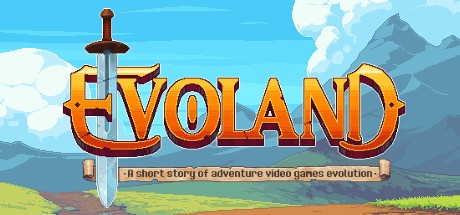
PC - Evoland
Haiku-Review:
not so much a game
but a nostalgic voyage
down memory lane
Additional Comments:
Well then...huzzah! My selfish material ways have, at least temporarily, subsided enough for me to venture further into the realm of digital purchases so that I could finally advance beyond the mere demonstration of Evoland into the full blown game. But the gnawing question on everyone's mind - well, maybe not everyone's mind, but for sure, my mind: was it worth it?
Knowing I'm just repeating myself, it's worth noting that I love the concept behind Evoland. After playing Classic and now the full game, I still love the concept, except...I'm not sure Evoland delivered the concept in the best possible way. Evoland Classic, essentially a short play demonstration of the full game, introduces the concept of RPG evolution by steering the player from a primitive Game Boy-esque action/adventure game through to a 16-bit top down RPG. Despite a couple minor personal grievances concerning extraneous material, Classic managed the evolutionary trope perfectly. It accomplished exactly what it set out to do. Enter Evoland proper.
Obviously, Evoland follows Classic to a T - after all, it's the same game, up until the latter half of Classic at least. Here, Classic deviates from what eventually became the official play route of the full game. Besides, Classic had to explore an ending of it's own. The full game takes the reins and further ventures into the RPG genre, introducing 3D models, side quests and mini games, complex boss fights, and its own take on the tried and true Diablo formula. Unfortunately, as the game ventures further along the RPG evolutionary timescale, the game begins to feel more and more hollow.
It's hard to pinpoint this empty feeling as the game's sole focus is about the development of the RPG genre over time as opposed to an actual story. However, there is a story embedded into the game. I can only assume this was done in hopes of deterring the game from becoming a pure abstraction of itself. Players need a hook to keep themselves invested in a game, at least in an RPG. Otherwise, the whole experience becomes droll at best. Not much is to be expected as far as story, considering the game opens up with offering our hero the ability to walk right and then to walk left. Where do you go from there? Especially when the game continually breaks the fourth wall with each graphical upgrade or other such historical innovation. Perhaps that's part of the reason while the game feels so hollow at times. There's no true investment in the world as the game feels less of a game as opposed to more of a study on gaming history in general. But the question prevails, is that a proper definition of the game as well? It should be, but it isn't.
But I could overlook the entire meta aspect of the game and focus my attention on what plot does exist within the constantly developing architecture of the game world. Whether I'm fighting monsters in a turn-based battle system across the overworld, administering wounds in the action/adventure segments, or slicing up eyeballs in the Diablo cave, I'll appreciate the story for what it is as the game wishes to express it at that given moment. In many respects, this is my big problem with the game. There's times where the game seems to hit its stride as certain play styles relate better to the game or story at hand while at other times, certain game styles seem to exist just because the developer likely had a list of things from the evolutionary chart of RPG games that he wanted to hit up, or deemed important to the cause. Whether or not he could relate them to the story made little difference. The result is a disjointed structure that instills apathy in the player. Other than seeing how the developer implemented certain key aspects of the ever evolving RPG genre, I have no incentive to accomplish anything, and never is this more true than in the Ruins of Sarudnahk.
Obviously, Diablo was an important presence in the grand scheme of RPG styles and I think Evoland pays a nice tribute to it, but in a microcosmic contextual view, as per the good of Evoland, it fails. That's not to say it shouldn't exist, it should, but it should also relate to the story as much as every other element relates to the story if the game is indeed attempting to put any merit into the story. The Ruins of Sarudnahk was nothing more than an empty playing experience because nothing meant anything other than some quirky, nerdy jokes and a necessary ingredient to achieve 100% status in the end credits. Of course, any other part of Evoland could be argued to befall the same pointless existence, but most every other locale or style seemed to have at least a drop of substance.
In the end, Evoland becomes a tale of two premises at loggerheads fighting over the intended point of the game. Are we, the players, playing a conceptual, piecemeal stroll through the early years of RPG goodness or are we playing a terribly cliché, good vs. evil parable that happens to be swaddled in a perpetually amorphous shroud of key RPG likenesses from throughout the years? I would play either. Sure, each option would inherit obvious flaws depending on how you hoped to perceive the game yourself, but at least each option would be stable. Instead, the game is an odd mix of the two; never quite sure how it wants to approach the next evolutionary element - story enriched or merely a surface element to tick off a developer's check box.
I still enjoyed a majority of the game, even if it felt vacuous at times. All of the pre-3D elements were well done as was the Sacred Grove - likely the best area in the game. While the rest of the game slowly evolved from one element to the next or awkwardly flopped from one element to the next - turn-based overworld vs. action/adventure dungeons and the clumsy usage of inventories, or rather faux inventories, the Sacred Grove took advantage of properly meshing two elements into a unique dimensional shift puzzle. I would have loved to see further implementation of this throughout the rest of the game between some of the other styles. If anything, I could imagine it giving the game a much needed shot of innovation above and beyond history repeating.
Perhaps I'm attempting to read too much into Evoland, or I expected far too much out of it. Perhaps the game is meant to be nothing more than a hollow affair accompanying our trek through 20 years of RPG evolution. If that's the case, I can only apologize for my own interpretation. In many ways, I'd rather that be the case than having just played a disappointment in comparison to the free demo. I tend to imagine my enjoyment of the game is fictitious, based on what I imagined the game was going to be as opposed to what it is in reality. My willingness to like the game boiled with such intensity that I overlooked all of the glaring flaws voluntarily. Perhaps there was truth to all those mediocre reviews I read some years back and intentionally disregarded them because I wanted to believe that they just didn't "get" the game. It's disheartening because Evoland Classic gave me such high hopes and gave me reason to ignore many of the more dismal reviews.
However, I must make it clear that most of my general disillusion occurred upon finishing the game when I realized I somehow missed out on a proper gaming experience somewhere along the way. It wasn't readily apparent and only upon reflection it hit me how devoid of actual substance it is. Until that point, fantastic game, as long as you accept the fact that you're shallow. Guess my advice is don't finish the game or else fall prey to how artificial the whole experience is. Maybe the best way to sum it up is that on the whole, Evoland lacks that certain soul that appears lacking in so many of the games crafted in RPG Maker - an intangible quality that's terribly difficult to describe but noticeably absent when such is the case.
The music is typical RPG fare, but to play into the hands of an ever evolving style, uses multiple versions of each song befitting to each stylistic cue, be it 8-bit, 16-bit or one of the more modern incarnations. Generic or not, I enjoyed the approach and appreciate the soundtrack for what it is. And honestly, when done well, I enjoy generic RPG fluff. A personal favorite would probably be Overworld [16 Bit]. Airship is fairly pleasant as well.
Interestingly, a sequel came last year and much like I was with this game initially, I'm intrigued. Even after my disappointment in Evoland, I'm strangely positive about the sequel. It looks promising, but then, I could be just as naïve as I was going into this game; under the influence of grand illusion invoked by my own personal hopes and desires for an "evolutionary" style gaming experience. I suppose as I already said after having played Evoland Classic; musing on whether or not I'll buy the full game, here too it's only appropriate to say, "We'll see..."
Nano-Rant:
Previously discussed within my comments for Evoland Classic, I feel I must touch on this again as I find it to be an incredibly poor design choice. Secret passages hidden behind nondescript walls. There's a reason why all the great RPGs place tiny tell-tale signs of where a secret passage may lurk. Nobody wants to spend endless amounts of time attempting to enter every 16x16 tile hoping a secret may exist beyond. Except, the full game kicked it up a notch over the demonstration with one particularly nasty example.
While not a spot on definition of what I'm already driving at, it essentially falls under the same category. I spent forever trying to figure out how to get to a particular chest in Noria Mines, fully expecting it to fall victim to more invisible passageway bullshit that's already rampant throughout the rest of that particular dungeon. Nope. Turns out I had to fall down a hole, which I would have never expected because upon accidentally being swept into one of the holes by a menacing whirlwind, I quickly learned to tread carefully and beware the gaps in the floor. This harkens back to one of my biggest issues with Where's Waldo? where once the player learns that something is inherently bad the player will ignore it from there on out. You can't teach the player one thing and then suddenly play the old switcheroo. Sure, the game just places my character back at the beginning of the room - there's no real punishment from falling in one of these holes, but it's still equatable with failure. Why am I going to voluntarily place myself into a situation of failure? It makes no sense, even for the purpose of exploration. It's simply dickish design and nothing else.
Rating: 2.5 DVD Players out of 5
not so much a game
but a nostalgic voyage
down memory lane
Additional Comments:
"...despite my criticisms toward digital purchases, this "teaser" more or less convinced me it may be worth purchasing after all. We'll see though. We'll see...."
-Lifted from my remarks on Evoland Classic
Well then...huzzah! My selfish material ways have, at least temporarily, subsided enough for me to venture further into the realm of digital purchases so that I could finally advance beyond the mere demonstration of Evoland into the full blown game. But the gnawing question on everyone's mind - well, maybe not everyone's mind, but for sure, my mind: was it worth it?
Knowing I'm just repeating myself, it's worth noting that I love the concept behind Evoland. After playing Classic and now the full game, I still love the concept, except...I'm not sure Evoland delivered the concept in the best possible way. Evoland Classic, essentially a short play demonstration of the full game, introduces the concept of RPG evolution by steering the player from a primitive Game Boy-esque action/adventure game through to a 16-bit top down RPG. Despite a couple minor personal grievances concerning extraneous material, Classic managed the evolutionary trope perfectly. It accomplished exactly what it set out to do. Enter Evoland proper.
Obviously, Evoland follows Classic to a T - after all, it's the same game, up until the latter half of Classic at least. Here, Classic deviates from what eventually became the official play route of the full game. Besides, Classic had to explore an ending of it's own. The full game takes the reins and further ventures into the RPG genre, introducing 3D models, side quests and mini games, complex boss fights, and its own take on the tried and true Diablo formula. Unfortunately, as the game ventures further along the RPG evolutionary timescale, the game begins to feel more and more hollow.
It's hard to pinpoint this empty feeling as the game's sole focus is about the development of the RPG genre over time as opposed to an actual story. However, there is a story embedded into the game. I can only assume this was done in hopes of deterring the game from becoming a pure abstraction of itself. Players need a hook to keep themselves invested in a game, at least in an RPG. Otherwise, the whole experience becomes droll at best. Not much is to be expected as far as story, considering the game opens up with offering our hero the ability to walk right and then to walk left. Where do you go from there? Especially when the game continually breaks the fourth wall with each graphical upgrade or other such historical innovation. Perhaps that's part of the reason while the game feels so hollow at times. There's no true investment in the world as the game feels less of a game as opposed to more of a study on gaming history in general. But the question prevails, is that a proper definition of the game as well? It should be, but it isn't.
But I could overlook the entire meta aspect of the game and focus my attention on what plot does exist within the constantly developing architecture of the game world. Whether I'm fighting monsters in a turn-based battle system across the overworld, administering wounds in the action/adventure segments, or slicing up eyeballs in the Diablo cave, I'll appreciate the story for what it is as the game wishes to express it at that given moment. In many respects, this is my big problem with the game. There's times where the game seems to hit its stride as certain play styles relate better to the game or story at hand while at other times, certain game styles seem to exist just because the developer likely had a list of things from the evolutionary chart of RPG games that he wanted to hit up, or deemed important to the cause. Whether or not he could relate them to the story made little difference. The result is a disjointed structure that instills apathy in the player. Other than seeing how the developer implemented certain key aspects of the ever evolving RPG genre, I have no incentive to accomplish anything, and never is this more true than in the Ruins of Sarudnahk.
Obviously, Diablo was an important presence in the grand scheme of RPG styles and I think Evoland pays a nice tribute to it, but in a microcosmic contextual view, as per the good of Evoland, it fails. That's not to say it shouldn't exist, it should, but it should also relate to the story as much as every other element relates to the story if the game is indeed attempting to put any merit into the story. The Ruins of Sarudnahk was nothing more than an empty playing experience because nothing meant anything other than some quirky, nerdy jokes and a necessary ingredient to achieve 100% status in the end credits. Of course, any other part of Evoland could be argued to befall the same pointless existence, but most every other locale or style seemed to have at least a drop of substance.
In the end, Evoland becomes a tale of two premises at loggerheads fighting over the intended point of the game. Are we, the players, playing a conceptual, piecemeal stroll through the early years of RPG goodness or are we playing a terribly cliché, good vs. evil parable that happens to be swaddled in a perpetually amorphous shroud of key RPG likenesses from throughout the years? I would play either. Sure, each option would inherit obvious flaws depending on how you hoped to perceive the game yourself, but at least each option would be stable. Instead, the game is an odd mix of the two; never quite sure how it wants to approach the next evolutionary element - story enriched or merely a surface element to tick off a developer's check box.
I still enjoyed a majority of the game, even if it felt vacuous at times. All of the pre-3D elements were well done as was the Sacred Grove - likely the best area in the game. While the rest of the game slowly evolved from one element to the next or awkwardly flopped from one element to the next - turn-based overworld vs. action/adventure dungeons and the clumsy usage of inventories, or rather faux inventories, the Sacred Grove took advantage of properly meshing two elements into a unique dimensional shift puzzle. I would have loved to see further implementation of this throughout the rest of the game between some of the other styles. If anything, I could imagine it giving the game a much needed shot of innovation above and beyond history repeating.
Perhaps I'm attempting to read too much into Evoland, or I expected far too much out of it. Perhaps the game is meant to be nothing more than a hollow affair accompanying our trek through 20 years of RPG evolution. If that's the case, I can only apologize for my own interpretation. In many ways, I'd rather that be the case than having just played a disappointment in comparison to the free demo. I tend to imagine my enjoyment of the game is fictitious, based on what I imagined the game was going to be as opposed to what it is in reality. My willingness to like the game boiled with such intensity that I overlooked all of the glaring flaws voluntarily. Perhaps there was truth to all those mediocre reviews I read some years back and intentionally disregarded them because I wanted to believe that they just didn't "get" the game. It's disheartening because Evoland Classic gave me such high hopes and gave me reason to ignore many of the more dismal reviews.
However, I must make it clear that most of my general disillusion occurred upon finishing the game when I realized I somehow missed out on a proper gaming experience somewhere along the way. It wasn't readily apparent and only upon reflection it hit me how devoid of actual substance it is. Until that point, fantastic game, as long as you accept the fact that you're shallow. Guess my advice is don't finish the game or else fall prey to how artificial the whole experience is. Maybe the best way to sum it up is that on the whole, Evoland lacks that certain soul that appears lacking in so many of the games crafted in RPG Maker - an intangible quality that's terribly difficult to describe but noticeably absent when such is the case.
The music is typical RPG fare, but to play into the hands of an ever evolving style, uses multiple versions of each song befitting to each stylistic cue, be it 8-bit, 16-bit or one of the more modern incarnations. Generic or not, I enjoyed the approach and appreciate the soundtrack for what it is. And honestly, when done well, I enjoy generic RPG fluff. A personal favorite would probably be Overworld [16 Bit]. Airship is fairly pleasant as well.
Interestingly, a sequel came last year and much like I was with this game initially, I'm intrigued. Even after my disappointment in Evoland, I'm strangely positive about the sequel. It looks promising, but then, I could be just as naïve as I was going into this game; under the influence of grand illusion invoked by my own personal hopes and desires for an "evolutionary" style gaming experience. I suppose as I already said after having played Evoland Classic; musing on whether or not I'll buy the full game, here too it's only appropriate to say, "We'll see..."
Nano-Rant:
Previously discussed within my comments for Evoland Classic, I feel I must touch on this again as I find it to be an incredibly poor design choice. Secret passages hidden behind nondescript walls. There's a reason why all the great RPGs place tiny tell-tale signs of where a secret passage may lurk. Nobody wants to spend endless amounts of time attempting to enter every 16x16 tile hoping a secret may exist beyond. Except, the full game kicked it up a notch over the demonstration with one particularly nasty example.
While not a spot on definition of what I'm already driving at, it essentially falls under the same category. I spent forever trying to figure out how to get to a particular chest in Noria Mines, fully expecting it to fall victim to more invisible passageway bullshit that's already rampant throughout the rest of that particular dungeon. Nope. Turns out I had to fall down a hole, which I would have never expected because upon accidentally being swept into one of the holes by a menacing whirlwind, I quickly learned to tread carefully and beware the gaps in the floor. This harkens back to one of my biggest issues with Where's Waldo? where once the player learns that something is inherently bad the player will ignore it from there on out. You can't teach the player one thing and then suddenly play the old switcheroo. Sure, the game just places my character back at the beginning of the room - there's no real punishment from falling in one of these holes, but it's still equatable with failure. Why am I going to voluntarily place myself into a situation of failure? It makes no sense, even for the purpose of exploration. It's simply dickish design and nothing else.
Rating: 2.5 DVD Players out of 5
Monday, February 29, 2016
GEN - Comix Zone
Haiku-Review:
the 90s explained
through video game artwork
plus bonus CD!
Additional Comments:
Unfortunately, those who buy the game used and those who play it on emulator will likely never experience the bonus CD that originally came with the game - a collection of songs from various artists on the American Recordings label. While some stuff is typical 90s alt-rock fare, there's some great songs on there too. Still love Laika's "44 Robbers" and MC 900 Ft Jesus' "Buried at Sea." But alas, none of that has any actual bearing on the game, and after all, that's what's important.
Comix Zone is yet another game I played quite regularly in my youth. It's a unique, stylized brawler set within a comic book drawn by the game's protagonist. The stages consist of pages broken down by panels inhabited by denizens that are drawn to life by the comic book's antagonist who now exists in modern New York City. Good god, that's some heavy shit right there. It's like a nightmarish revision of A-ha's video for "Take On Me." Unfortunately, due to its caustic difficulty, I rarely made much headway back then. My best guess was I made it to the arena in Tibet, perhaps a couple panels after if I was lucky. At least that's as much as I experienced that rang vaguely familiar.
Perhaps a bit tangential, but completely relevant all the same, whenever I return to a game from my childhood that happens to suffer from notorious difficulty, it always amazes me how much more patience I used to have. Comix Zone is the epitome of a practice makes perfect game, and these days, I've found my joy for these types of games has dearly waned. Yet, I think this may be a common phenomenon among a large number of gamers.
With the evolution of game design theory and principles, we've moved from score based games to story driven games. In score based games, lives are your sole focus as you have so many attempts to rack up the highest score possible. Story driven games place emphasis on story and adventure. Lives are old fashion and have no place here. Instead, the ability to save your progress runs rampant, which many people condone as a general easing of difficulty. This has led to the popular belief that today's games are far too easy compared to yesterday's games. In many respect, this is true, but I think it's important to understand why this is true. The 8-bit and 16-bit era of video games can almost be considered the gawky teenager in the video game timeline. It was a transitional period between placing weight on score or story. As a result, developers were clumsy with how to handle key aspects of gameplay in terms of difficulty. I believe Comix Zone is one such game. Why? Because you're only given a single life in a brutally tough beat 'em up that has a fairly strong emphasis on story. It becomes disheartening to see the unsuspecting world about to endure the full wrath of Mortus' mutant villainy for the nth time.
There's no room for error in this game. Unlike, for instance, the Double Dragon series, you have to be on your A game at all times. Comix Zone requires a lot of baby steps and repetition. I remember this being the case when I was young. Come to think of it, Volgarr the Viking reminds me a lot of how Comix Zone operates. Instead of busting heads, you need to fully evaluate the situation set before you and figure out the best method to advance while losing little to no health. Unfortunately, Comix Zone places a few obstacles in your way, some literal.
The only thing that matters in this game is health and you must ensure you're doing everything possible to retain as much of it as you can. Tanking is a dangerous endeavor even if you happen to have an extra ice tea on hand. You can't afford to smash the attack button irresponsibly because you don't care how much of a dick Styx, the pogo stick monk, is; there's a pretty good chance the next panel is going to contain a heavy concrete door that you're going to have to bust down and sadly, you're out of explosives. Doors, barrels, grates, and other obstacle laden bullshit is the real bane of Sketch's existence. Unless there's a trick to destroy the obstacle or you happen to have some extra dynamite on hand, you're going to loose a good bit of health in your attempt to remove the barriers. This is so...stupid. But hold on! There's another method. Sketch has the amazing ability to rip sheets of paper from the very fabric of his new existence inside his own comic book and make deadly paper airplanes. How meta! (And what's that? Paper Airplanes? Funny how those hints work out.) Except, doing so depletes a good portion of Sketch's health as well.
So, recap. Tough as nails enemies are sure to give your health the old one two, but at the same time, you need to ensure you have more than enough not just to survive the stage, but to break down any upcoming obstacles. And for the really annoying stuff, you can always fire off a paper airplane, if you have more than enough health to handle the strenuous task of ripping apart the paper made space-time continuum. Thank goodness for a hefty helping of ice tea conveniently misplaced around the neighborhood. Except that brings up an additional level of aggravating decision.
For every time I've ever complained of a limited inventory in which items are fairly important, I must apologize. Heck, I just did so for Paper Mario: The Thousand-Year Door. Comix Zone takes limited pocket size to a whole new level. Sketch has three slots that can be filled, and sadly, Roadkill, Sketch's pet rat that is impressively useful at any given moment, takes up a slot. So really, you only have two slots to play with unless you're confident enough to make more than enough headway without replenishing your health, therefore not requiring Roadkill's ability to sniff out a few extra ice teas from the inter-dimensional page of Sketch's new reality. But even with that cocky attitude, you may still need Roadkill to throw a few unreachable switches. Decisions, decisions. Because, you know, I'd really love to haul around a superhero icon along with some explosives and an extra ice tea - three items that could likely place me on the path to victory. Do I ditch the explosives and accept the fact that I'm going to take a nasty hit to my health when I have to break down that door or leave the superhero behind and just hope that Kung-Fung isn't at much of an RNG asshole as he usually is?
Simply put, it's all evaluation, strategy, and careful repetition. Once you know the optimal method to tackle a stage it simply comes down to dealing with everything's rather clunky hitboxes. Additionally, I feel using a six button controller might have a slight advantage over using a three button controller. As a kid, I always used a three button, since that's all I had. On my recent playthrough, I briefly tried a six button setup but reverted back to a three button since that's what I always played with in the past. However, a six button controller allows to have manual blocking at your disposal which I believe may be infinitely more helpful, at least compared to the so-called auto-blocking, that honestly, I question how helpful it actually is.
Despite the game's brutal difficulty, two of the three bosses are surprisingly easy, one of which is the final boss. In fact, I'd go so far to say that Mortus may be the easiest foe in the game. It's always a shame when the difficulty ratio of level vs. boss is upended far too much in one direction or the other. Although Kung Fung is a miserably taxing miscreant to face, he balances the stage sufficiently. Mortus plays as nothing more than anti-climactic fodder. The real challenge for me was realizing that some mystery switch suddenly appeared so that I could release Alissa from her nuclear goopy doom. That's an embarrassing way to achieve the bad ending. I had to end up looking up how to achieve the good ending because I expected something far more complicated than a simple switch magically appearing next to Alissa's imprisonment. Of course, it's so obvious now, but at the time I felt like a total idiot. Well, to be fair, I still feel like a total idiot, and as such have confessed as much in words to live in eternity.
Tough or not, I still think Comix Zone is a great game. I recall enjoying the game as a kid, and I still enjoyed it today. Sure, it's not the end all be all brawler. So many other titles easily top it, however, Comix Zone does the genre fair justice. And besides, it offers up one of the most unique approaches to the genre by placing the player inside a comic book where at times he may even find himself having to bust down the white space barriers between panels. The paper and drawing elements, be it Roadkill shredding the page in search of hidden items, or Mortus' giant hand quickly penning in some new baddies, are done superbly well. Also, considering it's on the Genesis, some fabulous throaty growls, and thick, chunky riffs are to be expected, and are they ever. Some noteworthy stuff includes Episode 1, Page 1-1 and Episode 2, Page 1-2. Heck, even the Sega Logo is badass.
Rating: 3.5 100 pound mozzarella donations out of 5
the 90s explained
through video game artwork
plus bonus CD!
Additional Comments:
Unfortunately, those who buy the game used and those who play it on emulator will likely never experience the bonus CD that originally came with the game - a collection of songs from various artists on the American Recordings label. While some stuff is typical 90s alt-rock fare, there's some great songs on there too. Still love Laika's "44 Robbers" and MC 900 Ft Jesus' "Buried at Sea." But alas, none of that has any actual bearing on the game, and after all, that's what's important.
Comix Zone is yet another game I played quite regularly in my youth. It's a unique, stylized brawler set within a comic book drawn by the game's protagonist. The stages consist of pages broken down by panels inhabited by denizens that are drawn to life by the comic book's antagonist who now exists in modern New York City. Good god, that's some heavy shit right there. It's like a nightmarish revision of A-ha's video for "Take On Me." Unfortunately, due to its caustic difficulty, I rarely made much headway back then. My best guess was I made it to the arena in Tibet, perhaps a couple panels after if I was lucky. At least that's as much as I experienced that rang vaguely familiar.
Perhaps a bit tangential, but completely relevant all the same, whenever I return to a game from my childhood that happens to suffer from notorious difficulty, it always amazes me how much more patience I used to have. Comix Zone is the epitome of a practice makes perfect game, and these days, I've found my joy for these types of games has dearly waned. Yet, I think this may be a common phenomenon among a large number of gamers.
With the evolution of game design theory and principles, we've moved from score based games to story driven games. In score based games, lives are your sole focus as you have so many attempts to rack up the highest score possible. Story driven games place emphasis on story and adventure. Lives are old fashion and have no place here. Instead, the ability to save your progress runs rampant, which many people condone as a general easing of difficulty. This has led to the popular belief that today's games are far too easy compared to yesterday's games. In many respect, this is true, but I think it's important to understand why this is true. The 8-bit and 16-bit era of video games can almost be considered the gawky teenager in the video game timeline. It was a transitional period between placing weight on score or story. As a result, developers were clumsy with how to handle key aspects of gameplay in terms of difficulty. I believe Comix Zone is one such game. Why? Because you're only given a single life in a brutally tough beat 'em up that has a fairly strong emphasis on story. It becomes disheartening to see the unsuspecting world about to endure the full wrath of Mortus' mutant villainy for the nth time.
There's no room for error in this game. Unlike, for instance, the Double Dragon series, you have to be on your A game at all times. Comix Zone requires a lot of baby steps and repetition. I remember this being the case when I was young. Come to think of it, Volgarr the Viking reminds me a lot of how Comix Zone operates. Instead of busting heads, you need to fully evaluate the situation set before you and figure out the best method to advance while losing little to no health. Unfortunately, Comix Zone places a few obstacles in your way, some literal.
The only thing that matters in this game is health and you must ensure you're doing everything possible to retain as much of it as you can. Tanking is a dangerous endeavor even if you happen to have an extra ice tea on hand. You can't afford to smash the attack button irresponsibly because you don't care how much of a dick Styx, the pogo stick monk, is; there's a pretty good chance the next panel is going to contain a heavy concrete door that you're going to have to bust down and sadly, you're out of explosives. Doors, barrels, grates, and other obstacle laden bullshit is the real bane of Sketch's existence. Unless there's a trick to destroy the obstacle or you happen to have some extra dynamite on hand, you're going to loose a good bit of health in your attempt to remove the barriers. This is so...stupid. But hold on! There's another method. Sketch has the amazing ability to rip sheets of paper from the very fabric of his new existence inside his own comic book and make deadly paper airplanes. How meta! (And what's that? Paper Airplanes? Funny how those hints work out.) Except, doing so depletes a good portion of Sketch's health as well.
So, recap. Tough as nails enemies are sure to give your health the old one two, but at the same time, you need to ensure you have more than enough not just to survive the stage, but to break down any upcoming obstacles. And for the really annoying stuff, you can always fire off a paper airplane, if you have more than enough health to handle the strenuous task of ripping apart the paper made space-time continuum. Thank goodness for a hefty helping of ice tea conveniently misplaced around the neighborhood. Except that brings up an additional level of aggravating decision.
For every time I've ever complained of a limited inventory in which items are fairly important, I must apologize. Heck, I just did so for Paper Mario: The Thousand-Year Door. Comix Zone takes limited pocket size to a whole new level. Sketch has three slots that can be filled, and sadly, Roadkill, Sketch's pet rat that is impressively useful at any given moment, takes up a slot. So really, you only have two slots to play with unless you're confident enough to make more than enough headway without replenishing your health, therefore not requiring Roadkill's ability to sniff out a few extra ice teas from the inter-dimensional page of Sketch's new reality. But even with that cocky attitude, you may still need Roadkill to throw a few unreachable switches. Decisions, decisions. Because, you know, I'd really love to haul around a superhero icon along with some explosives and an extra ice tea - three items that could likely place me on the path to victory. Do I ditch the explosives and accept the fact that I'm going to take a nasty hit to my health when I have to break down that door or leave the superhero behind and just hope that Kung-Fung isn't at much of an RNG asshole as he usually is?
Simply put, it's all evaluation, strategy, and careful repetition. Once you know the optimal method to tackle a stage it simply comes down to dealing with everything's rather clunky hitboxes. Additionally, I feel using a six button controller might have a slight advantage over using a three button controller. As a kid, I always used a three button, since that's all I had. On my recent playthrough, I briefly tried a six button setup but reverted back to a three button since that's what I always played with in the past. However, a six button controller allows to have manual blocking at your disposal which I believe may be infinitely more helpful, at least compared to the so-called auto-blocking, that honestly, I question how helpful it actually is.
Despite the game's brutal difficulty, two of the three bosses are surprisingly easy, one of which is the final boss. In fact, I'd go so far to say that Mortus may be the easiest foe in the game. It's always a shame when the difficulty ratio of level vs. boss is upended far too much in one direction or the other. Although Kung Fung is a miserably taxing miscreant to face, he balances the stage sufficiently. Mortus plays as nothing more than anti-climactic fodder. The real challenge for me was realizing that some mystery switch suddenly appeared so that I could release Alissa from her nuclear goopy doom. That's an embarrassing way to achieve the bad ending. I had to end up looking up how to achieve the good ending because I expected something far more complicated than a simple switch magically appearing next to Alissa's imprisonment. Of course, it's so obvious now, but at the time I felt like a total idiot. Well, to be fair, I still feel like a total idiot, and as such have confessed as much in words to live in eternity.
Tough or not, I still think Comix Zone is a great game. I recall enjoying the game as a kid, and I still enjoyed it today. Sure, it's not the end all be all brawler. So many other titles easily top it, however, Comix Zone does the genre fair justice. And besides, it offers up one of the most unique approaches to the genre by placing the player inside a comic book where at times he may even find himself having to bust down the white space barriers between panels. The paper and drawing elements, be it Roadkill shredding the page in search of hidden items, or Mortus' giant hand quickly penning in some new baddies, are done superbly well. Also, considering it's on the Genesis, some fabulous throaty growls, and thick, chunky riffs are to be expected, and are they ever. Some noteworthy stuff includes Episode 1, Page 1-1 and Episode 2, Page 1-2. Heck, even the Sega Logo is badass.
Rating: 3.5 100 pound mozzarella donations out of 5
Wednesday, February 24, 2016
GC - Paper Mario: The Thousand-Year Door
Haiku-Review:
who's this Mario?
you mean Murphy? Gonzales?
Mustache? Marty-O?
Additional Comments:
Having taken this long to finally post something from the GameCube is completely unacceptable. Case closed.
Moving on: Paper Mario: The Thousand-Year Door. The much needed upgrade to the original Paper Mario while somehow feeling exactly similar to the original Paper Mario. Ok, that's not entirely true, but one has to admit that there's an uncanny amount of déjà vu rampant throughout this game. Fortunate for me, the first time I played this game, back in '06 if I recall, I had zero inkling of any similarity between this game and its predecessor. For one, I never played the original Paper Mario, and two, I had little to no knowledge of its existence, period. In fact, I hadn't even played the Mario RPG grandfather, Super Mario RPG, beforehand. Therefore, everything presented was an entirely fresh set of ideas. I knew of Super Mario RPG, so the idea of a Mario RPG wasn't mind blowing, but the presentation and execution of The Thousand-Year door certainly was.
The Thousand-Year Door instantly drew me in, and I loved every minute of it. The locales were so unique, the populace, the story - you mean Bowser isn't the antagonist? Oh wait, was that a spoiler? While steeped in Mario lore, the game felt altogether disconnected from typical Mario fare, but not in a bad way. Somehow, the X-Naut army felt right at home in the Marioverse as did the Shadow Sirens, the Punis, or even an entire stage centered around wrestling. That is about the furthest thing you can get from Mario, unless you take into consideration that Mario on The Super Mario Bros. Super Show! was portrayed by famed wrestler Captain Lou Albano. Perhaps Glitzville has genuine purpose after all.
Eventually, I shelved the game, unbeaten. I don't recall the exact reason, but my post on Paper Mario for the Nintendo 64 has some plausible insight. Also, if memory serves, I think it also had something to do with Gloomtail. I vaguely recall struggling against him and finally said that's enough. Although, after my recent playthrough, I haven't the faintest idea why Gloomtail would have griefed me so badly. After beating Gloomtail, I questioned my rather ambiguous memories, though I specifically recall opening the Thousand-Year Door while at the same time never having fought Bowser and Kammy. Therefore, Gloomtail proving paramount in my decision to prematurely shelve the game all those years ago seems highly credible if not embarrassing. Oh well.
Nearly ten years later, I finally decided to finish the game once and for all. First thing I noticed is that save files can almost be interpreted as mini time capsules. So, that's what I was using as a gaming alias all those years ago? I'll be damned. I was aware of a few other alternates from some old game saves, but that one certainly caught me off guard. But that's all rather tangential to the greater topic at hand.
Beginning anew gave me a fresh perspective on this game. I was well aware of the similarities between Paper Mario and The Thousand-Year Door when I did my Paper Mario run despite it being a number of years since I last played this. As I wandered around certain areas in the original title, memories of The Thousand-Year Door would suddenly resurface. Having only been a year since I played Paper Mario, memories of that game are a bit more prevalent and I found it rather uncanny how much parallelism exist between the two games. I don't think this is particularly bad, but there are times when it felt a little lazy, for example Toad Town's sewers and Rogueport's sewers. When I first played this game, I loved the idea behind Rogueport Sewers, but after having played Paper Mario, they've sort of lost their charm because they've become cookie-cutter. A number of elements had now become cookie-cutter which in my opinion, sadly, hurts the overall panache of the game. Fortunately, The Thousand-Year Door's improvements over the original title at least allowed for this new found disappointment to fade into the background, but it was still close enough in proximity reminding me that a lot of the presented material is just rehashed Paper Mario with a sweet, succulent glaze.
General facsimile or not, I am curious about these so-called improvements. Everything...or most everything I hated about the original Paper Mario either went the way of the dodo or was thankfully improved. It was important to slip in "most" as there are a few nagging holdovers that are still beating the game down with their inane stupidity and implementation - looking at you Zess T.'s useless duplication of Tayce T.'s recipe fetch quests of futility. Why in the name of all that is good game design this still a thing? But I'll come back to that, and besides, at least they got rid of Chuck Quizmo.
The two most important improvements in this game are easily coin replenishment and experience gathering. Coins were damn near impossible to gather in the first game, but here coins are nearly a dime a dozen. I never actually had to grind for coins despite having a bevy of badges to buy in the endgame for 100% completion or even fetching ingredients to fulfill Zess T.'s recipes. Through the natural course of play I typically had a sizable bank account on my hands and if not, I could easily rake in a few hundred on a quick trip through the Pit of 100 Trials in my latest attempt to venture to the deepest unknown of Rogueport Sewers, usually without success. Shucks. But my attempted bravery came with a extravagant cash reward and some experience to boot, so I'll take it. And because of the constant increase in difficulty and a number of aborted attempts as a result, it never felt like the truly unnecessary grinding present in Paper Mario.
My other disappointment in the first title regarding experience was also duly rectified. Finally, no matter how weak an enemy is, you will always get at least one Star Point, at it should be. This gives every battle a semblance of purpose. So now, even while I'm having to trek all throughout the lands for the umpteenth time to get another fucking golden leaf or coconut, if I accidentally fall into battle with an annoying species of piranha plant, I'm cool with it because at least I know it moved me one hundreth of a degree closer to leveling up. Yea, that's still sad in the grand scheme of things, but it's better than wasting three minutes of my life for no reward whatsoever.
Another improvement was the distribution of Star Pieces and badges throughout the land. It may have just been a result of knowing that I should be on the lookout for these items with Paper Mario still fresh in my memory, but at the same time I felt like I was able to keep relative pace along the way in regards to collecting these items much better than before. It felt like I always, or at least usually, had the tools necessary to gather all imminent hidden items in a given area instead of having to wait several chapters down the road before I could collect things. Of course, I still had to return to previous areas and spin jump the floors on occasion but it didn't seem as prevalent in this game.
I also have to commend the improved mini games. Is improved the right word? Let's just say the mini games and leave it at that, because in my opinion, the mini games in Paper Mario were a joke. Here, they play like actual mini games and for the most part, are enjoyable to play. And on the subject of mini games, this brings up the obvious innovations of Mario's new found acquirable skills: Paper Mario, Plane Mario, Boat Mario, and Tube Mario. Although their initial wow factor wears off after several hours of play - why does Tube Mario's directional controls suck so much? - their implementation is so perfectly fitting. Plane Mario and Boat Mario is especially awesome, and in many ways, I wish they had done a little more with each, well at least Boat Mario. Although, the final slog through the waves outside Pirate's Grotto is simply delightful. But what makes these four skills amazing is how they further reinforce the whole paper-thin notion. A paper airplane in a game based around paper? Last time I saw this level of logical cleverness was in Comix Zone (hint hint).
Story depth is another area that's been greatly improved, and I don't mean the general plot that Mario's working his way through, but the level of backstory connected to the world. In your average Mario game, I'd find this unnecessary and frankly, unwieldy. But given that this is an RPG, backstory can only help. It enhances the immersion factor of the overall game world be it Grifty's tales of historic tragedy that lays the foundation of the Thousand-Year Door and Crystal Stars, or Luigi's negligent exaggerations of his own adventure to save Princess Eclair. Without adding extraneous gameplay, the world has suddenly become so much more interesting. Instead of just whipping up a handful of generic Crystal Stars needed to safeguard impending doom or whatever, they instead have a tale of woe that's not only connected with them but with the world at large. This gives a much needed importance to the Crystal Stars as opposed to collecting another set of seven "things" just for the heck of it because otherwise gamers might realize the plot is nothing more than thinly veiled gobbledygook to tide over forty hours of gameplay.
But there are a few miserable quirks that managed to find their way into the sequel as well. The game still has a general sluggishness to it. However, I didn't find this to fault the game anywhere near as bad as it did in Paper Mario. In Paper Mario, slow was the word of the day and damn near every single element of the game dragged. Here, traversing the word felt slow at times, even with Yoshi, but it was never exactly a nuisance. And although the battles played out exactly as they did in Paper Mario, they never felt anywhere near as lethargy induced, especially once you started making use of some very convenient badges that sped up battle tenfold. The only element that truly felt reminiscent of the slow tedium of the first game was the micro-game actions that were used to either boost or make use of a specific attack or special in battle. Some of them are just so annoying that I never bothered using that particular move; some are aggravating, like Vivian's Fire Jinx, a move I relied on quite often thus having to bear the awfulness that is that move's micro-game far too many times. Stuff like that turned battles into ventures of exasperation. At least I'm getting my single Star Point for these sufferings. Hmm, I'm starting to think a solitary point is merely a slap in the face.
One of the worst offenders of the game, as mentioned before, is Zess T. Tayce T. was already a horrible design decision that existed in the first game, and for some reason it was carried over into this game and slightly expanded upon. As I mentioned in my write up for Paper Mario, the concept of recipes in and of itself is not so much the issue as it is the hours of hoofing it around the world over and over again to collect the necessary ingredients because my goddamn inventory can only hold ten fucking items...unless I managed to pick up the Strange Sack in the Pit of 100 Trials. Even then, twenty slots isn't exactly a godsend. Why can't items stack like in any normal, well-designed inventory system, or is that simply far too logical? I could easily live with a limited inventory if item stacking could exist. Please, let me place all those necessary cake mixes into a single inventory slot instead of filling my entire sack to the brim. I get it, we can only hold ten (or twenty) items no matter what they are, but it's asinine in my opinion.
What makes things worse is Zess T. uses dishes as ingredients more so than Tayce T. This is just annoying as the potential ingredient list grows exponentially. Without a guide in hand, there's no freakin' way I'd experiment with countless possibilities for hours on end. Hell, it takes hours on end just to collect all the necessary ingredients and complete all her available recipes even when using a guide. A far more convenient way would be able to dump a boatload of ingredients off at Zess T.'s house whenever I'm in the neighborhood which would then stock her pantry from which I could pull whatever ingredients I might want to make use of. Sure, it wouldn't solve the blind experimentation, but it would cut down on necessary travel time and allow me to stock certain items for key dishes that I might wish to prepare. Otherwise, the whole system is rather pointless. Why bother jumping from locale to locale on an epic fetch quest time and time again just to make the only useful dishes Zess T. has to offer when I can just buy some Ultra Shrooms and Jammin' Jellies and make a few Jelly Ultras? Well, I guess Whacka Bumps and Golden Leaves are free, so there is that, but do I really want to travel through Twilight Trail again? Even if there's a chance to pick off an unsuspecting Amazy-Dayzee? Eh...ok, but expect a good amount of grumbles to accompany the excursion.
Even with the few nuisance carryovers from the first game, the improvements in The Thousand-Year Door over Paper Mario are palpable. Everything that makes this game work helps it shine far and above its predecessor, even if the game feels like a near facsimile of it 90% of the time. They realized (most of) their faults and tidied them up giving the game life. Unlike Paper Mario where I had to step away for a few weeks while working my way through Shy Guy's Toy Box, I tackled The Thousand-Year Door without break. I never hit a rough patch, even while fighting my way through some of the torturous errands in the end game to obtain 100% completion. Which reminds me of one final, and glorious improvement over the original: the ability to carry on after you beat the game so you can tie up any loose ends. I wasn't aware this was the case at first and only found out when I wondered what would happen if I clicked on my save after finishing the game. Considering I had one final element to complete, something I thought I flat out missed during my playthrough and accepted as such, I was finally able to cross off that final item even after I beat the game. Happy days!
All in all, Paper Mario: The Thousand-Year Door is a great game, a massive improvement over the original, and generally a must play game. It still feels a bit too unique to be considered a proper RPG, but the elements are there, so even a die hard RPG fan can appreciate the game. More than anything, and it's possible it's nothing more than my imagination cleverly tricked by all the appealing elements of the game, but it doesn't feel anywhere near as slow as Paper Mario. That alone is a massive selling point for this game. And guess what? It's got some great music and atmospherics as well. But why would that ever be challenged? Personal favorites include Rogueport Sewers, Glitzville, and X-Naut Fortress.
Nano-Rant:
I do have a couple additional gripes. One's out of personal stupidity while the other's out of straight up developer stupidity.
As mentioned, there was one final thing left on my checklist that I failed to cross off by the time I beat the game. I had one final entry left in Goombella's tattle log. It was frustrating the hell out of me, especially since I looked up online what I was missing and ended up misreading it thinking I was missing an alternate Bowser fight. As I said, my own stupidity. Turns out I was overlooking Gus - a potential battle that is literally planted in front of you from the very beginning of the game. Expecting some sort of story tie in, I just kept paying him his stupid toll and never bothered to pick a fight. Boy, did I ever have egg on my face.
But then, there's the real crux of evil lying in the underbelly of this game. It's not Bowser, or Sir Grodus, or even the Shadow Queen. It's the goddamn Trouble Center. Fuck that place. Everything I hate about Zess T., and her inability to hop on down to the local supermarket for some fresh ingredients despite living right next door to the fucking store, the Trouble Center takes that entire experience and kicks it up a notch, or rather a ton of thorny, rash-inducing notches. Fortunately, most of the troubles are pretty tame and quick to finish, but then there are some troubles that make you want to pull your hair out, like Bub-ulber's sudden gluttonous urges or General White's wanderlust. Are you seriously going to have me trek to every single locale in the game to find this asshole? Wait, he even revisited Goldbob? Are you fucking kidding me? This entire trouble has essentially become moot, except wait, I have the package. Fetch quests are one thing, but having the player bounce around the game while adding zero merit, even as a side quest, is flat out garbage. It's a waste of time and nothing more. Side quests, while purely optional, should at least enliven the overall experience in some way. This enlivens crap. Seriously. This is the developer running out of ideas and saying, "Hey, let's make the player visit every location again for the nth time because we already know they'll never tire of zipping in and out of Rogueport Sewers or making use of Cheep-Cheep Blimp because they already have to do this tiresome bullshit for countless other meaningless side quests." Brilliant!
Nano-Win:
But fear not. I won't end this post on tidings of misery. There's a couple unexpected surprises that came with this game as well.
First, a bit of a personal surprise because I realized I missed a number of things during my initial playthrough back in '06. One such thing was Ms. Mowz. I had no idea Ms. Mowz could become a partner, but what really fascinated me about her is that she's a complete overhaul of what was essentially the I Spy badge in Paper Mario.
Secondly, I love the 2-D Bowser levels. Even if they're short, easy, and add no real value to the game, the premise of them is just awesome. I wish there was one for every chapter.
Rating: 4.5 crickets out of 5*
I combed through Hooktail Castle on multiple occasions throughout the course of the game, including using Ms. Mowz, trying to find this mysterious cricket because I'm too thickheaded to realize it's a byproduct of a SFX badge. I don't use them and therefore would never put two and two together. Oh well.
who's this Mario?
you mean Murphy? Gonzales?
Mustache? Marty-O?
Additional Comments:
Having taken this long to finally post something from the GameCube is completely unacceptable. Case closed.
Moving on: Paper Mario: The Thousand-Year Door. The much needed upgrade to the original Paper Mario while somehow feeling exactly similar to the original Paper Mario. Ok, that's not entirely true, but one has to admit that there's an uncanny amount of déjà vu rampant throughout this game. Fortunate for me, the first time I played this game, back in '06 if I recall, I had zero inkling of any similarity between this game and its predecessor. For one, I never played the original Paper Mario, and two, I had little to no knowledge of its existence, period. In fact, I hadn't even played the Mario RPG grandfather, Super Mario RPG, beforehand. Therefore, everything presented was an entirely fresh set of ideas. I knew of Super Mario RPG, so the idea of a Mario RPG wasn't mind blowing, but the presentation and execution of The Thousand-Year door certainly was.
The Thousand-Year Door instantly drew me in, and I loved every minute of it. The locales were so unique, the populace, the story - you mean Bowser isn't the antagonist? Oh wait, was that a spoiler? While steeped in Mario lore, the game felt altogether disconnected from typical Mario fare, but not in a bad way. Somehow, the X-Naut army felt right at home in the Marioverse as did the Shadow Sirens, the Punis, or even an entire stage centered around wrestling. That is about the furthest thing you can get from Mario, unless you take into consideration that Mario on The Super Mario Bros. Super Show! was portrayed by famed wrestler Captain Lou Albano. Perhaps Glitzville has genuine purpose after all.
Eventually, I shelved the game, unbeaten. I don't recall the exact reason, but my post on Paper Mario for the Nintendo 64 has some plausible insight. Also, if memory serves, I think it also had something to do with Gloomtail. I vaguely recall struggling against him and finally said that's enough. Although, after my recent playthrough, I haven't the faintest idea why Gloomtail would have griefed me so badly. After beating Gloomtail, I questioned my rather ambiguous memories, though I specifically recall opening the Thousand-Year Door while at the same time never having fought Bowser and Kammy. Therefore, Gloomtail proving paramount in my decision to prematurely shelve the game all those years ago seems highly credible if not embarrassing. Oh well.
Nearly ten years later, I finally decided to finish the game once and for all. First thing I noticed is that save files can almost be interpreted as mini time capsules. So, that's what I was using as a gaming alias all those years ago? I'll be damned. I was aware of a few other alternates from some old game saves, but that one certainly caught me off guard. But that's all rather tangential to the greater topic at hand.
Beginning anew gave me a fresh perspective on this game. I was well aware of the similarities between Paper Mario and The Thousand-Year Door when I did my Paper Mario run despite it being a number of years since I last played this. As I wandered around certain areas in the original title, memories of The Thousand-Year Door would suddenly resurface. Having only been a year since I played Paper Mario, memories of that game are a bit more prevalent and I found it rather uncanny how much parallelism exist between the two games. I don't think this is particularly bad, but there are times when it felt a little lazy, for example Toad Town's sewers and Rogueport's sewers. When I first played this game, I loved the idea behind Rogueport Sewers, but after having played Paper Mario, they've sort of lost their charm because they've become cookie-cutter. A number of elements had now become cookie-cutter which in my opinion, sadly, hurts the overall panache of the game. Fortunately, The Thousand-Year Door's improvements over the original title at least allowed for this new found disappointment to fade into the background, but it was still close enough in proximity reminding me that a lot of the presented material is just rehashed Paper Mario with a sweet, succulent glaze.
General facsimile or not, I am curious about these so-called improvements. Everything...or most everything I hated about the original Paper Mario either went the way of the dodo or was thankfully improved. It was important to slip in "most" as there are a few nagging holdovers that are still beating the game down with their inane stupidity and implementation - looking at you Zess T.'s useless duplication of Tayce T.'s recipe fetch quests of futility. Why in the name of all that is good game design this still a thing? But I'll come back to that, and besides, at least they got rid of Chuck Quizmo.
The two most important improvements in this game are easily coin replenishment and experience gathering. Coins were damn near impossible to gather in the first game, but here coins are nearly a dime a dozen. I never actually had to grind for coins despite having a bevy of badges to buy in the endgame for 100% completion or even fetching ingredients to fulfill Zess T.'s recipes. Through the natural course of play I typically had a sizable bank account on my hands and if not, I could easily rake in a few hundred on a quick trip through the Pit of 100 Trials in my latest attempt to venture to the deepest unknown of Rogueport Sewers, usually without success. Shucks. But my attempted bravery came with a extravagant cash reward and some experience to boot, so I'll take it. And because of the constant increase in difficulty and a number of aborted attempts as a result, it never felt like the truly unnecessary grinding present in Paper Mario.
My other disappointment in the first title regarding experience was also duly rectified. Finally, no matter how weak an enemy is, you will always get at least one Star Point, at it should be. This gives every battle a semblance of purpose. So now, even while I'm having to trek all throughout the lands for the umpteenth time to get another fucking golden leaf or coconut, if I accidentally fall into battle with an annoying species of piranha plant, I'm cool with it because at least I know it moved me one hundreth of a degree closer to leveling up. Yea, that's still sad in the grand scheme of things, but it's better than wasting three minutes of my life for no reward whatsoever.
Another improvement was the distribution of Star Pieces and badges throughout the land. It may have just been a result of knowing that I should be on the lookout for these items with Paper Mario still fresh in my memory, but at the same time I felt like I was able to keep relative pace along the way in regards to collecting these items much better than before. It felt like I always, or at least usually, had the tools necessary to gather all imminent hidden items in a given area instead of having to wait several chapters down the road before I could collect things. Of course, I still had to return to previous areas and spin jump the floors on occasion but it didn't seem as prevalent in this game.
I also have to commend the improved mini games. Is improved the right word? Let's just say the mini games and leave it at that, because in my opinion, the mini games in Paper Mario were a joke. Here, they play like actual mini games and for the most part, are enjoyable to play. And on the subject of mini games, this brings up the obvious innovations of Mario's new found acquirable skills: Paper Mario, Plane Mario, Boat Mario, and Tube Mario. Although their initial wow factor wears off after several hours of play - why does Tube Mario's directional controls suck so much? - their implementation is so perfectly fitting. Plane Mario and Boat Mario is especially awesome, and in many ways, I wish they had done a little more with each, well at least Boat Mario. Although, the final slog through the waves outside Pirate's Grotto is simply delightful. But what makes these four skills amazing is how they further reinforce the whole paper-thin notion. A paper airplane in a game based around paper? Last time I saw this level of logical cleverness was in Comix Zone (hint hint).
Story depth is another area that's been greatly improved, and I don't mean the general plot that Mario's working his way through, but the level of backstory connected to the world. In your average Mario game, I'd find this unnecessary and frankly, unwieldy. But given that this is an RPG, backstory can only help. It enhances the immersion factor of the overall game world be it Grifty's tales of historic tragedy that lays the foundation of the Thousand-Year Door and Crystal Stars, or Luigi's negligent exaggerations of his own adventure to save Princess Eclair. Without adding extraneous gameplay, the world has suddenly become so much more interesting. Instead of just whipping up a handful of generic Crystal Stars needed to safeguard impending doom or whatever, they instead have a tale of woe that's not only connected with them but with the world at large. This gives a much needed importance to the Crystal Stars as opposed to collecting another set of seven "things" just for the heck of it because otherwise gamers might realize the plot is nothing more than thinly veiled gobbledygook to tide over forty hours of gameplay.
But there are a few miserable quirks that managed to find their way into the sequel as well. The game still has a general sluggishness to it. However, I didn't find this to fault the game anywhere near as bad as it did in Paper Mario. In Paper Mario, slow was the word of the day and damn near every single element of the game dragged. Here, traversing the word felt slow at times, even with Yoshi, but it was never exactly a nuisance. And although the battles played out exactly as they did in Paper Mario, they never felt anywhere near as lethargy induced, especially once you started making use of some very convenient badges that sped up battle tenfold. The only element that truly felt reminiscent of the slow tedium of the first game was the micro-game actions that were used to either boost or make use of a specific attack or special in battle. Some of them are just so annoying that I never bothered using that particular move; some are aggravating, like Vivian's Fire Jinx, a move I relied on quite often thus having to bear the awfulness that is that move's micro-game far too many times. Stuff like that turned battles into ventures of exasperation. At least I'm getting my single Star Point for these sufferings. Hmm, I'm starting to think a solitary point is merely a slap in the face.
One of the worst offenders of the game, as mentioned before, is Zess T. Tayce T. was already a horrible design decision that existed in the first game, and for some reason it was carried over into this game and slightly expanded upon. As I mentioned in my write up for Paper Mario, the concept of recipes in and of itself is not so much the issue as it is the hours of hoofing it around the world over and over again to collect the necessary ingredients because my goddamn inventory can only hold ten fucking items...unless I managed to pick up the Strange Sack in the Pit of 100 Trials. Even then, twenty slots isn't exactly a godsend. Why can't items stack like in any normal, well-designed inventory system, or is that simply far too logical? I could easily live with a limited inventory if item stacking could exist. Please, let me place all those necessary cake mixes into a single inventory slot instead of filling my entire sack to the brim. I get it, we can only hold ten (or twenty) items no matter what they are, but it's asinine in my opinion.
What makes things worse is Zess T. uses dishes as ingredients more so than Tayce T. This is just annoying as the potential ingredient list grows exponentially. Without a guide in hand, there's no freakin' way I'd experiment with countless possibilities for hours on end. Hell, it takes hours on end just to collect all the necessary ingredients and complete all her available recipes even when using a guide. A far more convenient way would be able to dump a boatload of ingredients off at Zess T.'s house whenever I'm in the neighborhood which would then stock her pantry from which I could pull whatever ingredients I might want to make use of. Sure, it wouldn't solve the blind experimentation, but it would cut down on necessary travel time and allow me to stock certain items for key dishes that I might wish to prepare. Otherwise, the whole system is rather pointless. Why bother jumping from locale to locale on an epic fetch quest time and time again just to make the only useful dishes Zess T. has to offer when I can just buy some Ultra Shrooms and Jammin' Jellies and make a few Jelly Ultras? Well, I guess Whacka Bumps and Golden Leaves are free, so there is that, but do I really want to travel through Twilight Trail again? Even if there's a chance to pick off an unsuspecting Amazy-Dayzee? Eh...ok, but expect a good amount of grumbles to accompany the excursion.
Even with the few nuisance carryovers from the first game, the improvements in The Thousand-Year Door over Paper Mario are palpable. Everything that makes this game work helps it shine far and above its predecessor, even if the game feels like a near facsimile of it 90% of the time. They realized (most of) their faults and tidied them up giving the game life. Unlike Paper Mario where I had to step away for a few weeks while working my way through Shy Guy's Toy Box, I tackled The Thousand-Year Door without break. I never hit a rough patch, even while fighting my way through some of the torturous errands in the end game to obtain 100% completion. Which reminds me of one final, and glorious improvement over the original: the ability to carry on after you beat the game so you can tie up any loose ends. I wasn't aware this was the case at first and only found out when I wondered what would happen if I clicked on my save after finishing the game. Considering I had one final element to complete, something I thought I flat out missed during my playthrough and accepted as such, I was finally able to cross off that final item even after I beat the game. Happy days!
All in all, Paper Mario: The Thousand-Year Door is a great game, a massive improvement over the original, and generally a must play game. It still feels a bit too unique to be considered a proper RPG, but the elements are there, so even a die hard RPG fan can appreciate the game. More than anything, and it's possible it's nothing more than my imagination cleverly tricked by all the appealing elements of the game, but it doesn't feel anywhere near as slow as Paper Mario. That alone is a massive selling point for this game. And guess what? It's got some great music and atmospherics as well. But why would that ever be challenged? Personal favorites include Rogueport Sewers, Glitzville, and X-Naut Fortress.
Nano-Rant:
I do have a couple additional gripes. One's out of personal stupidity while the other's out of straight up developer stupidity.
As mentioned, there was one final thing left on my checklist that I failed to cross off by the time I beat the game. I had one final entry left in Goombella's tattle log. It was frustrating the hell out of me, especially since I looked up online what I was missing and ended up misreading it thinking I was missing an alternate Bowser fight. As I said, my own stupidity. Turns out I was overlooking Gus - a potential battle that is literally planted in front of you from the very beginning of the game. Expecting some sort of story tie in, I just kept paying him his stupid toll and never bothered to pick a fight. Boy, did I ever have egg on my face.
But then, there's the real crux of evil lying in the underbelly of this game. It's not Bowser, or Sir Grodus, or even the Shadow Queen. It's the goddamn Trouble Center. Fuck that place. Everything I hate about Zess T., and her inability to hop on down to the local supermarket for some fresh ingredients despite living right next door to the fucking store, the Trouble Center takes that entire experience and kicks it up a notch, or rather a ton of thorny, rash-inducing notches. Fortunately, most of the troubles are pretty tame and quick to finish, but then there are some troubles that make you want to pull your hair out, like Bub-ulber's sudden gluttonous urges or General White's wanderlust. Are you seriously going to have me trek to every single locale in the game to find this asshole? Wait, he even revisited Goldbob? Are you fucking kidding me? This entire trouble has essentially become moot, except wait, I have the package. Fetch quests are one thing, but having the player bounce around the game while adding zero merit, even as a side quest, is flat out garbage. It's a waste of time and nothing more. Side quests, while purely optional, should at least enliven the overall experience in some way. This enlivens crap. Seriously. This is the developer running out of ideas and saying, "Hey, let's make the player visit every location again for the nth time because we already know they'll never tire of zipping in and out of Rogueport Sewers or making use of Cheep-Cheep Blimp because they already have to do this tiresome bullshit for countless other meaningless side quests." Brilliant!
Nano-Win:
But fear not. I won't end this post on tidings of misery. There's a couple unexpected surprises that came with this game as well.
First, a bit of a personal surprise because I realized I missed a number of things during my initial playthrough back in '06. One such thing was Ms. Mowz. I had no idea Ms. Mowz could become a partner, but what really fascinated me about her is that she's a complete overhaul of what was essentially the I Spy badge in Paper Mario.
Secondly, I love the 2-D Bowser levels. Even if they're short, easy, and add no real value to the game, the premise of them is just awesome. I wish there was one for every chapter.
Rating: 4.5 crickets out of 5*
I combed through Hooktail Castle on multiple occasions throughout the course of the game, including using Ms. Mowz, trying to find this mysterious cricket because I'm too thickheaded to realize it's a byproduct of a SFX badge. I don't use them and therefore would never put two and two together. Oh well.
Thursday, December 31, 2015
BTTF2's a Lie!
Seriously! Where's our hoverboards? And not those segway wannabes that someone's trying to pawn off as the next new toy. The mere fact that you're riding around on wheels goes against the very definition of hover! Who's the fucking idiot that took the name for something that's clearly amazing and applied it to something that's clearly stupid and duped the shopping masses into buying this hazardous piece of crap!? Your idea's bad and you should feel bad.
And the way I see it, there's really anything else 2015 to talk about? Oh wait! Games! But, of course. How obvious. Not many games, but enough. Eighteen to be precise. Eh, it's enough to scrap together a top ten for good measure.
It feels like it's been a long year since it seems like eons since I checked off a few of the games on this list. Meanwhile, some of the more recent games failed to make an impression, or rather, made the wrong impression. There's been a good variety of games beaten this year including a personal heavy hitter, and likely my wildest trip into childhood nostalgia. Very few games, if any, will ever invoke the kind of nostalgia that Zork I did. The only games that may have the faintest glimmer of hope: Where in the World is Carmen Sandiego?, Smurf in Gargamel Castle, and the almighty River Raid. Except, I played a brief few minutes of Smurf in Gargamel Castle several years ago as well as running through a couple segments on River Raid so the excitement level will never compare to that of Zork I's when I realized it truly was the same game from so long ago. Sadly, for as much as it was a keynote experience this past year, it narrowly missed this year's list. Oh! Spoiler, for those keeping track.
How can that be, you may ask. But alas, as always, my list is an expression of many factors; most importantly, what game would I genuinely return to for some additional game time? For as much as Zork I amazed me as a general experience, the likelihood of powering it up again is slim to none. Perhaps in another 25 years.
What games did make the list then? Well, let's find out.
10. Tengami
-Ok, maybe the game has little to no replayability, it was far too easy, and ended prematurely, but the overall presentation and experience left me wanting more. Not just more in the game, but more Tengami in general. If a sequel ever came out, I'd be all over it.
9. Ecco the Dolphin
-If there was ever a game that epitomized a love/hate relationshp, it would surely be Ecco the Dolphin. There's so many reasons to throw my arms in disgust, but at the same time, so many reasons to marvel in the aquatic antics of that spry little dolphin.
8. 12 Labours of Hercules
-Proof that casual games can be a blast. I expected a meager amount of enjoyment, but instead I got a game I just couldn't put down until I managed Gold across the board.
7. Forza Horizon 2 Presents Fast & Furious
-There's no reason for this game to exist as a standalone, however, considering I don't own Forza Horizon 2, I did thoroughly enjoy the arcade-like antics that only the Horizon series can deliver for the few brief hours it took me to finish this.
6. Eighth Annual Vanilla Level Design Contest
-I've gradually lost interest in ROM hacks, namely SMW hacks over the years, however, compilation hacks have always managed to pique my interest as a wide variety of approach and experimentation blossoms within. These VLDCs certainly do not disappoint.
5. Me & My Katamari
-It may have lost some of its luster compared to the original, or even the sequel, but at the same time, it's a Katamari game. As long as the basic principle hasn't changed, I know I'm going to have a blast playing through them.
4. Abobo's Big Adventure
-And here I always thought I Wanna Be The Guy was a fantastic mashup. Abobo's Big Adventure clearly defines what a video game mash up should be. Everything else likened to the genre has mighty big shoes to fill - Abobo's shoes.
3. Mega Man 3
-Long been my favorite among the original NES Mega Man games, and for that matter, all Mega Man games, the Doc Robot stages have always been the standout feature. Many games have tried stage remixes over the years, but I've always believed this is the only game to get it right.
2. Captain Toad: Treasure Tracker
-I'm not sure what I expected from this game, although it looked like a fun and interesting puzzle-like game. Captain Toad absolutely blew me away and I think it's one of the better games Nintendo has come out with in a loooong time (discounting obvious MK and SSB material).
1. Fallout 3
-For me, Fallout 3 is in the running for greatest game ever, which is something because over time I've lost interest in open world games and have generally never enjoyed FPS titles of any kind. Even with its bevy of bugs, crashes and general programming incompetence, everything in this game just managed to click perfectly. And I'm certain there's still an enormous amount of secrets I've managed to overlook throughout the Capital Wasteland.
And the way I see it, there's really anything else 2015 to talk about? Oh wait! Games! But, of course. How obvious. Not many games, but enough. Eighteen to be precise. Eh, it's enough to scrap together a top ten for good measure.
It feels like it's been a long year since it seems like eons since I checked off a few of the games on this list. Meanwhile, some of the more recent games failed to make an impression, or rather, made the wrong impression. There's been a good variety of games beaten this year including a personal heavy hitter, and likely my wildest trip into childhood nostalgia. Very few games, if any, will ever invoke the kind of nostalgia that Zork I did. The only games that may have the faintest glimmer of hope: Where in the World is Carmen Sandiego?, Smurf in Gargamel Castle, and the almighty River Raid. Except, I played a brief few minutes of Smurf in Gargamel Castle several years ago as well as running through a couple segments on River Raid so the excitement level will never compare to that of Zork I's when I realized it truly was the same game from so long ago. Sadly, for as much as it was a keynote experience this past year, it narrowly missed this year's list. Oh! Spoiler, for those keeping track.
How can that be, you may ask. But alas, as always, my list is an expression of many factors; most importantly, what game would I genuinely return to for some additional game time? For as much as Zork I amazed me as a general experience, the likelihood of powering it up again is slim to none. Perhaps in another 25 years.
What games did make the list then? Well, let's find out.
10. Tengami
-Ok, maybe the game has little to no replayability, it was far too easy, and ended prematurely, but the overall presentation and experience left me wanting more. Not just more in the game, but more Tengami in general. If a sequel ever came out, I'd be all over it.
9. Ecco the Dolphin
-If there was ever a game that epitomized a love/hate relationshp, it would surely be Ecco the Dolphin. There's so many reasons to throw my arms in disgust, but at the same time, so many reasons to marvel in the aquatic antics of that spry little dolphin.
8. 12 Labours of Hercules
-Proof that casual games can be a blast. I expected a meager amount of enjoyment, but instead I got a game I just couldn't put down until I managed Gold across the board.
7. Forza Horizon 2 Presents Fast & Furious
-There's no reason for this game to exist as a standalone, however, considering I don't own Forza Horizon 2, I did thoroughly enjoy the arcade-like antics that only the Horizon series can deliver for the few brief hours it took me to finish this.
6. Eighth Annual Vanilla Level Design Contest
-I've gradually lost interest in ROM hacks, namely SMW hacks over the years, however, compilation hacks have always managed to pique my interest as a wide variety of approach and experimentation blossoms within. These VLDCs certainly do not disappoint.
5. Me & My Katamari
-It may have lost some of its luster compared to the original, or even the sequel, but at the same time, it's a Katamari game. As long as the basic principle hasn't changed, I know I'm going to have a blast playing through them.
4. Abobo's Big Adventure
-And here I always thought I Wanna Be The Guy was a fantastic mashup. Abobo's Big Adventure clearly defines what a video game mash up should be. Everything else likened to the genre has mighty big shoes to fill - Abobo's shoes.
3. Mega Man 3
-Long been my favorite among the original NES Mega Man games, and for that matter, all Mega Man games, the Doc Robot stages have always been the standout feature. Many games have tried stage remixes over the years, but I've always believed this is the only game to get it right.
2. Captain Toad: Treasure Tracker
-I'm not sure what I expected from this game, although it looked like a fun and interesting puzzle-like game. Captain Toad absolutely blew me away and I think it's one of the better games Nintendo has come out with in a loooong time (discounting obvious MK and SSB material).
1. Fallout 3
-For me, Fallout 3 is in the running for greatest game ever, which is something because over time I've lost interest in open world games and have generally never enjoyed FPS titles of any kind. Even with its bevy of bugs, crashes and general programming incompetence, everything in this game just managed to click perfectly. And I'm certain there's still an enormous amount of secrets I've managed to overlook throughout the Capital Wasteland.
Friday, December 25, 2015
FDS - Super Mario Bros. 2
Haiku-Review:
we'll change bricks to stone
and give most everything eyes-
voilà! a new game!
Additional Comments:
Traditions, traditions. Honestly, I didn't think I'd manage another Mario Christmas. But here we are!
My original intention was to run through Super Mario 64 this year, but due to various reasons, that never materialized. Reason number one being I have zero interest in playing that game. It just feels so alien whenever I play it. Mario game? What's a Mario game?
I thought of a couple other possible kooky titles to hit up, but in the end, I wanted to tackle a game that falls directly in the line of sight of a Mario platformer. Ooh! Wait! What about that one game that was an actual sequel according to Japanese Mario lore but was nothing but a mythical Nessie to the rest of the world? After all, I somehow skipped over it in order to play Yume Koujou: Doki Doki Panic...er, Super Mario Bros. 2. But...this is Super Mario Bros. 2. No. Wait...what? Could be worse. Could be Final Fantasy III...I mean VI...I mean... Wait. If it's VI, then where are the three unaccounted Final Fantasy games? Ah, Japan, you sneaky little devil you, keeping everything to yourself.
I played Super Mario Bros. 2 years ago as part of Super Mario All-Stars where it was cheekily dubbed, The Lost Levels. Nice save there, Nintendo. I remember very little of the experience except for the newly implemented wind feature being doubled up with some disgustingly stupid jumps and the overall increased difficulty compared to the first SMB. I think I quickly put that game down and returned to SMB3 - my personal favorite. The Lost Levels felt like a sour pang. It was so cool to see this "lost," to the Western world at least, Mario game, but at the same time, I was hugely disappointed. Not just because of the difficulty or the lack of noticeable improvement over the first game, but something just felt off. It felt lazy; unnecessary. Nothing grabbed my attention other than the mystique behind the game's existence itself. Then again, maybe it was just those god forsaken wind jumps.
This is the first time I've returned to this game since that experience. I've always wanted to return to give the game a proper chance, but I always knew in the back of my mind that the game would feel like nothing more than cutting room scraps. After completing it, my opinion on the matter barely deviates from my original thoughts. It feels like a lazily slapped together game shoveled out with the intent to make a few extra yen. In today's terms, it feels equivalent to some thoughtless DLC created to make a quick buck because everyone loves the base game so much, they'll buy any old horse shit that we decide to pack on. I know this is likely a controversial viewpoint on the matter and people likely think I'm just butthurt over the difficulty, but I'm not. I simply believe I played through a poorly designed game.
You don't have to venture far on the internet, or amongst gamers in general, to know that this game has acquired a reputation for being notoriously difficult compared to the first. But what makes it difficult? In the first game, the difficulty was progressive on a fairly linear scale. New enemies were introduced as well as more complex structural patterns and jumps in fairly forgiving ways. The sequel, however, appears to take the position that players of SMB2 will be players who have already conquered SMB, therefore there's no need to potty train them all over again. They're aware of everything we're going to throw at them so let's pick it up from right where we left off. This is a ridiculously stupid model. Granted, we're talking about the early days of platforming and few if any sequels existed. So it was all very much up in the air as far as how games were designed moving forward. Why reinvent the wheel all over again when we can just pick up where we left off?
The argument can be made that the game is simply introducing what sort of challenge to expect. Instead of starting at the ground floor, this game starts you on the tenth floor and gives you a royal kick in the arse saying, "Have at it (you foolish idiot)," as you go hurtling through challenges never before imagined over the course of the first few floors. Only, as the game progresses, the difficulty curve is all over the place, like a highly turbulent day on Wall Street. This alone pisses me off in regards to starting the game at such an extreme level compared to the original game. There's no sense of learning. Instead, there's often a sense of relaxation or stagnation, or simply, we ran out of ideas so enjoy this long stretch of flat land with very few enemies.
But what makes the game difficult is the poor design. Looking back on Super Mario Bros., the levels appear to be well made, as though there was purpose to every brick, every pit, every goomba etc. Here, it seems like the designers blindly slapped the levels together in the dark. So much of the game feels like a bad YouTube hack. No other official Mario release, at least that I can think of, carries such a comparison. It feels like there's no rhyme or reason to anything here. Instead, it's like someone had a handful of bricks, question blocks, platforms, enemies, etc. and nonchalantly splattered them across a giant canvas. Voilà, level 3-1, or 4-2, or 7-4, or what sort of level did we need? Underground? Ah yes. Just add a bunch of random pipes. That'll do. What? The piranha plant is dipping into the ground? Who cares?
A result of the slapdash design is incredibly dickish jumps. This mostly revolves around wind or the more infuriating, green springboard. More than anything else in the game, I abhor the green springboard sections. Unless I'm just flat out misunderstanding moon launch physics, Mario's return to earth is total guesswork. I died far too many times because I misjudged where Mario was going to drop from the top of the screen. Every time I expected him to be relatively center, he'd somehow drop on the far left. How is that happening? In an attempt to correct, I'd overcompensate and Mario would suddenly drop center screen. Far too many Marios lost their lives to these blasted devices. And it's such a shit way to die because I felt like I had no control over the situation. If I die because I fall in a pit while attempting a particularly tricky jump or run straight into a koopa because I mistimed something, I can totally accept that because the game got the better of me and I made a mistake - sometimes a stupid mistake. But to die over what's essentially a blind jump is pure bullshit. Frankly, it amazes me that a game that has zero vertical scrolling somehow managed to introduce blind jumps. That's brilliant minds at work right there.
Even the old staples of annoyance like fortress mazes make an unwelcome return. That was one aspect of the original I never liked and this game somehow made the concept just that much more frustrating. The first game at least had mazes that felt intuitive, but here, there were a couple maze that kept throwing me for a loop because there were a couple blocks I never would have guessed were part of the design. I think one of them I solved by sheer accident. Another maze, I'm not even sure what the intended method is, but if it's how I eventually solved it... *Facepalm* There's nothing more to be said. More incredulously, backwards warps were added. If the game couldn't troll you enough - backwards warps. Wow!
It's not all bad, however. There are some improvements over the first game that I enjoyed. As much as I hated the wind sections, I found the wind to be a very unexpected, and rather genius addition. Eventually, through the NSMB series, we came to see the wind gimmick being used with proper intelligence and we have SMB2 to thank for that. Additional types of moving platforms were a highly appreciated improvement. We even find the precursor to the platforms that move infinitely to the right in later games like SMB3. So yes, along with poison mushrooms (though I hesitate to call that a worthwhile improvement - it actually adds very little to the game in my opinion) or elongated fire bars, there's is a handful of new elements to help freshen up the gameplay so it's not a completely stale rehash of the first game. Unfortunately, most of the welcomed improvements are far outshined by everything that's wrong with this game.
I can't convince myself to recommend this game under any circumstances. I suppose if you like shitty SMB hacks, sure why not? But if you want to play a quality product, this is not it. Even if you simply like a good challenge, I can't recommend this game in good conscience. To me, it's a poorly made mockery of everything Super Mario Bros., and that's rather depressing because it's such a mythical game in the early days of the Super Mario franchise. People often say the game was never brought to the Western world because Westerners can't appreciate a good challenge like the Japanese gamers can. I've never understood that as we had a number of stupidly difficult game here in the Western world. In fact, if I'm not mistaken, The Adventures of Bayou Billy actually saw an increase in difficulty for its Western release in comparison to its Japanese counterpart, Mad City. In my opinion, the whole notion of Westerners hate a good challenge is nothing but a crock of shit. Yes, remarks have been made that NoA didn't wish to bring the game to the Western world precisely for the above reasons, but I call bullshit on that. I wholeheartedly believe this game never saw a Western release because its crap. I'm glad we got a hastily converted game about a family in a strange Arabian setting as opposed to this poor excuse at level design. What came to be "our" Super Mario Bros. 2 is a vastly superior game in the platforming and design departments. I wouldn't say it's a superior Mario game as I still don't find it Mario-esque at all and if there's anything the Japanese version is, it's undeniably a Mario game. But as far as everything else is concerned, the Yume Koujou: Doki Doki Panic ripoff that we got is a game of far greater caliber.
Nano-Rant:
I actually have two things to rant about - one short one long.
First, my true nano-rant: floating bloopers. This is yet another reason why I can only compare this game to juvenile YouTube hacks. It just screams unprofessional.
And now for my more serious complaint: Worlds A-D. I have nothing against Worlds A-D themselves, and rather enjoyed them a bit more compared to the rest of the game, except for the sections that were blatant copypastas of previous levels. My issue is with the hoops you need to jump through just to access them. Beat the game eight times? What a ridiculously arbitrary number and what an unbelievable way to pad out gameplay in hopes of replayability. World 9, on the other hand, has a totally sensible method of unlocking: beat the game without warps. That's completely fair. But beat the game eight times? What kind of third rate award tactics is this?
I hated the game on my first playthrough, so there's certainly no way I'm playing another seven times. Even if I loved the game, I'd likely play it two maybe three times through completion in a relatively reasonable time period (few months to a year?) at least to experience the full game with both Mario and Luigi. Additional playthroughs would be sporadic at best over the span of years because it still doesn't have the same exact type of replayability as say Mega Man 2 or Super Mario Bros. 3 where you can impose a number of challenges upon yourself to make things more interesting. Needless to say, there's no fucking way I'm ever going to play this game through to the end eight times, even if I just ran the minimalist route. A sensible solution would be to beat the game twice, once with Mario, once with Luigi. I could totally accept that since there are some slight differences in physics between the two brothers so the experience would be ever so slightly different across each playthrough. And then, ta-da! Bonus world!
As is, I'll use Game Genie, thank you very much.
Rating: 1.5 peace pavers out of 5
we'll change bricks to stone
and give most everything eyes-
voilà! a new game!
Additional Comments:
Traditions, traditions. Honestly, I didn't think I'd manage another Mario Christmas. But here we are!
My original intention was to run through Super Mario 64 this year, but due to various reasons, that never materialized. Reason number one being I have zero interest in playing that game. It just feels so alien whenever I play it. Mario game? What's a Mario game?
I thought of a couple other possible kooky titles to hit up, but in the end, I wanted to tackle a game that falls directly in the line of sight of a Mario platformer. Ooh! Wait! What about that one game that was an actual sequel according to Japanese Mario lore but was nothing but a mythical Nessie to the rest of the world? After all, I somehow skipped over it in order to play Yume Koujou: Doki Doki Panic...er, Super Mario Bros. 2. But...this is Super Mario Bros. 2. No. Wait...what? Could be worse. Could be Final Fantasy III...I mean VI...I mean... Wait. If it's VI, then where are the three unaccounted Final Fantasy games? Ah, Japan, you sneaky little devil you, keeping everything to yourself.
I played Super Mario Bros. 2 years ago as part of Super Mario All-Stars where it was cheekily dubbed, The Lost Levels. Nice save there, Nintendo. I remember very little of the experience except for the newly implemented wind feature being doubled up with some disgustingly stupid jumps and the overall increased difficulty compared to the first SMB. I think I quickly put that game down and returned to SMB3 - my personal favorite. The Lost Levels felt like a sour pang. It was so cool to see this "lost," to the Western world at least, Mario game, but at the same time, I was hugely disappointed. Not just because of the difficulty or the lack of noticeable improvement over the first game, but something just felt off. It felt lazy; unnecessary. Nothing grabbed my attention other than the mystique behind the game's existence itself. Then again, maybe it was just those god forsaken wind jumps.
This is the first time I've returned to this game since that experience. I've always wanted to return to give the game a proper chance, but I always knew in the back of my mind that the game would feel like nothing more than cutting room scraps. After completing it, my opinion on the matter barely deviates from my original thoughts. It feels like a lazily slapped together game shoveled out with the intent to make a few extra yen. In today's terms, it feels equivalent to some thoughtless DLC created to make a quick buck because everyone loves the base game so much, they'll buy any old horse shit that we decide to pack on. I know this is likely a controversial viewpoint on the matter and people likely think I'm just butthurt over the difficulty, but I'm not. I simply believe I played through a poorly designed game.
You don't have to venture far on the internet, or amongst gamers in general, to know that this game has acquired a reputation for being notoriously difficult compared to the first. But what makes it difficult? In the first game, the difficulty was progressive on a fairly linear scale. New enemies were introduced as well as more complex structural patterns and jumps in fairly forgiving ways. The sequel, however, appears to take the position that players of SMB2 will be players who have already conquered SMB, therefore there's no need to potty train them all over again. They're aware of everything we're going to throw at them so let's pick it up from right where we left off. This is a ridiculously stupid model. Granted, we're talking about the early days of platforming and few if any sequels existed. So it was all very much up in the air as far as how games were designed moving forward. Why reinvent the wheel all over again when we can just pick up where we left off?
The argument can be made that the game is simply introducing what sort of challenge to expect. Instead of starting at the ground floor, this game starts you on the tenth floor and gives you a royal kick in the arse saying, "Have at it (you foolish idiot)," as you go hurtling through challenges never before imagined over the course of the first few floors. Only, as the game progresses, the difficulty curve is all over the place, like a highly turbulent day on Wall Street. This alone pisses me off in regards to starting the game at such an extreme level compared to the original game. There's no sense of learning. Instead, there's often a sense of relaxation or stagnation, or simply, we ran out of ideas so enjoy this long stretch of flat land with very few enemies.
But what makes the game difficult is the poor design. Looking back on Super Mario Bros., the levels appear to be well made, as though there was purpose to every brick, every pit, every goomba etc. Here, it seems like the designers blindly slapped the levels together in the dark. So much of the game feels like a bad YouTube hack. No other official Mario release, at least that I can think of, carries such a comparison. It feels like there's no rhyme or reason to anything here. Instead, it's like someone had a handful of bricks, question blocks, platforms, enemies, etc. and nonchalantly splattered them across a giant canvas. Voilà, level 3-1, or 4-2, or 7-4, or what sort of level did we need? Underground? Ah yes. Just add a bunch of random pipes. That'll do. What? The piranha plant is dipping into the ground? Who cares?
A result of the slapdash design is incredibly dickish jumps. This mostly revolves around wind or the more infuriating, green springboard. More than anything else in the game, I abhor the green springboard sections. Unless I'm just flat out misunderstanding moon launch physics, Mario's return to earth is total guesswork. I died far too many times because I misjudged where Mario was going to drop from the top of the screen. Every time I expected him to be relatively center, he'd somehow drop on the far left. How is that happening? In an attempt to correct, I'd overcompensate and Mario would suddenly drop center screen. Far too many Marios lost their lives to these blasted devices. And it's such a shit way to die because I felt like I had no control over the situation. If I die because I fall in a pit while attempting a particularly tricky jump or run straight into a koopa because I mistimed something, I can totally accept that because the game got the better of me and I made a mistake - sometimes a stupid mistake. But to die over what's essentially a blind jump is pure bullshit. Frankly, it amazes me that a game that has zero vertical scrolling somehow managed to introduce blind jumps. That's brilliant minds at work right there.
Even the old staples of annoyance like fortress mazes make an unwelcome return. That was one aspect of the original I never liked and this game somehow made the concept just that much more frustrating. The first game at least had mazes that felt intuitive, but here, there were a couple maze that kept throwing me for a loop because there were a couple blocks I never would have guessed were part of the design. I think one of them I solved by sheer accident. Another maze, I'm not even sure what the intended method is, but if it's how I eventually solved it... *Facepalm* There's nothing more to be said. More incredulously, backwards warps were added. If the game couldn't troll you enough - backwards warps. Wow!
It's not all bad, however. There are some improvements over the first game that I enjoyed. As much as I hated the wind sections, I found the wind to be a very unexpected, and rather genius addition. Eventually, through the NSMB series, we came to see the wind gimmick being used with proper intelligence and we have SMB2 to thank for that. Additional types of moving platforms were a highly appreciated improvement. We even find the precursor to the platforms that move infinitely to the right in later games like SMB3. So yes, along with poison mushrooms (though I hesitate to call that a worthwhile improvement - it actually adds very little to the game in my opinion) or elongated fire bars, there's is a handful of new elements to help freshen up the gameplay so it's not a completely stale rehash of the first game. Unfortunately, most of the welcomed improvements are far outshined by everything that's wrong with this game.
I can't convince myself to recommend this game under any circumstances. I suppose if you like shitty SMB hacks, sure why not? But if you want to play a quality product, this is not it. Even if you simply like a good challenge, I can't recommend this game in good conscience. To me, it's a poorly made mockery of everything Super Mario Bros., and that's rather depressing because it's such a mythical game in the early days of the Super Mario franchise. People often say the game was never brought to the Western world because Westerners can't appreciate a good challenge like the Japanese gamers can. I've never understood that as we had a number of stupidly difficult game here in the Western world. In fact, if I'm not mistaken, The Adventures of Bayou Billy actually saw an increase in difficulty for its Western release in comparison to its Japanese counterpart, Mad City. In my opinion, the whole notion of Westerners hate a good challenge is nothing but a crock of shit. Yes, remarks have been made that NoA didn't wish to bring the game to the Western world precisely for the above reasons, but I call bullshit on that. I wholeheartedly believe this game never saw a Western release because its crap. I'm glad we got a hastily converted game about a family in a strange Arabian setting as opposed to this poor excuse at level design. What came to be "our" Super Mario Bros. 2 is a vastly superior game in the platforming and design departments. I wouldn't say it's a superior Mario game as I still don't find it Mario-esque at all and if there's anything the Japanese version is, it's undeniably a Mario game. But as far as everything else is concerned, the Yume Koujou: Doki Doki Panic ripoff that we got is a game of far greater caliber.
Nano-Rant:
I actually have two things to rant about - one short one long.
First, my true nano-rant: floating bloopers. This is yet another reason why I can only compare this game to juvenile YouTube hacks. It just screams unprofessional.
And now for my more serious complaint: Worlds A-D. I have nothing against Worlds A-D themselves, and rather enjoyed them a bit more compared to the rest of the game, except for the sections that were blatant copypastas of previous levels. My issue is with the hoops you need to jump through just to access them. Beat the game eight times? What a ridiculously arbitrary number and what an unbelievable way to pad out gameplay in hopes of replayability. World 9, on the other hand, has a totally sensible method of unlocking: beat the game without warps. That's completely fair. But beat the game eight times? What kind of third rate award tactics is this?
I hated the game on my first playthrough, so there's certainly no way I'm playing another seven times. Even if I loved the game, I'd likely play it two maybe three times through completion in a relatively reasonable time period (few months to a year?) at least to experience the full game with both Mario and Luigi. Additional playthroughs would be sporadic at best over the span of years because it still doesn't have the same exact type of replayability as say Mega Man 2 or Super Mario Bros. 3 where you can impose a number of challenges upon yourself to make things more interesting. Needless to say, there's no fucking way I'm ever going to play this game through to the end eight times, even if I just ran the minimalist route. A sensible solution would be to beat the game twice, once with Mario, once with Luigi. I could totally accept that since there are some slight differences in physics between the two brothers so the experience would be ever so slightly different across each playthrough. And then, ta-da! Bonus world!
As is, I'll use Game Genie, thank you very much.
Rating: 1.5 peace pavers out of 5
Wednesday, December 23, 2015
GEN - Sonic the Hedgehog Spinball
Haiku-Review:
Mr. the Hedgehog!
It was inevitable
to play some pinball
Additional Comments:
After the sheer disappointment that was Soldier Girl Amazon, I had to crank out something I knew I'd enjoy. Something I loved in the distant past that I've been itching to return to after all these years. Something carrying the name of excellence. Without wishing to venture into Sonic the Hedgehog 3 quite yet, Sonic Spinball sounds like the perfect candidate for the job. Besides, outside of a quick ten minute refresher a couple of years ago, I think it's been close to twenty years since I sat down with this beauty.
From the very beginning, Sonic screamed pinball as he rolled through loops at dizzying speeds and bounced recklessly about from bumper to bumper. And if these little prophetic mechanics weren't enough, whole stages echoed the magnificence of pinball within their 2D platform design such as Spring Yard or Casino Night. In fact, Casino Night Zone had pockets of pinball-esque areas where you could use a set of flipper to send Sonic bouncing about racking up points or hopefully dunk him in a roulette where he could score big. It felt a natural evolution to further Sonic's forays into pure pinball platforming, perhaps minus the platforming?
Sonic Spinball managed to fulfill that step to a T. Obviously, many liberties have been taken in regards to actual pinball chicanery with a good bit of platforming still present, though squashed to a extremely minimal amount. Still the walking and jumping mechanics are prevalent enough to remind you that Sonic Spinball isn't quite a full on pinball emulation. If anything, it's like the developers said what if we take the most action packed segments of Spring Yard or Casino Night and made a whole game out of them. Add a little extra pinball-esque pizzazz and that's essentially what's here.
At times, however, I wish the developer would have gone in a full pinball direction as the platforming mechanics are a little clunky. Compared to Sonic 2, they feel rough around the edges. The jumping, for instance, instills very little confidence. There's an odd directional delay that can hinder a jump's height. This is most noticeable in The Machine where there's a wall near the top of the stage on either side that you need to jump over. Because of the narrow opening, I always found myself jumping at a bad angle either preventing the jump altogether or retarding the height. Additionally, the walking and turning feels a bit spongier than in the various 16-bit Sonic games.
Then again, to strip the game of the minimal reminders of platforming could potentially alienate Sonic fans altogether. While erratic pinball behavior may be a brilliant step forward in the series, we still need that simple memento to help us remember why we loved the series to begin with. Although, does it really matter in a spin-off? Probably not, but it certainly helped the case as I think despite the slightly cumbrous controls at times, the platforming adds a much welcomed uniqueness to the overall game that emphasizes the mesh between typical Sonic platforming and furious pinball action., bearing the pinball side of the tale is a bit more heavy handed.
Despite having only four stages, I remember this game holding my attention for days on end in my younger days. Really, I only ever played the first two stages, making it to the third on very rare occasion. Even now, I think four stages, while sounding minuscule in today's standards, is just enough playable material. Any more and I believe the game would begin to lose its charm. My main reason for believing this is with the increasing complexity over each stage, it eventually plays to the detriment of the game. I personally find that the game peaks with the third stage. While the fourth stage, Showdown, is still fun and interesting, I think the sheer size and labyrinthine design steps away from the allure of the first three. Maybe it's just the final boss that reminded me of how arduous a task it is to traverse that particular stage. Even the ridiculous, and surprisingly mandatory, cluck bounces in Lava Powerhouse don't curtail that stage from needless convolution. Lava Powerhouse, as a whole, is still packed tightly enough that you never feel overwhelmed, disoriented, or annoyed with having to repeat the same sections over and over again because you accidentally slipped into one of the previous areas. As much as I hated Mario Pinball Land, that is something that game did right. Even if I fell from an upper board to a lower board, it never felt like a chore to regain ground. And in a game where luck plays just as much of a hand as skill, that's a tough pill to swallow.
Fulfilling the definition of chore or not, I cannot deny the ingenuity behind these stages - The Machine especially. Though it bordered on being too complex for its own good, The Machine was an interesting mishmash of ideas and of the four stages, felt most reminiscent of something that could potentially appear in a traditional Sonic platformer. Parts of it made me think of Scrap Brain, Star Light, or even Death Egg. And while Toxic Caves and Lava Powerhouse teeter on that line, Showdown felt a little too foreign. Yes, I can find similarities here and there - there's no denying it's Sonic in its roots - but I think again it became a case of too complex for its own good to the point it begins to lose the identity shared by the rest of the game. Maybe the stage just annoyed me that much without realizing it and I'm making a mountain out of a molehill.
The good news, however, is there's nothing else I can pick apart. From here on out it's nothing but unicorns and rainbows. Sonic Spinball is a brilliantly fun game. You just need to realize you're getting Sonic's brand of pinball and not true pinball. But you know what? I love 'em both. In my book, Sonic's unique take on pinball is just as enjoyable as the real thing. Besides, one thing the real deal doesn't have is wildly bizarre takes on Dr. Robotnik for some truly intriguing bosses. Robo-Scorpion has always been one of my personal favorites, and Robo-Boiler? What's not to love about that freakishly insane machine filled with four of Dr. Robotnik's disembodied heads spewing pools of liquid hot magma?
Another thing the real deal lacks is some seriously awesome 16-bit pure Sega crunch. I've gone on the record numerous time declaring my love for the sound engine used by the Genesis, and sure as beans, Sonic Spinball plays up my opinion with more of that beautifully jarring growls that we come to expect. Although short, Theme is a classic, but for some of that raw Sega sound, tunes like Toxic Caves or Boss are definite recommended listens.
Nano-Rant:
Ok, I have one last sour note to end on. After playing through normal speed, I began playing the game on the fast setting. I made it as far as Robo-Boiler and the game came to a crashing halt. For some inexplicable reason, Robo-Boiler lacked any sort of collision which meant I couldn't harm him which meant I couldn't proceed any further in the game. By this point, I was a littler worse for wear as it felt like I had played the game straight for hours, not to mention Showdown along with the final boss began grating at my nerves on my previous playthrough. I had no real particular interest in restarting, at least not at the time.
I looked around on the net to see if this was a known glitch, or at least one that's been reported but extremely rare. Unfortunately, I found nothing on the subject. This disheartened me even more. Frustrated with how the game came to an end, lack of confirmation that this has ever happened to anyone else, and the knowledge that speedruns of Sonic Spinball use the fast setting (obviously), I had to make a second attempt just for the sake of peace of mind. After another attempt, all I can say is that it appears to be a fluke. Just unfortunate that that fluke happened to be a pretty game breaking bug when it occurred.
Nano-Win:
Scratch that! I can't end such a great game on the down and out. I do have an additional testament of joy to add. For all the years I've owned this game and for as much as I played it years ago, I never knew there were additional bonus stages (stage, singular, really) for collecting all the rings. It just blew my mind that not once did I ever manage to collect all the rings on at least Toxic Caves. There's not that many and they're all pretty damn easy to obtain so....
Rating: 4 mad doctors demanding you smell their socks out of 5
Mr. the Hedgehog!
It was inevitable
to play some pinball
Additional Comments:
After the sheer disappointment that was Soldier Girl Amazon, I had to crank out something I knew I'd enjoy. Something I loved in the distant past that I've been itching to return to after all these years. Something carrying the name of excellence. Without wishing to venture into Sonic the Hedgehog 3 quite yet, Sonic Spinball sounds like the perfect candidate for the job. Besides, outside of a quick ten minute refresher a couple of years ago, I think it's been close to twenty years since I sat down with this beauty.
From the very beginning, Sonic screamed pinball as he rolled through loops at dizzying speeds and bounced recklessly about from bumper to bumper. And if these little prophetic mechanics weren't enough, whole stages echoed the magnificence of pinball within their 2D platform design such as Spring Yard or Casino Night. In fact, Casino Night Zone had pockets of pinball-esque areas where you could use a set of flipper to send Sonic bouncing about racking up points or hopefully dunk him in a roulette where he could score big. It felt a natural evolution to further Sonic's forays into pure pinball platforming, perhaps minus the platforming?
Sonic Spinball managed to fulfill that step to a T. Obviously, many liberties have been taken in regards to actual pinball chicanery with a good bit of platforming still present, though squashed to a extremely minimal amount. Still the walking and jumping mechanics are prevalent enough to remind you that Sonic Spinball isn't quite a full on pinball emulation. If anything, it's like the developers said what if we take the most action packed segments of Spring Yard or Casino Night and made a whole game out of them. Add a little extra pinball-esque pizzazz and that's essentially what's here.
At times, however, I wish the developer would have gone in a full pinball direction as the platforming mechanics are a little clunky. Compared to Sonic 2, they feel rough around the edges. The jumping, for instance, instills very little confidence. There's an odd directional delay that can hinder a jump's height. This is most noticeable in The Machine where there's a wall near the top of the stage on either side that you need to jump over. Because of the narrow opening, I always found myself jumping at a bad angle either preventing the jump altogether or retarding the height. Additionally, the walking and turning feels a bit spongier than in the various 16-bit Sonic games.
Then again, to strip the game of the minimal reminders of platforming could potentially alienate Sonic fans altogether. While erratic pinball behavior may be a brilliant step forward in the series, we still need that simple memento to help us remember why we loved the series to begin with. Although, does it really matter in a spin-off? Probably not, but it certainly helped the case as I think despite the slightly cumbrous controls at times, the platforming adds a much welcomed uniqueness to the overall game that emphasizes the mesh between typical Sonic platforming and furious pinball action., bearing the pinball side of the tale is a bit more heavy handed.
Despite having only four stages, I remember this game holding my attention for days on end in my younger days. Really, I only ever played the first two stages, making it to the third on very rare occasion. Even now, I think four stages, while sounding minuscule in today's standards, is just enough playable material. Any more and I believe the game would begin to lose its charm. My main reason for believing this is with the increasing complexity over each stage, it eventually plays to the detriment of the game. I personally find that the game peaks with the third stage. While the fourth stage, Showdown, is still fun and interesting, I think the sheer size and labyrinthine design steps away from the allure of the first three. Maybe it's just the final boss that reminded me of how arduous a task it is to traverse that particular stage. Even the ridiculous, and surprisingly mandatory, cluck bounces in Lava Powerhouse don't curtail that stage from needless convolution. Lava Powerhouse, as a whole, is still packed tightly enough that you never feel overwhelmed, disoriented, or annoyed with having to repeat the same sections over and over again because you accidentally slipped into one of the previous areas. As much as I hated Mario Pinball Land, that is something that game did right. Even if I fell from an upper board to a lower board, it never felt like a chore to regain ground. And in a game where luck plays just as much of a hand as skill, that's a tough pill to swallow.
Fulfilling the definition of chore or not, I cannot deny the ingenuity behind these stages - The Machine especially. Though it bordered on being too complex for its own good, The Machine was an interesting mishmash of ideas and of the four stages, felt most reminiscent of something that could potentially appear in a traditional Sonic platformer. Parts of it made me think of Scrap Brain, Star Light, or even Death Egg. And while Toxic Caves and Lava Powerhouse teeter on that line, Showdown felt a little too foreign. Yes, I can find similarities here and there - there's no denying it's Sonic in its roots - but I think again it became a case of too complex for its own good to the point it begins to lose the identity shared by the rest of the game. Maybe the stage just annoyed me that much without realizing it and I'm making a mountain out of a molehill.
The good news, however, is there's nothing else I can pick apart. From here on out it's nothing but unicorns and rainbows. Sonic Spinball is a brilliantly fun game. You just need to realize you're getting Sonic's brand of pinball and not true pinball. But you know what? I love 'em both. In my book, Sonic's unique take on pinball is just as enjoyable as the real thing. Besides, one thing the real deal doesn't have is wildly bizarre takes on Dr. Robotnik for some truly intriguing bosses. Robo-Scorpion has always been one of my personal favorites, and Robo-Boiler? What's not to love about that freakishly insane machine filled with four of Dr. Robotnik's disembodied heads spewing pools of liquid hot magma?
Another thing the real deal lacks is some seriously awesome 16-bit pure Sega crunch. I've gone on the record numerous time declaring my love for the sound engine used by the Genesis, and sure as beans, Sonic Spinball plays up my opinion with more of that beautifully jarring growls that we come to expect. Although short, Theme is a classic, but for some of that raw Sega sound, tunes like Toxic Caves or Boss are definite recommended listens.
Nano-Rant:
Ok, I have one last sour note to end on. After playing through normal speed, I began playing the game on the fast setting. I made it as far as Robo-Boiler and the game came to a crashing halt. For some inexplicable reason, Robo-Boiler lacked any sort of collision which meant I couldn't harm him which meant I couldn't proceed any further in the game. By this point, I was a littler worse for wear as it felt like I had played the game straight for hours, not to mention Showdown along with the final boss began grating at my nerves on my previous playthrough. I had no real particular interest in restarting, at least not at the time.
I looked around on the net to see if this was a known glitch, or at least one that's been reported but extremely rare. Unfortunately, I found nothing on the subject. This disheartened me even more. Frustrated with how the game came to an end, lack of confirmation that this has ever happened to anyone else, and the knowledge that speedruns of Sonic Spinball use the fast setting (obviously), I had to make a second attempt just for the sake of peace of mind. After another attempt, all I can say is that it appears to be a fluke. Just unfortunate that that fluke happened to be a pretty game breaking bug when it occurred.
Nano-Win:
Scratch that! I can't end such a great game on the down and out. I do have an additional testament of joy to add. For all the years I've owned this game and for as much as I played it years ago, I never knew there were additional bonus stages (stage, singular, really) for collecting all the rings. It just blew my mind that not once did I ever manage to collect all the rings on at least Toxic Caves. There's not that many and they're all pretty damn easy to obtain so....
Rating: 4 mad doctors demanding you smell their socks out of 5
Monday, December 21, 2015
ARC - Soldier Girl Amazon
in the face of war:
blonde on a motorcycle
seeks male idiots
Additional Comments:
I've been so caught up in a few specific games for what seems like months with no foreseen end in sight - games like Fallout: New Vegas, Mad Max, and the surprisingly fun yet not so surprisingly addictive, Puzzle Quest: Challenge of the Warlords, along with several other noteworthy titles that I'll cheekily fail to mention at this time. However, with the year coming to a close, I felt like tackling something different, something lacking complexity, and hopefully, something quick. Arcade games usually fit the bill as their purpose has always been to traverse a world filled with incredible challenge from point A to point B on a perfectly linear path. Beyond that, the game heralds little to no depth. After all, who wants to feed a machine twenty bucks in quarters just to read an hour and a half worth of eye-rolling context? Certainly not I. Though I must be grateful that those quarters are only theoretical thanks to emulation. Still, no need for time wasting plot lines mucking up an exquisite action shooter. A blonde, a bike, and a mission to.... A mission to what? Maybe just a smidge of story? No? Ok....
Soldier Girl Amazon is a typical top down shooter in the sense that you're shooting the crap out of some fantastic other-worldly lifeforms while they retaliate with their own barrage of machine gun candor. Yet, the game doesn't exactly feel like a typical shooter. It's more akin to the slightly misguided genre rebels, Jackal or The Lost Castle in Darkmist. Maybe it's because instead of the usual aerial machinery, you play as a bodacious babe out to kick some ass, all the while struttin' her stuff - at least until you hijack a futuristic motorcycle, that is until you lose it exactly three tenths of a second later. Perhaps, but at least she has a gun, so the feel of an aerial shooter isn't far removed. Or perhaps it's that awkward scrolling that I've seen before.
Much like Jackal, Soldier Girl Amazon places scrolling within the player's hands making use of a unidirectional manual scroll. When it comes to top down shooters, or any shooter for that matter, I've never been a fan of manual scroll. Unlike any other genre where auto-scrolling typically introduces a faux brand of difficulty, I find this to be the case for manual scrolling in shooters. Maybe it's the unnatural flow to the levels since you usually have to remain in constant motion. Unforeseen pitfalls always seem to prevail during manual scroll, especially when large obstructions may come into play. One such incident nearly occurred here where I thought I backed myself into an inescapable corner. True, the same could happen with autoscroll, but at least you'll be crushed to death by the invisible barrier within a few short seconds as opposed to spending an eternity in a tiny hollow.
Scrolling, however, may be of personal taste and isn't the true detriment of the game. Controls and difficulty easily win those honors. The controls are solid for what they are; unfortunately, they're far too clumsy for this particular title. Maybe if the difficulty wasn't turned up to eleven, I could overlook the lack of rapid fire or the use of a single stick handling all of the aiming routines. Except the severe difficulty only makes the frustration with the controls all the more noticeable.
How developers choose to ignore a rapid fire button in these kind of games is beyond me. Sure, I love hammering my thumb on the fire button incessantly for an hour or two without break. Ok, if I was on an actual cabinet, I'd be slamming my palm or tapping my finger on the fire button - not as aggravating a chore as thumb Olympics. Still. But what's more infuriating is the aiming physics. You shoot in the direction you face. In theory, it makes sense, and in a number of shooters, it works perfectly. However, when every enemy has the ability to home in on you and enemy fire appears to travel at a rate equal or greater than your walking speed, it needlessly complicates play technique. If anything, it forces you to go on the defensive more often than necessary because you consistently find yourself boxed in, preventing you from aiming at your enemy lest you walk headlong into their wrath. It's bullshit and nowhere was this more of an issue than the first boss, or rather after defeating the first boss and having to then kill off four of the most annoying enemies I think I've ever come across in any video game. First off, let's think about what I just said. The largest problem area is with the very first boss in the game. That's not a good sign for things to come. Level 1 - fuck it, we're done. Secondly, why do these little adjunct shitheads even exist? I killed the boss and rescued the first of many mysterious men (actually, I didn't, but more on that later). And why are they harder to kill than the boss itself? Can I only harm them by firing into their open mouth? I don't get how these little yellow fuckers function. Let's just move on to the next level already! Oh, it's just more of the same uninspired background and freak-show inhabitants as it is ten levels down the line.
Thing is, those now affectionately labelled "little yellow fuckers" are the sole reason why I hate the way the controls work in this game. After a short time of fumbling around trying to figure out how to kill them, they suddenly began to frenzy, rattling off quick-fire spurts of deadly energy so fast that I had no time to reciprocate my due hatred. All I could do was run circles around them; the slightest hesitation instantly killing me. How the hell am I supposed to aim any sort of return volley when I can't even pause for a nanosecond? If I had the ability to aim with a second stick, the game would actually be playable, but as is...forget it. Oh, I have a few bombs - maybe, if I didn't waste them yet - but they're next to useless.
Somehow, I bullied my way to the boss of the second level where I finally declared the game worthless trash given the insane difficulty. Thing is, there are games out there with insane difficulty that are genuinely fun to play. Any of the Touhous, or hell, most bullet hells in general come to mind. Yes, they're frustrating, but they're playable and have a certain Zen quality to them as you try to carefully work your way through a myriad of beautiful fractal patterns of death. Soldier Girl Amazon, on the other hand, is just amateurish design building proposed challenge with slapdash varieties of mutants with no real ounce of thought to placement. In fact, to create increasingly difficult levels, the game just creates more varied mobs with overall increased numbers. Why not? A group of gigantic bees wasn't enough to aggravate me; let's add some floral mouths, scurrying androids, and most surprising of the bunch, some human soldiers to the mix. The bullets will fly! And to top it all off, make sure the player suffers one-hit kills and we'll send him packing when he dies.
Honestly, it doesn't matter. If you can survive one level, you've essentially survived the game. In many respects, Soldier Girl Amazon reminds me of Exed Exes - in overall style at least. Difficulty, not so much as Exed Exes essentially had an infinite lives mechanic built in. But most everything else, it reeked of the same level of ineptitude. There's really only one level and you just repeat it over and over and over again. There'll be some additional enemies to heighten the action and a couple of new bosses, but there's really no point in venturing forth. There appears to be a rescue scenario at work, except it seems to be perpetual. Soldier Girl Amazon's work is never done, and as such, the game appears to be endless. Granted, an 80s arcade game, endless is appropriate. There's no reason to whinge over that, however, an endless game that's comprised of the same goddamn level over and over...what's the point? High Score? Yea, that is the point of most arcade games, so consider me eggfaced. Except, Soldier Girl Amazon doesn't seem like the game that would rely on such a petty design, and that's what bothers me about it. There could be additional backgrounds or enemies. Why manufacture a couple extra bosses only to recycle everything else? It makes no sense. It's nothing more than a grand illusion to trick idiot kids out of their middling funds injecting the idea that the game is filled with a vast selection of levels.
Now, to be perfectly honest, I can't attest to Soldier Girl Amazon being truly endless, but I'm 99.9% sure it is. After failing miserably at the boss on the second level, I succumbed to extreme measures to further investigate this game. Some people may find cheats immoral in the face of gaming, and most would likely express the use of cheating strips one of the right to call themselves a proper gamer. I could care less. Perhaps I should feel some guilt, but every once in a while a game comes along that's squarely giving you the finger right to your face. Soldier Girl Amazon is one such game and I don't feel a shred of guilt performing any sort of cheats. Frankly, the game doesn't deserve the time of day to play it legit. Thanks to cheats, I suffered through 20-something levels of repetitive tedium and rescued another 20-something jackoffs from the forces of who-the-fuck-cares. While I experienced ever increasing mobs throughout the levels, nothing else ever changed. I figure a simple equation was put in place to create the increasingly difficult mobs. Otherwise, why put in the effort to make several dozen levels only to change so little, if anything? Eventually, after 20-something levels, the game crashed on me mid-level. My first suspicion was something overflowed and began to eat into some additional data - the score perhaps? The way the crash occurred, it sounded reasonable except the Dec->Hex didn't exactly play ball with my hypothesis. Whatever. I consider it a fitting end to a shitty game.
Nano-Rant:
Is there even a point to having a nano-rant? Pretty much this entire post has been nothing but one giant rant. So what shitty thing can possibly top all the other bullshit? You can completely fail what I can only assume is your mission objective. Granted, it doesn't affect the game in any physical sense, but the sheer fact that it can happen and how it happens is just the icing on the cake.
When the game initially starts, nine futuristic soldiers run off into the distance to fight the good fight. Your mission, so I assume, is to rescue all these asshats as they somehow got themselves imprisoned immediately - quite possibly as soon as they negotiated the upper thresholds of the TV screen. Once you defeat a boss, a single captive is released. However, you have roughly two seconds to move Soldier Girl Amazon on top of the rescued prisoner before he decides to run off into the wilderness. Either he's an ungrateful fuck or duty calls. If this happens, you fail to rescue him. At first, I figured once the captive is shown on screen, everything's right in the world. Intuitive game mechanics for the win - yea. This isn't that big of a deal on the latter bosses, but on the first boss, thanks to those little yellow fuckers, you can't exactly focus on collecting the prisoner.
In the grand scheme of things, none of this matters since there's no ending and no real objective. They're just score fodder - 5000 points a pop. So honestly, there's no point in getting my panties in a wad over a device that is only there to further the overarching premise of a high score mechanic. I'll give it that, but it's little things like that that act as a reminder that Soldier Girl Amazon tried its best to be an actual game with actual substance but rather stick it's big ugly toe in the ocean instead of taking a plunge while giving the impression of the latter.
It's a pointless game. I can't even enjoy it for the simplicity of high score functionality. If that's what I'm looking for, I'll turn to Pac-Man or Fast Food or other such games that pander to the high score arcade phenomena. Soldier Girl Amazon, on the other hand, is nothing but a misleading Two Face.
It's been a while since I've had a game piss me off to such a degree. I suppose it was time for one such nightmare to come along. So much for hoping something from my arcade library would be a quick, enjoyable diversion from my working stock.
Rating: 0.5 wasted powerups out of 5*
*Yet another comparison to Exed Exes - powerups that you pretty much lose immediately because the game exists in a one-hit universe against the player's favor. Yet treasure boxes take a half dozen bullets to break apart. What the fuck is that about!?
Subscribe to:
Comments (Atom)