Wednesday, July 18, 2012

SFC - Toride

Haiku-Review:

ancient constructs prized
within a magic mirror
thanks to tiles paired

Additional Comments:

Another guilty pleasure sweeps Beat All Games: first with Backgammon, and now with a generic Japanese tile game. I've always enjoyed Mahjong solitaire games, both for their simplicity and complexity. I remember playing Shanghai quite a bit as a kid, and while I'm certain I was alone on the idea that solitaire games were enjoyable, I didn't care. I came across a copy of Toride priced at a couple dollars. I was curious as to what it was and tried desperately to find some answers online. There seems to be very little information regarding this game out there, but as soon as I found out it was a tile game that wasn't Mahjong (yes, Mahjong, and Mahjong solitaire are two totally different games; unfortunately, we here in the west have been mislead for far too long) I was sold - especially since I don't own a copy of Shanghai. And speaking of Mahjong vs. Mahjong solitaire, you wouldn't believe how confused I was when I first gained access to some Super Famicom ROM's several years back and couldn't make heads or tails of these strange Gin Rummy-like games. Of course, everything being written in Kanji and Hiragana didn't help much either - in fact, it just obfuscated the situation that much more.

Fortunately for me, Toride's menus are easy to navigate and I can at least make plausible presumptions regarding the story. Everything else is strangely in English, which is something I've always pondered when it comes to Japanese releases. Why is there a good amount of text in English, especially in games that never saw a US or European release? I suppose I shouldn't complain as it does alleviate the obvious language barrier that can easily disrupt gameplay in other Japanese releases.

As tile games go, I enjoyed Toride. The game has an equal share of easy and frustratingly difficult layouts to solve. The story mode is mostly made up of easy to medium hard layouts whereas the single play has some exceedingly mindbending variations in the upper reaches. While some of the harder layouts proved their worth in the story mode, the reliance on vertical elimination wasn't near as apparent as it was in the single play matches. In fact, I didn't even realize that L and R served a very worthy function, which helped immensely with vertical elimination, until halfway through story mode since most of the layouts leveled out rather evenly.

Single match play is a beast of a different color. While the early going is incredibly easy, the latter stages are heavily reliant on vertical elimination, wild card tiles and ultimately hoping for the best when even L/R scrolling is of little help to see what lies below. This was especially frustrating with the red group of tiles. While the other three groups had more than enough tell-tale signs to determine a tile's insignia, well almost enough - fours and fives were often a gamble - the red grouping proved disastrous on more than one occasion. I played through single match play with time attack turned off the first time and I still struggled mightily with the latter stages. Discounting numerous failures, I spent upwards of ten-plus minutes on some of them. I couldn't imagine doing half of these stages with time attack turned on. Hmm, sounds like a challenge to me. Turning time attack on, I played through all of them again. While the déjà vu helped, I still faced failure after failure as I exceeded my hand in the upper reaches. But at the same time, having time attack on forced me to exercise both tile scouting and field elimination that much quicker and in the end helped as well.

Overall, what can I say? It's Mahjong solitaire. Honestly, that's enough to make me happy and besides, as long as the puzzles are solvable, there's really no way to screw the concept up. Sadly, since the game is little known, there's very little information out there, and that includes music selections. The music isn't the best, but after a while a couple of the pieces definitely grew on me. Unfortunately, that's all I can really say about that.

Nano-What?:

Interestingly, while trying to dig up what little information I could about this game, I found that Toride has some skeletons in the closet. Surprisingly, Toride is a port of an arcade game. Well, I guess it's not that surprising given it's a Japanese game and you consider stuff like Pachinko - sure, why not? But apparently there were two versions of the original arcade: the one on which the Super Famicom game is derived and one which has replaced all the beautifully rendered temples and monuments with...erotica. Hmm. This isn't the first time I've seen this but I certainly have to wonder, especially since the "models" are all drawn as opposed to the digitized scans found in say Erotictac or Miss World '96 Nude - although I certainly wouldn't call that an advancement in technology on their part. But what really makes me wonder is why any of this exists in the first place? Were these developers that apprehensive about their product that they had to peddle smut in order to attract potential gamers or were they all just lowly smut peddlers with some minor programming skills that chose to gift a plethora of repugnant nudes on the heels of a less than desirable puzzle game? Fortunately, Toride is a functional game and rather enjoyable at that, but the idea to play it just to see some 16-bit nudity? No thanks. I suppose we can only be grateful that none of that transferred over into the SFC port.

Huh, who would have though that a tile game would lead to a discussion on badly digitized smut?

Rating: 3.5 skeletons out of 5

Sunday, July 15, 2012

INT - ABPA Backgammon

Haiku-Review:

checkers lined on pips
lie waiting to hit a blot -
where is my home board?

Additional Comments:

Huzzah! Intellivision lives! Ok, maybe Backgammon isn't the best game to herald it in, but the system's clumsy controller has so far gotten the better of me as I continue to try and tackle Advanced Dungeons & Dragons on the upper difficulties. So, until I can master akimbo-like prestidigitation, board gaming it is. Again, I'm sure there's something else I could have played through first, but honestly, I like backgammon. There's a certain nostalgia that comes with the traditional form of the game as I used to play it all the time as a kid - backgammon, acey-deucey, and I think possibly a couple other variants. Nowadays, it's become nothing more than a forgotten memory, so when I recently picked up a healthy stack of Intellivision games, I just had to pick up Backgammon as well. Maybe it's not quite the same experience as the real thing, but as long as the basic rules are in play, I've no qualms about facing off with a thirty-plus year old gaming machine no matter how trivial the game may seem in terms of today's video gaming extravagance.

Unfortunately, for the benefits of Beat All Games, there's very little to say about the game. It's backgammon through and through. The rules are in place, and regardless of difficulty, it's the next best thing to sitting down with an actual backgammon board. If I had to point a finger at anything, it'd likely be the one thing that most differentiates a digitized emulation of the game from the real deal: the dice. No matter the game and no matter the hardware, digitized die rolls just feel...phony. This especially becomes apparent in Backgammon on Mode 2 where the computer seems to have a fairly high percentage chance of rolling doubles while the player has nil to none. I played Mode 2 twice, having lost the first round thanks to a fortuitous doubles roll by the computer on the final play - a round in which I didn't roll doubles even once. Now, it should be said that I've really no place to complain because it's completely plausible to play through a real game of backgammon without rolling doubles even once. But to have a relative similar dice rolling outcome in both rounds where I really had to fight to overcome the computer's wrath of doubles, I do have to question the integrity of the dice rolling algorithm used in Mode 2.

The issue is that I'm not completely sure if that is what should constitute a higher degree of difficulty - as least on it's own accord. But from a programmer's perspective, perhaps it is the easiest way to present two difficulty tiers. To contrast the two modes, Mode 1 plays out more like a head to head race, solely reliant on high dice rolls. Very little is done regarding "combat" as blotting is nearly impossible thanks to the high quantity of doubles. Mode 2, however, is heavily strategy laden. Since the die results aren't there, you have to rely on sacrificial blots, tactical hits and the off chance to prime. While my first attempt at Mode 2 nearly ended in victory, and rather easily at that, I had to fight like hell in the second round. Hits were consistently traded off, and in the end I had to make prime to ensure that I could get my remaining checkers around the board before the computer could. Thing is, it was a thrilling round to play - felt more traditional to playing a real player because there was a lot more strategy involved throughout. Unfortunately, the strategy didn't necessarily come down to the computer being particularly wily. It was all a result of the computer's onslaught of doubles compared to my near absence of them. Hmm....

In the end though, there's no real reason to complain. The game works on a fundamental level as it should. The luck of the draw regarding dice can boil down to exactly that - luck. Sure, the law of averages would likely play out a bit more in real life, but it did lend for some great rounds nonetheless.

There is one other aspect of the game that bothered me. While not egregious by any means, the placement of the home board caught me completely off guard. Unfortunately, due to the nature of play, the home board can either be to your left or right depending on which side of the table you're sitting on. I often played the game sitting on the side in which the home board resided on my right. I guess out of instinct more than anything, I wrongfully assumed such is the case here. This led to a couple of bad plays on my initial game. My anticlockwise fixation got the better of me; more than once I might add rather embarrassingly. From my perspective, it just seemed natural that my checkers revolve thusly, and despite spending some time contemplating checker direction and home board placement - again, rather embarrassingly - it still felt off to move my pieces against the grain.

Nevertheless, ABPA Backgammon is a fine digital replication of a fantastic board game. Still, I'd rather play the game against an actual player, but in the meantime, the Intellivision manages just fine as a temporary replacement.

Rating: 4 pips out of 5

Tuesday, June 26, 2012

TG16 - Dungeon Explorer

Haiku-Review:

a maze of castles
surround tiny villages -
lurking, Satan waits

Additional Comments:

Oh crap, I meant Natas! Natas!!! (...maybe no one noticed.)

Anyway, while looking through TurboGrafx's library for some games I can add to my collection, I came across Dungeon Explorer. I was immediately drawn in by the almost primitive, yet enriched variation of Gauntlet's tried and true hack 'n slash tomfoolery. I've always loved Gauntlet's kill or be killed attitude with Grunts and Lobbers incessantly bashing away at the heroes en masse. There's something about it that's just so juvenile, even more so than today's hack n' slash offerings, but that's the joy of it. It's simplicity at it's finest in regards to the genre: level after level after level of hundreds upon thousands of mindless souls just aching to be killed. And beyond that? Nothing. Dungeon Explorer, however, chose to investigate the possibility of enhancing the game with actual content and additional gameplay mechanics. There's more than just massacring everything in sight to be found here, or at least at first glance.

This is one of those games that grabbed me by the horns, but then just sort of lost grip as it progressed. In a way, I'd blame it on all of those fresh, new ideas: upgrading Gauntlet's Bingo card style overworld with Odessia's beautiful countryside and incorporating a new RPG style stat/HP increase, but then I'm not so sure. It could also be the downplay of the sheer number of enemies and the ease to erase any unwanted sprites with screen boarder proximity. Actually, while a help in certain areas, that was a big letdown. But first, I'll go into more detail regarding Dungeon Explorer's upgrades.

I think the greatest thing this game did to enhance the primitive hack n' slash of the 8-bit days was to add a true, interactive overworld. This alone brought whole new life to the game and is really what sold me. This alone made the game feel more akin to an RPG experience than the rather lackluster leveling system. Not only that, but it helped enliven the plot; making it feel more substantiated than simply decreeing that the heroes are searching each dungeon for the elusive ORA Stone. Walking from village to village and facing nasty denizens en route also helped tie the world together instead of simply transporting the hero from one dungeon to the next. Sure, this is nothing new to RPG's or even action adventure games, but for the Gauntlet style approach to infinitesimal monster creation, at least until the respective generators are destroyed, it not only opens up countless possibilities, but it makes the game feel wholly unified.

However, the overworld brought on a lot of confusion too. Granted, the game is conceptually a giant labyrinth, but I only ever felt that on the overworld. The dungeons themselves fell short of that standard, playing far too linear. Even Ratonix Dungeon, despite its dizzying array of staircase trickery, was incredibly straightforward. But as far as the overworld went, I always felt like I was overlooking something, fell under a spell of misdirection, or just flat out barking up the wrong tree. The confusion is an unfortunate  byproduct of the game's Continue feature. No matter the in-game progress, the hero will always begin in the same little inn in Axis Village, which is more or less the nexus of Dungeon Explorer's universe. Therefore, in an effort to eliminate as much cross-country reprisal as possible, the overworld is littered with shortcuts that are eventually unlocked when the time is right. Honestly, I applaud Atlus tenfold for this approach. With the exception of a couple minor excursions that need to be repeated if you meet an untimely end, they took great care to create effective bypasses where and when necessary. At the same token, it causes some doubt as you travel the land. Maybe it's just my own stupidity, but I never felt confident in where I was going during the latter half of the game. A couple of times, I think I managed to find my destination by sheer fortune. All in all, what should have been labyrinthine felt too linear and vice versa.

As far as the game's leveling system, I'm not sure if it has a positive impact or not. Yes, the idea of stat boosting is always fun - it create's a secondary goal of sorts. And coming from a background of pen and paper RPG's, there's just something about watching individual numbers progress over time; inching ever closer to that next tier where some great new power or ability suddenly comes into play. Unfortunately, most video games muck up the entire system which ends up forcing players to tirelessly grind away for experience points. Dungeon Explorer, however, took a completely different approach, more akin to that of Legend of Zelda where stat increases are done after defeating a dungeon boss. Except here, it makes the rest of the game feel a little hollow. I think this partially has to do with the heroes having separate ability ratings whereas in Zelda, each new "level" only brings additional health. Throwing abilities into the mix cries out for experience accumulation, but sadly it's absent. The further I pressed on, the more meaningless all of the monsters became. Ok, maybe I could obtain some magic after enough kills, but even that wasn't worth it. I eventually hit a point where I just felt like making a mad dash for the stairs. If I had the lives in hand, why not? Typically, the bosses were easy enough to dispose of on my initial encounter, so if I could manage to beeline my way to their lairs, hey, that's all the better. And unfortunately, that wasn't all that hard to do much of the time since Dungeon Explorer really tanked the quantity of creatures compared to Gauntlet considering generators were dispersed throughout the dungeons and overworld.

The general emptiness of the environments and questionable, almost feckless, usage of enemies made the game feel far more casual than it probably should have. While I did face a number of deaths and game overs, the game still felt far too easy. If it wasn't for the confusion that I faced at times as I wandered the world, I'd probably give the game low marks purely for difficulty, or lack thereof. I'm not saying games need to be hard to be fun, but there at least needs to be some challenge, which for me, this game had very little. Even the bosses proved elementary in their strategies. And to be honest, most of my deaths were caused by running the gauntlet without a care in the world. Why waste time killing everything, which serves little purpose to begin with, when I know I can sacrifice some extraneous life force to reach the boss all that much quicker. I know that I could make the same argument for nearly any game out there, but it's never felt more apparent an issue than it did here. And that's sad, because this is still a great game.

But I think what really bugged me the most is the total lack of intelligence and motivation with most of the monsters, especially the various goblins, wizards, skeletons, and other humanoids. While all the sprites are programmed with a basic homing routine to zero in their attacks on the heroes, they have an uncanny ability to be hampered by any sort of object, formidable or not. It's not just an issue of being trapped behind a wall, but for some reason, they all seem inclined to snag their clothing on the corners where they become trapped for all eternity, or at least until you turn your back. Wait. What? That makes no sense. They will charge you head on if you're looking them dead in the eyes, but they somehow lose their way if they fall victim to the various sticky walls, even if you're directly in their line of sight. It's like they're embarrassed by their misfortune and are waiting for you to look the other way so that they can at least retain what little pride they have left. What makes this aggravating though is that they'll clog up tight passageways while still managing to stay out of shot. That's all well and good if that's what was intended, but I'm fairly certain in this case, it was not. And no matter how much you wiggle your hero around, trying to draw the attention of the aloof beasts, they still stay put hugging the adhesive dungeon walls.

The music in this game is pretty fucking phenomenal though. The soundtrack really showcases the raw throatiness of the PC Engine - very similar to Sega's sound engine for the Genesis. For me, those two console were the peak of video game sound pumping out those nice sawtooth lows and square wave highs. Unfortunately, locating specific pieces from Dungeon Explorer to showcase isn't exactly easy, but I found a beautiful little montage showcasing some of the better tracks like Overworld, Dark Dungeon, and Dangerous Garden. Another terrific piece is the Main Theme. The first time I popped in my Hu-Card to ensure it worked; I damn near melted when I heard that song as the intro played out. This game is nearly worth the music alone.

Nano-What?:

Holy crap, the antagonist's name is Satan!? When's the last time I've seen that in a video game? Don't know if I ever have. Ok, his name is actually Natas, or at least that's what everyone calls him, but there is one point where he says, "I am Natas, King Satan." Makes me wonder if this game ever came under the hellfire that titles like Splatterhouse or Mortal Kombat faced during the political correctness and censoring of games during the 90s. Seems to me, it squeaked through without so much as a hiccup. Well done!

Rating: 3 milkshakes out of 4

Wednesday, June 20, 2012

SNES - The 7th Saga

Haiku-Review:

seven hidden runes
by the kingdom's best they're sought -
a race to be king!

Additional Comments:

When I first got into emulation some years back, The 7th Saga; along with notables, Flashback and Drakkhen, was the first game I plunged into guns a-blazin'. The only insight I had into the game was that it was an RPG, and very likely a turn-based one at that. Chosen haphazardly perhaps, the decision was made based on knowing the game by name, but knowing next to nothing about it. Obviously, with a veritable bounty of games at my fingertips thanks to emulation, there's so many other RPG's I could have nosedived into, but I'm also the one to veer towards those little known titles that hide in the shadows. Sorry, Secret of Mana, you've been snubbed. What a blasphemous asshole I must be?

Unlike my soured runs of Flashback and Drakkhen, I pushed on with The 7th Saga. Surprisingly, despite its flat, repetitive gameplay, I found the game enjoyable. True, it's no better than a mediocre attempt at a Final Fantasy clone, but the game had a certain quirkiness that I found myself attached to. Between the crudely drawn Mode 7 overworld, the Dada-esque collection of Engrish-named horrors, and the sort of Might Makes Right mentality among the heroes, it just felt worlds apart from any other RPG while still relying on the same stale mechanic that has plagued each and every turn-based RPG since day one. Somehow, these curious nuances elevated the game; not into something necessarily better, but something a tad refreshing.

Eventually, my emulated run hit a brick wall. Somehow I lost track of my priorities in the game and managed to corner myself in the northern confines of the continent with no inkling of where to go. (Not to mention, I think I deleted my .srm file by mistake at some point.) Ah well, until another day.

Here it is a few years later and what do I find but a physical copy in my game collection. Huzzah! Sounds to me like a perfect time to try and conquer this game once and for all. Second approach and I decided to use the exact same lineup as my first attempt: Valsu Saizer with Olvan Jaess as the companion. Not only is it a perfect balance between might and magic, but the two of them together are a total powerhouse team - surprising since white mages are rarely ever useful except in the early going. And despite Valsu only having access to a solitary offensive spell, it's still powerful enough in the end game to cause some damage - surprisingly more damage than Olvan can muster even while boosted with the aid of a Power spell. Huh. Heck, I had an easier time withstanding blows with Valsu than I did with Olvan and that...well, that just doesn't make sense!

While making my way through the game, I kept tabs on what some other people had said about this game and I saw the same two complaints time and time again: extreme difficulty and grinding abuse. On my initial playthrough some years ago, I faced the same challenges. I recall grinding a great deal after leaving Melenam and again between the kingdoms of Belaine and Telaine. Each new creature I faced proved to be the ultimate test of strength, and sadly I lost all too often. This time, however, I never truly felt challenged until the end game. Yes, I faced some tough opponents here and there that truly gave me a run for my money and I fell bravely in battle far too much - the church sure as hell got its fair share of money from me - but I don't think I ever reached a point where I'd call the game difficult. Even grinding fell completely to the wayside. The only time I ever felt as if the big toe of repetitive battle needlessly pressed down on me was before entering Gorsia's Tower, and that's only because I wanted to recoup some monetary losses I experienced during the battle with Gariso. Honestly, I had no real reason to fatten my wallet. But from a collective standpoint, I wanted the best of the best regarding weapons and armor, even if some of it wasn't wholly necessary, for example the Immortal Rod for Valsu. I never even used the thing so essentially it was an easy 40k down the drain.

Experience, ability, and power never betrayed me as I ran the course of the game. Even with my highly unorthodox route that I ended up using after landing in Dowaine, I always felt the leveling was exactly on par with the opponents presented. So I'm at a loss as to how the game lends itself towards such criticisms. Yes, most turn-based RPG's do fall victim of grinding - it's just in their nature - but I think The 7th Saga managed to find a balance to stay just a step ahead of the nefarious cycle. But then, maybe it's the combination I used. Knowing how well Valsu and Olvan compliment each other, that's a very plausible hypothesis as to how I steered clear of this horrible disease. Heck, I managed to overcome the same issue in Final Fantasy by manipulating my party's abilities in the early going and that game is wrought with the pestilence of grinding.

I never felt like the game was at fault at any point. Ok, maybe one thing weakened my perception of the game: the ever present Curative Moebius, but even that meagerly skewed my opinion. RPG's, especially those by Square and Enix, are notorious for cyclical healing reliance during battle to help elevate the concept of difficulty. Forcing strategy to single out a particular character as a dedicated healer is no fun no matter how much you try and sugarcoat it. Lengthening battles by these means is not difficulty; it's tiresome bullshit meant to extend the life of a game ad nauseum. Difficulty should not equate to taking massive hits from the enemy only having to use every turn to heal the incapacitated with a dedicated patron of the white arts. Having a character solely for that purpose is asinine. Yes, healing should be an essential mechanic to any magic-based RPG, but not to the extant that most game companies portray it. And I'm not complaining because of the so-called "challenge" that comes with cyclical healing - on the contrary, it's not challenging. It's nothing but tedium and an unpleasant game experience. But then you have to ask, is there an easy fix? Easy? Probably not, since we as gamers have taken for granted that healing is as easy as spending a sixpence down at the temple or loading the old pack with a plethora of curative concoctions from the local market. All in all, medicines and/or restorative practices are perhaps too easy to come by. Why should I worry about woe when I've got twenty canisters of aloe at my side? Except in this game, the ease of medicine is exploited even further which brings me to another point - not necessarily a gripe, but a worthy talking point.

A very interesting element of The 7th Saga is the Runes. Essentially, these objects of power are what drive our heroes on - those who obtain all seven shall become king of all the lands. But not only do they carry a totalitarian dream; they also carry mysterious enhancements to help augment the bearer's own powers. Now that's one sweet deal and by the time you face Gariso, every stone is worth their weight in gold as they say. There is a downside to it all however. But what really makes the whole negative impact of the runes rather curious is that you don't even realize the problem until it's too late. With the freedom to use each Rune on the fly, they sort of negate the usefulness of a white mage. Again, this bolsters my original point that white mages are typically pretty useless in RPG's except in the early going. (Makes me laugh though since my main character was a...whelp, white mage. Ha!) Why waste magic when I have my runes? And sadly, you just sort of get used to it, that is until the safety net is pulled out from under you and suddenly those numbers next to MP matter a great deal. Strategy is no longer based on infinitesimal cyclical healing but rather, how much cyclical healing can I muster before I reach the comfort of the next inn? While personal magic and pharmaceuticals are still in abundance, it does at least bring some strategy back into the game regarding usage. Unfortunately, battles are still dragged down by needless convalescing, but by this point in the game you become pretty numb to it all.

As a final kick in the pants, the Runes play their swansong in the battle against Gorsia. Once you get the hang of how Gorsia's battle works, it's not that bad, but until you do, it's bloody murder. A whole lot of luck, against your favor, plays out in this battle since Gorsia enjoys flinging a home-cooked dark attack that easily causes twice the damage of even your hardiest warrior's HP. If it wasn't for the long ass trek to reach him, I probably wouldn't complain, but the cheapness of his battle strategy frustrated the hell out of me every time I had to spend an additional ten to twenty minutes making my way back to his humble abode. Thankfully, Valsu's speed capped out so I knew I had an extremely good chance of escape if needed - especially against those godforsaken Falocks.

But despite the aforementioned grievances, none of them were enough to drag the game down for me. Yes, it's a turn-based RPG which typically bore the hell out of me, but I never grew tired of this one. Even on my first attempt several years ago, I found the game enjoyable enough to keep pressing on. Unfortunately, I somehow backed myself into a corner and deleted my save. Otherwise, I'd probably have completed the game on my initial run. There's nothing exceptional about this game by any means and I can easily see why it's become one of the neglected titles from the SNES era. On the surface, it's a mediocre clone at best, but dig a little deeper and it's a unique RPG that pits hero against hero on a quest to be king. I'd say it extends its stay for a bit too long, but after experiencing the gameplay through two different perspectives regarding the Runes, I can appreciate it sticking around.

And finally, I cannot end without giving acclaim to the music. I love the music in this game, especially the overworld themes like Lux Tizer, Kamil Dowonna, or World Map. They're all so otherworldly in a strange sort of way - almost mystical sounding. And then there's brilliant pieces like the adventurous Mecha Glider, the quaint How to Cross an Ocean, or the snooty pomp of Grand Palace. With the amount of songs listed, I should have just linked the entire OST. Yes, The 7th Saga is yet another game where the entire soundtrack is nothing but ear candy from beginning to end. (Dare I sneak in Great Achievement, if for anything, at least a good laugh? Dare I do indeed...)

Nano-Rant:

While I can appreciate the over-extended stay, I do have to say that it came at quite a surprise. For as long as it took to reach what I thought was the end, I was appalled to find that the game continued on. Of course, I came to accept it as the reasoning appeared sound, however it left me scarred enough to think that the actual end was yet another segue into the ongoing saga that is The 7th Saga, especially considering the rather disappointing, yet shocking end. Talk about crying wolf!

Nano-Win:

If only I could express how much I laughed when I was first introduced to the post-Gariso battle music, Battle in a World of Fading Hope, and what do I see but an H.R. Giger-inspired Ghoul dancing erratically while hiding his face as if to say, "Don't look at me!"

Rating: 3.5 mosquitoes out of 5

Wednesday, June 6, 2012

GEN - Sonic the Hedgehog

Haiku-Review:

total game changer
for Super Nintendo hounds -
sold! Sega for life

Additional Comments:

In the beginning, for me, was Atari with the wood-paneled 2600. My mom picked one up at a tag sale when I was around six years old and I played the hell out of it. Of course, I was clueless to the existence of a video game industry beyond my own personal 2600 collection, but that's not really the point. I was more than ecstatic with the titles I acquired - certainly no complaints here - so much so that I eventually learned to play the first stage or two of River Raid blind. Heh, nowadays, I wouldn't have the patience to master such a kooky undertaking, what with the endless plethora of gaming at my hands. Then came Nintendo with the NES. I was sad to see my Atari go, but sonuvabitch, nothing could match the incredible new gameplay of Super Mario Bros. The exponential gravitas suddenly unleashed with the power of the NES was simply unbeatable. Fair enough, and as the years passed, Nintendo placed its deathgrip stranglehold around my neck as I saw no reasonable alternative to the SNES when it was finally unleashed.

For those that grew up in the post-16-bit era of gaming, the idea of a one-console household seems like nothing more than old folklore. Especially nowadays, the idea of owning less than two of the latest and greatest is just, well...absurd. But back then, you really had to put your faith in a company knowing that only one of the magnificent altars of pleasure would rest below your TV set. Nintendo had me hooked and the idea of jumping ship to see what Sega was all about was pure blasphemy. But for a friend of mine, he decided to gamble. I remember him telling me about his decision as if he had gotten the inside line on Sega's future. If anything, between the two of us, we'd have access to both an SNES and a Genesis, so why not?

Up to this point, other than hearing a few whispers about Sega's brainchild, I knew very little. I wasn't exactly hungry to play any of these "foreign" titles - after all I had such classics as Super Mario World, Teenage Mutant Ninja Turtles IV, F-Zero and Sim City to keep me busy. But the day came that I decided to cross the barrier and try out this strange game known as Sonic the Hedgehog. Holy crap on a crap cracker!! I remember the day vividly. My first experience with Sonic forever changed the way I looked at video games. Sure, it's nothing more than a simple platformer, but the hyped-up speed was for real. Not only that, but the game just popped. Sega's usage of color somehow felt brighter and more alive. For the first time, doubts of Nintendo's prowess began to infect my mind. Still, I stuck with the SNES, but to have my hands on a Genesis and this wonderful game dubbed Sonic the Hedgehog....

Eventually, a Genesis made its way into my household along with the game that left me drooling for so long. To this day, the Genesis-based Sonic trilogy (I consider Sonic 3 and S&K as a single game as it was originally envisioned) is still my favorite platforming series. It's hard to say there's something out there that's better than the likes of Super Mario Bros. 3, but the Sonic series is impressively entertaining. These are games that I will never tire from, no matter how many times I play them. And believe me, I've played them an ungodly amount.

Over the years, I've had a lot of friends feed me reasons why Sonic is mediocre at best. What those reasons are, I couldn't say. I've never been able to latch onto anyone's criticism as I've often found them to hold little water and/or bear menial, biased complaints towards Sega in general. Maybe I'm just biased myself. Whatever. As far as personal sour notes, sure I grumble over the slow-as-hell elevator segments in Spring Yard Zone or the inconvenient air timer in Labyrinth Zone or the whole existence of Scrap Brain Zone 3 as a Labyrinth Zone knockoff - ok, I'm more than a bit miffed at that one. But all in all, no matter the degree of disappointment in any of the above situations, I love this game to its very core. Well, Scrap Brain Zone 3 could potentially cause a worrying wobble. Seriously, Scrap Brain Zone has the coolest gimmicks while Labyrinth Zone has the lamest. They could have done so much more with Scrap Brain's material. Oh well.

What's more to say? I suppose I could go into more detail about why I think this game is awesome. The thing is, it's just that - it's simply put, awesome! The levels, the themes, the physics, the replayability, the exploration, the graphics, the music, it's all so amazing. I feel as though I'm snubbing the game in a way; sort of overlooking the technicality of it all and instead opting to fill most of this post with backstory. But in a way, that's part of the magic of Sonic the Hedgehog, for me at least. Not only is the game massively impressive and brilliantly fun to play, the game presented itself to me as that initial step into gaming beyond Nintendo. It got me out of my comfort zone and dared me to explore what else was out there. Nintendo's selection felt expected whereas Sega's repertoire danced the ragged edge. If it wasn't for that, I probably wouldn't have moved on to the new and intriguing Sony Playstation; instead having kept my fingers crossed that Nintendo would once again hit one out of the park with its over-hyped Shitbox-64. Point is, how many other games have I been able to accredit with laying an incredible foundation for the future of gaming or somehow shaping it in a way yet unforeseen? Super Mario Bros. and...uh.... To make a comparison, despite my personal opinions on the matter, Sonic the Hedgehog did for me what I think Super Mario 64 did for the vast majority of gamers. Ok, so it's just another 2D platformer, but back in the day, it really was so much more than that and I think that's something that people, especially kids, nowadays will never understand.

Nano-Win:

There is absolutely no way I can finish this post without showcasing some music. Across the board, Sonic 1, 2 and 3/K, music is a thing of pure beauty. I know most all of the songs by heart and can typically hum any of them at a drop of a hat. Is that a good thing? Who knows? The entire soundtrack of Sonic the Hedgehog is golden and ideally I'd just list the entire thing. In fact, I think I will - WONG!! - but the songs that really strike my fancy are Marble Zone, Star Light Zone, and Scrap Brain Zone. Pure fucking win!!!

Rating: 5 CPU's out of 5

Saturday, May 26, 2012

PS2 - Katamari Damacy

Haiku-Review:

I feel the cosmos -
touched by a constellation?
like that's possible

Additional Comments:

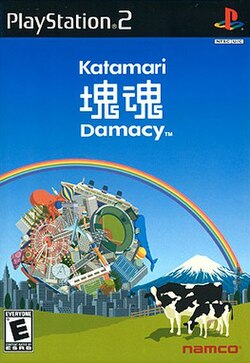
Where do I even begin? Katamari Damacy is undeniably worlds apart from anything that has come before it...or since for that matter. From the moment you lay eyes on the beautiful cover artwork depicting a pair of cows standing beneath a rainbow as a giant Katamari shouldering a stadium, Ferris wheel, sperm whale, some sort of ginormous psychedelic mushroom, and other loony devices looms in the distance, the quirky mystique that is Katamari Damacy immediately sets in, only to blossom once the disc is put into action. The colors, the characters, the story, the gameplay, the world - it's all so very...bizarre. But bizarre isn't exactly the term I'm looking for. There's more than enough weirdness going on out there in the world of video games, but there's something about Katamari Damacy that raises it to a whole new level of awe.

First off, I find Katamari Damacy a very difficult game to explain to people. It's one of those games, that despite its totally addictive tenure of brilliance and fun, there's just no way to express that thrill of play into words, especially when the gameplay is nothing more than rolling a ball, er...Katamari around and collecting everyday objects. Honestly, that sounds boring as hell no matter how hard you try to sell it. Collection games as a whole can be pretty trite in the fun department and it takes something truly special to make such a game stand out and survive more than a few short hours of gameplay, or heck even ten minutes of trial play. For me, collection games usually lose their charm fairly quick. A simple comparison can be made to a lot of the turn-based rpg's - they grow stale over time. But Katamari Damacy never befell that perilous rut; no matter how many times I had to run through Make the Moon just to pick up a couple of advertisements or Make Taurus to try and finally pick off the Holy Cow - how much I hated trying to bounce down into Seagull Park perfectly without either bouncing out or hitting one of those damn Cow-Men.

Explanation aside, even showcasing the game somehow leaves little to the imagination. Big deal! You roll a ball of glue around and snatch up everything in the world. I'll admit that when I first saw footage of the game, while it piqued my interest, I had my reservations. What sold me was everything that went along with it: the King of All Cosmos and his arrogant attitude, the nutty cutscenes about a couple of block-headed kids who appear to retain a certain intimacy with the heavens, and that oh so wonderful soundtrack. Are you kidding me!? The soundtrack is pure win!!! (But I'll get to that later...)

Once you get your hands on it though, it's something else entirely. The intro itself, for a lack of better words, is fucking orgasmic. Honestly, I've found that the best way to describe this game to anyone left in the dark, or perhaps the old naysayers, is to simply show them the intro. I somehow feel like I'm being subjected to an awkward Japanese reinterpretation of Sgt. Pepper's Lonely Hearts Club Band. What the fuck is going on - or am I just stoned out of my mind!?

But seriously, the introduction is a genuine hook. And once you get into the game you just can't put it down. Unfortunately, the game is short and easy. But that's only a problem if you're just out to beat the game and move on in your tirade of video game conquests. However, if you wish to collect every object, every cousin, every named object, every gift - and heck, every country, it can take some time, especially, as I said, trying to track down some of those advertisements. Normally, I'd find this to be a fault in collection based games as a cheap way to elongate the playing time, but here it works and could almost be referenced as a godsend. Unlike most collection games, at least in my experience, Katamari Damacy forces you to look at each level in a sort of outside-the-box fashion as you try and track down the remaining objects needed to fill out your lists. This is because relative size versus world size can become an issue under certain circumstances. You have to be aware of when you need to pack some girth and where you need to be within a certain size limit. Sure, you can play the game blindly; rolling around collecting haphazardly, or you can play with some strategy as you try and tackle specific objects when necessary. Mostly, it's just fun to knock everyone about as you clumsily build your Katamari even while you're trying to buckle down and make goal.

Then you have your storylines. Between each level are some of the oddest cutscenes I've ever come across in a video game. First, there's the pompous King of all Cosmos. Whether he's carelessly throwing Royal Presents away, constantly chiding the Prince for his overall puny stature and general ineptness, or continually boasting his own efforts despite never lifting a finger except to inexplicably destroy the heavens, I have to say that the King of All Cosmos is a complete and total ass. Yet, he's strangely engaging and charismatic - like that's possible. Somehow I feel drawn to his words and find him a trusting lord of the skies.

Stacked on top of the Royal Family's dilemma is a secondary story following the Hoshino family. What a weird boat this lot is. I think I got an even bigger kick out of these scenes than I did with the Royal Family's. As the haiku says, "I feel it. I feel the cosmos," will stick with me for far too long. There's something wholly disturbing about hearing Michiru repeat this line time and time again. Maybe I'm just not in tune with the universe like she is. Sigh.

What really makes this game pop more than anything though has undoubtedly got to be the soundtrack. I don't think there's a single weak link in the chain. Every song is a total earworm; not the type you'd willingly suffer tinnitus to detract yourself from, but a series of catchy melodies that drive you to question how you ever got along without them. Seriously, the opening theme, Nana-Nan Katamari, has been stuck in my head for weeks now and I catch myself humming it all the time. No complaints here. Of course, there's incredible tracks like Katamari on the Rocks, Overture, Lonely Rolling Star, or Que Sera, Sera, but my absolute favorite(s) has to be Lovely Angel and its reconstructed form: Flavored Angel Gift. Given my soft spot for those beautifully wet synth sounds, I could listen to an endless loop of Lovely Angel for hours on end.

In the end, the game is completely out of this world, yes, but it is one of the best games I've gotten my hands on to date. It's very rare for a game to impress me so much that I want to jump immediately into its sequel. Well, Katamari Damacy managed just that. Unfortunately, I haven't been able to add We Love Katamari into my collection as of yet. A downer for sure, but I suspect I'll scratch the indelible itch soon enough.

Nano-Win:

Namco is right - the first tissue in a newly opened box of tissues is always two! What's up with that!?

Rating: 5 Smelly Cat's out of 5

Friday, May 4, 2012

SFC - VIP and Wall Mix 1: ASCII Art Edition

Haiku-Review:

oh, smiling Boon,
why do these cats hate you so?
translation I need

Additional Comments:

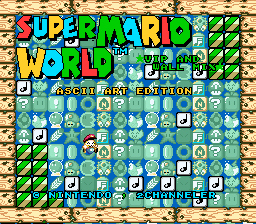
Well, now I feel guilty giving 2ch's SMW hack collaboration origin a haiku, but neglected to pen one for SMWC's initial foray into collab hacks. I probably wouldn't feel so gutted (I'm not) if I hadn't written such a blatantly nonchalant review, especially when a majority of my thoughts were posted elsewhere. Seems I really snubbed that game and rather undeservedly at that - well, I don't know if undeservedly is the choicest word since there are quite a few problems. Then again, the wisest way to describe that game: an experiment, much like the first VIP and Wall Mix. Aha! Cleverly utilized segue.

Like any hack, no matter the foundation and/or purpose, it's guaranteed that the game is going to play incredibly unpolished. Hey, it's a hack, what do you expect? We're not talking about professional grade games made by professional, nine-to-five game makers. Ok, maybe there are a few rare selections that can sneak their way over to the grown-up table, but Mix 1 is certainly not one of them. If anything, Mix 1 is about the furthest thing from a well-rounded, professional-aspiring 2D romp. Ok, all the YouTube spew out there is far worse, but that goes without saying. Lest we forget, Mix 1 was developed in the early days of SMW hacking when tools were few and those tools that did exist were extremely limited in functionality. And I think that is often overlooked when people are quick to eschew the early SMW hacks. Unfortunately, the vast majority of gamers are so reliant on bells and whistles, namely graphics, that they will quickly sneer at anything that appears to have backpedaled. What mystifies me is the amount of people who dip their toe into ROM hacking and express the same attitudes. I'll never understand this, but then I suppose I'm putting too much faith in the intelligence of the gaming masses. The point is, for someone to rail Mix 1 purely on aesthetics is absurd. Sure, the VIP contributors could have spent a little more time buffing out the details - Trap! Riddle? Joke Material! immediately comes to mind - but as long as the functionality is there and there's no guesswork involved, I'm not going to complain. I'll admit that I don't like looking at blocky, cutoff ugliness myself, but I think there's also a time and place to place blame on beauty over architecture. Mix 1, and really all the Mix's, it's obvious that the hacks place importance on level design and not razzle-dazzle. Otherwise, fire away, and I'd jump aboard the bandwagon myself and harp on the ugliness that is VIP and Wall.

What should be criticized is level design, difficulty and the wanton abuse of tricks, glitches and any other aggravating programming anomalies that are taken advantage of. But even here I feel some leniency can be allowed. The question is how much, though you may be asking why I'm even willing to look the other way when it comes to the grief of advanced flight control, for instance. Well, honestly, it's a hack. I know that's a cop-out, but the reality is that we're dealing with an entirely different beast here. It again showcases that we're dealing with hobbyists and not paid developers. And while I can only speak for my own personal interests, my belief is that a majority of these hobbyists are doing it purely for their own gratifications. They're not out to make a buck; nor do they have any real ambition of attaining quality or perfection outside of their own acquired taste. Collaborations likely being the one exception to the rule, but even here, quality is more or less standardized to the ambitions of the collab leaders and not the paying public. Of course, a vast number of published games out on the market, ranging from the beginnings of the industry to today could likely render the argument moot, but that's another story.

Much to the dismay of many, the VIP's thrive on difficulty and questionably unfair tactics. But unlike many hacks, or even games that do the same, the VIP's manage to exude fun no matter how diabolical the levels become - primary examples being (^O^) Smooooth, Boon's Mechanism Mansion, or MissingNo. All three of these levels aggravated the hell out of me, yet I still thoroughly enjoyed them. (^O^) Smooooth's secret exit's reliance on uncanny flight maneuverability is way over the top, but at the same time, it's not exactly brutal, say to the point of Kaizo's madness, or perhaps something more dear to most gamer's out there: Battletoad's Turbo Tunnel, or for those who ever made it that far: Rat Race. For me, it almost comes across as a training ground for advanced tips and tricks - which does have it's use later on in the game or series.

However, there is a dramatic drawback to glitch/trick reliance. Obviously, the average gamer is not going to know how to perform any of Mario's demanding Cirque du Soleil-like talents. Never mind advanced aptitudes, the average gamer complains about the increased emphasis on Mario's little used spin jump in most hacks. Figuring there was only one place in the original Super Mario World (that I can quickly think of off the top of my head) where the spin jump was mandatory - Star World 1 - why would anyone willingly use it? On the surface, it was a weaker jump. Point is, that is a major issue with this game. If you don't know the ins and outs of SMW trickery, you're going to be fully stumped by the time you reach the end of the first world; possibly sooner if you're looking to score the secret exits. And what fun is that? No fun. While I can't say I sympathize with the less than adept, I can fully understand the grief the game causes and the chastising that results. I'm sure I would completely hate the game if I fell into the same category of gamers. Graces to Super Kaizo World for planting the seed to enhance my Mario abilities I suppose and/or curses to the game for the exact same. Not sure what I feel more, especially since I now look at Super Mario World or any of its plagiarized derivatives in a different light.

Basically, the overall fairness and difficulty of the game is idiotic and it's about as beautiful as an open blood wound, but the levels are experimental, clever, and strangely a joy to play. I know most people would avidly disagree with my opinion on architecture and fun, but I'm certain there's a ripe handful of gamers out there who wouldn't. And while it's not the best in the VIP series, I somehow keep returning to the one that started it all. I don't know how many times I've completed this game, but I do know that I still get as much enjoyment out of it now as I did the first time I played it. Somehow, I just can't say the same for the subsequent VIP's - though it could simply be a case of nostalgia. Meh...

Nano-Rant:

There's one room in Boon's Mechanism Mansion where I still have no idea what the intended solution is. Every time I've been thrown into the room, I've always had to manipulate the P-Balloon and ON/OFF triggers differently than intended and perform either a shell jump or P-Switch jump. If anything, it's given me more confidence in real-time shell jumping techniques. Huzzah!!

Rating: 3.5 apples out of 5

Thursday, April 26, 2012

NES - Astyanax

Haiku-Review:

with bad dialogue
a studly teen conquers death;
loves a butterfly

Additional Comments:

A somewhat recent acquisition, it sort of fell into my hands on a whim as well as a recommendation based purely on personal interest; not necessarily quality of gameplay. I really had no idea what Astyanax was on about other than being told it was a fantasy-based platformer. And if it wasn't for that smidgen of information, I'd still be under the belief that it was just another generic, deep space STG (realize that I was completely unfamiliar with any sort of artwork at the time) and likely forego the chance to give it the old college try. After all, macrocosmic shooters bear the weirdest names of all so it seemed a perfectly sound hypothesis.

After popping the game in for some quick testing, my initial reaction found the game more than satisfactory. Despite a clunky Castlevania-esque gameplay motif, the larger-than-life sprites gave the game a unique edge - not necessarily for the better, but enough to plant a seed of intrigue. However, when I finally got around to sitting down with this game and started pushing for overall victory, the intrigue melted away and was replaced with the dim reality that is Astyanax.

This is one of those games where I believe the ideas worked on paper and then somehow...what? What happened? There's something about the game that feels sloppy, but I can't exactly pinpoint it. Maybe it's the atrocious dialogue, maybe it's the unimaginative feel, or maybe it's the shoddy hitbox dimensions. I'd say it's my old nemesis, knockback, but that's a whole other can of worms that I'll get to shortly. Besides, it doesn't really compound the issue at hand. Actually, the amorphous hitbox is a pretty diabolical problem, but I think it's all the cutscenes that are so offputting. First off, the story is contrived and drags on ad nauseum. Secondly, the game is run amok with pedestrian names. At first, I figured the game was playing off the banality of The Princess Bride à la Rosebud is to Astyanax as Buttercup is to _______, until I realized the total lack of creative naming across the board. Blackhorn? Thorndog? Sheesh, this stuff is making Brooks' look like a fantasy naming genius. At least some of the place names make up for it with the likes of Remlia, Telugamn, or even Marshy - which despite its obvious "add Y" cop out, it does have a nice little ring to it. Already, the game feels cheapened. But then there's the gut wrenching dialogue.

Before I berate the script, I suppose I should look at it realistically. The median age of Nintendo's customers during the 80s/90s was likely 10. Space is always at a premium on cartridges of old, so any way to condense anything and everything into as little space as possible is always a priority. And last but not least, the likelihood that any gaming company would actually use an author of even meager status to pen a tale, especially something that's 100 lines long, if you're lucky, was nil to none. I picture Joe Schmo from accounting as the author of choice. And that's how it is in most games, but Astyanax reeks of puerile fan fiction at its worst. It really hit rock bottom when Astyanax confronts Thorndog, with the following dialogue spurred by Cutie's inquiry to the princess's whereabouts:

Thorndog: "Ha ha ha..... You are a noisy fly. She will be a slave to Blackhorn soon."
Astyanax: "Wrong ugly! First I'll destroy you, then I'll rescue her."
Thorndog: "Tough talk, insect! Can you back it up?"

There's a lot of eye-rolling material out there in the early days of cutscenes - hell, even today. But having to read something this awful is an insult to writers everywhere. This is the type of stuff that I just have to walk away from, and for a while, I did. I suppose we can only count our lucky stars that voice-over wasn't a viable option at the time. I feel I should chastise the plot as well (thbbt), but I can't point all my fingers at something that can be considered wholly optional to the core gameplay (in a way).

Getting down to the mechanics, the hitbox is misleading - not overly, but enough to aggravate. This is most noticeable in Marshy (which is my least favorite level by the way), where Astyanax's "ethereal aura" appears to extend beyond his physical means in a forward facing direction. No matter how much distance I tried to keep, those spear-wielding muck monsters could always land a hit even when it was blatantly obvious that there was air between the spearhead and our intrepid hero. And thanks to knockback and thin ledges, well it's no wonder Marshy made my shitlist. Additionally, I lacked confidence in Astyanax's jumping. I often felt shortchanged, but not sure if was down to jump pressure or bad luck. This often resulted in near misses on my end, but guaranteed contact by others. Inazumi also played far more difficult than it really was because of this, but I think I can also attribute that to some faulty object clipping. Nevertheless, this appears to be a common theme: faulty and/or sloppy programming that ended up hurting what could have easily been a fun little romp through fantasy land. What really aggravates me though is that all, or nearly all of the game's difficulty was directly attributed to these programming infractions. Surprisingly, the game's pretty easy once you realize that patience is the key - again, very Castlevania-esque. Actually, the game reminds me a lot of Legendary Axe. But neither of those titles relied on shoddy gameplay as a means of difficulty.

However, something that both this game and Castlevania fell back on as a means of difficulty: knockback. I fucking hate knockback. In certain games, knockback works, for instance the Golden Axe series. But here, knockback is nothing but a brutal bitch where it's conveniently coupled with nasty little groupings of short ledges and edge-hugging enemies. Under normal circumstances, this is a highly antagonizing, yet totally fair setup with systematic difficulty. Add knockback to the equation and it's nothing but bad level design, especially when you're dealing with a slipshod hitbox. Yes, the difficulty isn't that much harder as long as you traverse with total composure and utilize pixel-perfect landings, but difficulty shouldn't stem from a rather adverse aftereffect either. The argument can be made for or against the effect based on the initial hit - if you're hit, you're hit - but it's the total lack of control versus severity of punishment. And it's most frustrating when being tormented by a hail of fiery pollen from the various insidious flora that inhabit the lands. No matter how carefully you position yourself, the pollen will always knock you in the opposite direction from the one expected.

Overall, the game turned out to be a disappointment. It had its moments, but the ease and predictability as I pushed further into the game only added to my pain. Realizing the trend of magic weakness possessed by every boss negated any sense of accomplishment. As a result, I never felt like the game climaxed, even with Thorndog's seal of evil forcing sacrifice and/or the final confrontation with Blackhorn. The game played as a mediocre pill from beginning to end and that's exactly what it was. And it's a shame too, because as I said, my initial reaction proved a worthy purchase.

Even the music was a letdown. More appropriately, the music was monotonous and grating. Well, maybe not all of it - Prologue has a nice mysterious ring to it, and Remlia has a distinctively bouncy feel to it. But most of the remaining soundtrack urged me to mute the TV.

Nano-Rant:

I played through this entire game without knowing that Astyanax had additional spells at his disposal. Heck, I don't even know what the other spells do.

Rating: 2.5 noisy flies out of 5

Monday, April 16, 2012

PS1 - Jet Moto

Haiku-Review:

cinematic lean
skews televised horizon;
causes many spills

Additional Comments:

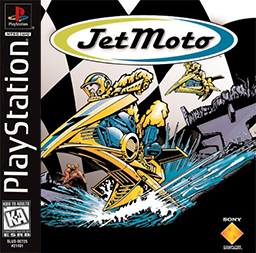
Yet another arcade-style racer that I picked up in my inaugural days of Playstation excitement; I was sold on Jet Moto's over the top fantasy tracks that reminded me so much of the material previously presented in F-Zero. Of course, F-Zero's flatland, planetary themed tracks beheld a stark difference from Jet Moto's "down to earth" beach courses or its romps through some cypress-laden swamp; all of them replete with altitude. Nevertheless, I wasn't facing the famed Maggotts/Becketts complex of Silverstone, the magnificient Eau Rouge or Pouhon of Spa-Francorchamps or even the Carousel at Infineon. Instead, I bravely traded wits with a mighty waterfall, a broken glacier, and a myriad of head-on collisions. Huzzah!

Honestly, there's something to be said about fantasy tracks. 99.9% of the time, they're complete garbage. There's a reason why track design is left to true geniuses of the craft and not some arbitrary game designer who willy-nilly slaps a string of corners together and calls it a day. Yes, I know there's far more work that goes into fantasy track design, but often, that's just how they come across. There's a certain lack of rhythm or finesse. However, game designers have really stepped up their game in recent years when it comes to fictitious layouts. But then you have these games that heartily embrace a true arcade nature where the developers are given absolute freedom to create these outrageous courses in which complete and total peril reigns. The idea is to forego safety and conventional physics and let the player enjoy the ride of his life. This is where your F-Zero's and Jet Moto's fit in; even up through the Wipeout or Burnout series. F-Zero perfected it in its initial release - not so confident about the others myself - but for Jet Moto...we'll call it above average, or at the very least, acceptable.

At first, the tracks are tame, yet littered with enough precarious obstacles to keep the adrenaline going. As the game progresses, the insanity thickens until eventually fear and awe accompany the nightmare that is Nightmare. Sitting on the brink of doom, this track is...bullshit! And that is the kindest, most elegant way to express my appreciation of this track. But more on that later. While the game institutes a progressive track ladder, the standard of difficulty is rather erratic. There's certainly nothing to complain about in the Amateur ranks, until you apathetically meander through the unimaginative Hammerhead. Actually, I really shouldn't complain about that since Hammerhead guarantees victory every time, whether you're just getting your feet wet in the Amateur ranks or proving your genuine champion material in Master. But still, it really belongs in the Amateur ranks swapped with Suicide Swamp. The Intermediate rank becomes all the more curious as you further examine the remaining layouts. Cliffdiver, for example, is one hell of a punch to the gut with its entangling switchbacks. What's more, no matter how well you master the tricky combination of grappling with a counter-leaned tight radius turn, the computer driven bikes drive the section like they're on rails. It's little programming...we'll call them anomalies...like this that really drag a track down. Honestly, the switchbacks aren't that difficult once you get the feel for them, but knowing that time lost is inevitable, you really have to be on your A-game the remainder of the course, which isn't exactly easy either unless you've got a handle on the shoulder leans. Ice Crusher suffers from the rail "anomaly" in the final climb up to the start/finish line, but the remainder of the track is wide and lethargic enough that it doesn't necessarily impede a decent lap. Cliffdiver is, simply put, a tough track; more so than the black diamond Snow Blind and/or Willpower that follow in the Professional ranks.

That's not to say Willpower is a cakewalk - far from it. Willpower deserves the black diamond rating, but not because of an unfair advantage by the computer. This track suffers from an expected flaw of fantasy course design: a ludicrously asinine layout. This problem is even more apparent in Nightmare, and to a lesser degree, both in Snow Blind and Cliffdiver. These tracks represent exactly why game designers should not be track architects. They feel like the designers threw a bunch of corner ideas in a hat and drew lots or just blindly scribbled a configuration on a discarded napkin. They're total chaos. Additionally, it feels like the tracks were designed without accounting for individual bike physics, namely lift. This is most glaringly obvious in Snow Blind where the track consistently crests within low clearance tunnels. The coup de grâce though has got to be the constant checkpoint placement upon every single summit, as if it was specifically outlined in the developer's notes. I don't know how many times I clotheslined those stupid structures thanks to an ill-timed turbo - or hell, even without a turbo.

When it comes to Pandora's Box, Nightmare is by far the worst. While I was able to tame the rest of the tracks; which Willpower was fairly straightforward once I learned the ideal locations for turbo utilization, I was never able to grasp the madness that is Nightmare. Polonius be damned, there is no method to this madness at all. Between Nightmare's layout and the constant battering from the other racers, I raced Master knowing that this race was nothing but a throwaway. And for me, that's the biggest misstep in the game. I really wished that the game had reordered the events within each difficulty mode and/or randomized it. Of course, you can do this on your own accord with the Custom tab, but Custom is an unofficial stab at the championship. I'd rather race the championship as a consistent driver and not as someone who has to push for enough of a lead so that I can totter around the final few events knowing that victory's in the bag. Oh well. Master's a bitch of a difficulty as it is, so who am I to complain how I secure the final blow to the competition.

What's funny is that when I played this game in my younger days, and I played the hell out of it too, I never made it past Intermediate. I ended up becoming so frustrated with the difficulty of the game, especially Ice Crusher, which looking back rather surprises me since that track is considerably easier than some of the other Intermediate ranked tracks. However, the game was still a blast to play so I'd spend hours racing custom seasons. Here it is years later, and I destroyed this game in less than a week. In fact, I think it took me just three nights to progress up through the various modes. I was rather surprised how easy I found the game this time around, easily sweeping victories on all but Joyride in Professional mode and taking at least four wins in Master. Strangely, Joyride turned out to be one of the hardest tracks for me to master, never once taking a victory outside of the Intermediate ranks, but I think I can attribute that to my light bike preference - stupid waves.

As far as music, hmm...I'm not so sure there's anything worth touching on. The music is certainly attuned to the provided environments, but after a while the surf and twangy, southern-fried Appalachia becomes a bit grating. Perhaps it's the track, but even the power of Cliffdiver claws at your ears with razor sharp talons eventually. And as far as the snow-based tunes, despite their initial intensity, they just sort of seep into the background; reminds me of the way NSMB Wii's music tragically disappears into mediocrity. Take Snow Blind, for example. It's not bad, but not great either and after a while, a bit passé - sort of has a next gen Sonic/Crush 40 ring to it as well. Bleagh...

Nano-Rant:

Let it be known that I will always pick handling and light weight over power and speed in any racing game, after all time is best gained or lost in the corners. Let it also be known that I abhor racing light weights in the midst of over-aggressive fatties. I don't mind arcade-racers that promote contact driving, but Jet Moto resorts to bumpin' & bangin' far too often. If it wasn't for the amount of time I spent off the track, I probably could have learned to appreciate both Willpower and Nightmare a whole lot more.

Rating: 3.5 Mountain Dews out of 5

Saturday, April 14, 2012

GEN - Jeopardy!

Haiku-Review:

wagers of knowledge,
posing questions to answers -
really, a haiku?

Additional Comments:

Seriously though, is there any reason to write anything about this game? Jeopardy is Jeopardy is Jeopardy is Jeopardy, no matter the format or trivial differences found therein, except for Super Jeopardy. Ok, I'll concede that it's Jeopardy, but come on GameTek, since when does Jeopardy have four players? Granted, I'm unfamiliar with the show's pre-Trebek era, circa '64-75 and/or '78-'79, but that's neither here nor there. Besides, why toy with an already proven format? And this goes for any version of Jeopardy.

Now, I was chatting with a couple friends over the prospect of "finishing" Jeopardy and doing a write-up. The whole idea is asinine, but already knowing my eclectic list of games, I felt it only just to push my way into gaming's left field, especially after something as epic as Ocarina of Time. (Hmm, perhaps I should in turn follow this up with Hatris on the NES.) On top of that, can one really "finish" Jeopardy? I suppose a winning round is all you need. Then again, what of the 100% completion status? It feels like the Burger Time scenario all over again, or my far from fruitful Crystal Castles venture - damn you, 2600 and your many modes! With countless clues and categories, I could likely spend the equivalency of a real Jeopardy season until I've physically witnessed and answered, er...questioned every clue. Therefore it was time to come up with a compromise once again, much like the unbeatable titles of the points-based era. The most logical solution was to utilize the pre-2003 champions' ruling in which the champion would be retired after five consecutive victories. Not only does this tie in directly with the televised version of the game show, but it places a fair enough limiter to keep the game enjoyable long enough without becoming instantly stale by consistently repeating categories. Ha! Guess the joke's on me. I still had the pleasure of answering the same damn five clues within the Admirals category in six out of my seven games. Yes, I get it, the answers are: Christopher Columbus, John Paul Jones, Richard Byrd, George Dewey, and Hyman Rickover. I now have five more menial tidbits of information about historic admirals drilled deeper into my memory than I've ever cared to acknowledge. Now please, for the love of god, give me some different categories! Other culprits of repetition included the 1930's, Hunting, and Rocks & Minerals. (Insert gun-to-head emoticon here.) And the only reason I had to play seven games as opposed to a quick five, you may ask? Simply put, I wagered a large amount of money on a Daily Double during my second game and foolishly believed that a clover and a shamrock are one in the same. Son of a bitch! Wait a minute, they are the same!!!!

Interestingly, and most definitely sad to admit, I read various Jeopardy reviews posted around the net - namely for those titles that appeared on the various 8 and 16-bit systems. I did so out of curiosity's sake more than anything. After all, as I already wondered, what does one write about? A lot of them complained about the most incredibly mundane details, which I'll be the first to admit that I do that myself, but decrying the staleness of the white-on-blue clue screens or the limited avatar selection is a bit silly given what were dealing with here as a game. Pissing and moaning over the quality of a given answer though, that's another matter entirely. Again, a clover and a shamrock are the same fucking thing!!!

Honestly, there's nothing that takes away from the premise of the game. As long as it has two rounds of six categories with five clues each with increasing wager amounts as well as a single-shot final round and you're having to provide answers in question form to clues provided, then you're playing Jeopardy. SNL's Celebrity Jeopardy is still Jeopardy. Sixth grade science class Jeopardy is still Jeopardy. It's all Jeopardy. The integrity of the game may be somewhat lost in translation along the way, but it's still the same game at its core, much like the copious amounts of Monopoly's that flood the touristy gift shops of the world.

Ah! But there is a "mundane" detail that I wish to rail. Why, oh why, does the computer insist on attempting every clue - and not just one, but both computer controlled players. This needlessly drags a game out for far too long. Add to that, they don't bother ringing in until the timer hits zero. Talk about head-pounding aggravation, here it is in all its torturous glory. It doesn't only lead to a prolonged game; it also leads to a fairly well assured situation of a two-participant Final Jeopardy. Six out of my seven games, one of the computer players ended up in the negative early on and only made things worse as the game progressed as they felt the need to answer everything they possibly could whether they knew the answer or not. I suppose I shouldn't complain - easier victory for me - but it really takes away from the whole idea of gambling away your knowledge on 50's TV, Famous Baseball Quotes, or 17th Century British Naval Officers. Ok, maybe I made those last two up, but still.

Final Jeopardy:

It's the number of occurrences that Jeopardy's namesake appears within its post entire.

Rating: 2.5 shamrocks out of 5

Monday, April 9, 2012

N64 - The Legend of Zelda: Ocarina of Time

Haiku-Review:

time-traveling Link,
seven years, a conundrum
Hyrule falls again?

Additional Comments:

Behold! Here stands one of the most acclaimed, if not the most acclaimed game of all time. And for those naysayers out there, just check out any number of top-ten games lists as documented by various gaming magazines, webzines, blogs, what-have-you from over the years. To make the task even easier, I found a nice little page that has accumulated a wealth of gaming lists, and well, no surprise here. Ocarina of Time has found its way into well over half of them; even accomplishing a bounty of top honors. Need I say more about its obvious preeminence? And it's not just Nintendo/LoZ zealots, it's the general gaming populace. Makes me wonder if I should cut this post short, slap on a 5 out of 5 and bask in the knowledge that for once I made a non-controversial post, for everyone's an Ocarina fanboy (or girl) and to say otherwise is heretical of the utmost degree. Post complete, ego boosted, everybody pleased....

Or maybe I'll choose to make a post that falls in line with the rest of my choleric banter whilst cowering behind the anonymity of internet authorship. After all, let's face it, despite the game's brilliance, it has smugly lumped itself on a heaping of undeserved ego for far too long. Maybe I'm just a lone outsider that doesn't fully understand the quality and scope of the game, or maybe I've felt a wee twinkle of the Triforce of Courage myself to stand tall and not be bought in by the copious OoT fandom that runs rampant, and is very nearly turbocharged thanks to our friend the internet. Meh, words will only tell.

I'm not trying to antagonize the Zelda faithful, or hell, even the casual Zelda gamer, but I am a bit puzzled over how this game has managed to rank so favorably by so many people. This alone makes me believe that I'm just overlooking something glaringly obvious, or it's time to face the truth: I'm a disagreeable twit in the world of video games. But really, I'm just making it sound worse than it is. Ocarina of Time is not a bad game. It's not even a mediocre game, or dare I say, good game. No. Ocarina is flat out fantastic. However, despite it being a total game changer, it's not a 10 out of 10 game. Yes, the presentation is immaculate, the gameplay is spot on, the world along with its numerous multi-level dungeons is a joy to explore, the story is engrossing (regardless of the inevitable befuddling invoked by any time-travelling tale), and the innovation, not just in the Zelda franchise, but in gaming in general, is beyond respect, but - and I really hate to insert such a nasty little conjunction; not just because of the general consensus regarding the game, but also out of my own admiration of the game - there is something amiss.

How can a game so perfect feel so imperfect? For me, knowing my storied past with the N64, the controller is the obvious scapegoat. Ah yes, that clunky, obtuse, plastic gargantuan that forces your fingers akimbo in the most ridiculous button rumba no matter the title. But I've got two reasons why the Nintendo 64 controller has been blessed with impunity. For once, Nintendo completely nullified the Lord of the Dance fingering tactics allowing easy control throughout - reason enough to applaud the game as it tamed the unwieldy beast. Additionally, my first playthough was done using the Legend of Zelda: Collector's Edition on the GameCube which uses an exponentially better controller, but more importantly, I vividly recall the same mild uneasiness flooding my receptors as I plodded through the game. It was this general sense of while I loved the game, I never quite loved the game - if that makes any sense. There's a certain something that just sort of rubbed me the wrong way. It was never enough to blemish the game into any sort of unfavorable obscurity, but enough to make me question its merit and knock it off its smug little perch. But what troubles me is that I can't really explain what it is.  Sounds argumentative for the sake of being argumentative - so that I can flick the white glove and snidely remark, "Pshaw your Ocarina of Time" - but it isn't.

I'm really pounding my head against the wall on this one and the reason is that every time I'm certain I've stumbled upon the crux of the problem, it's not really the problem. For instance, the intuitiveness of the game, it's completely bonkers. Looking at any other Zelda game, everything makes sense. Sure, some of the puzzle solutions may really ruffle your feathers, but when you find the solution you feel like the biggest dolt in the world because the answer was so blatantly obvious given the tools provided. Ocarina, on the other hand, doesn't quite adhere to this logic. In my pursuit to 100% it, I had to turn to GameFAQ's to hunt down the remaining few heart pieces and handful of Skulltula's that I missed. This was when the game really began to frazzle me. What ever would make me think to play the Song of Storms to open up a hole in the ground? There's no logic behind this and no insight that the Song of Storms is more or less equivalent to an ordinary shovel. Maybe if I learned the song from a ditch digger, that'd at least be something. And it's not just that. It's little irrational nuances throughout the game that shoulder enough of an annoyance to keep the game from perfection. I'd be happy to admit ignorance on my part if that were the case, but only if such were the case across the entirety of the Zelda series, stretching from Legend of Zelda all the way to Twilight Princess (I haven't played Skyward Sword yet, so...), but I've never had this problem in any other Zelda game, even Majora's Mask and well...I'll leave that for another time. Granted, my above example is unessential if you're just out to beat the game, so complaints seem arbitrary at best, but for me, it was just piling on to that mysterious strain of imperfection.

So then, what killed me on the straight and narrow if we're to shove all the optionals aside? I think it has to be item use. Looking back on my Link to the Past post, I talked about how that game nailed the item versus environment usage. It felt like the developers built the overworld with every single item in mind and did so without needlessly abusing certain items or using certain items just because they can. In Ocarina, it felt like these two entities; both very important to a Zelda game, were built with a blind eye towards the other. They never wholly interconnect with each other properly, and when items were put to use, it felt tacked on. Of course, this wasn't a prevalent problem, but when the two didn't quite gel, it felt ridiculously cheap. Again, I can refer back to the Song of Storms. Let it be a singular key. Were not going to feel duped because that one song only serves a single purpose. Same can be said with the dungeons. Why am I having to play the Song of Time or Zelda's Lullaby for puzzles that are not only blatantly obvious to solve, but serve no real purpose other than to add an extra 30 seconds to the dungeon so we can hear one of these two songs for the nth goddamn time? At least the other items don't conjure a needless cutscene. Once or twice is fine. There are, in fact, a couple spots where the Song of Time is wisely used to solve a puzzle, but elsewhere - you've got to be kidding me.

Taking a step back though and looking at it all realistically, I can see why most of these nuances exist. It was the first 3D Zelda game which meant two things. One, it was a testing ground for what can be done in this fantastic new dimension of gameplay. Fortunately, Nintendo pretty much nailed it on their first try and the hiccups that did occur were corrected as the series progressed. And two, it's only expected that Nintendo was going to pull out all the stops. Essentially, they had nothing to lose, and given the track record of Super Mario 64, it was obvious that free-roaming 3D landscapes and models were more than enough to win everyone over. Basically, if we were met with another topdown Zelda with any of the aforementioned blunders, the series would have likely stumbled. But being that it was 3D, there was more than enough inherent confidence that anything wrong could easily go overlooked. No harm, no foul really. And given what the video game industry was going through at the time, the game is not only revolutionary, but a respected trendsetter in what the newly emergent 3D world of gaming should strive for. At the time, yes, I can fully understand why it was a top rated game - a 10 out of 10 if you will. But I also think the wee nasties were swept under the rug at the time thanks to the idea of the right place at the right time.

Even now, it still is a top rated game in my eyes. Not as great as everyone claims, but great nonetheless. In the Zelda franchise itself, it's my third favorite, and honestly, it's by a mere fraction that Ocarina deserves the third step of the podium. If Twilight Princess wasn't more or less an Ocarina reskin (haters can hate, but that's really how I see it), it'd probably edge it out. Plus the motion control bullshit sort of hinders it as well. Thanks a fucking lot, Nintendo Wii!!! But nevertheless, Ocarina is still a great Zelda game, and is always the go-to game that I recommend if no one's ever played a 3D Zelda before.

So there it is. Yes, I harangued it a bit, but was it really so bad? And think about this: I did so without once vilifying the Water Temple. Ah ha! But seriously, I wish I could pitch it as a perfect game, but  I guess the bumps just hit me harder than, well most anyone else. C'est la vie.

But let's end on a pleasant note. No matter the title, one thing the Zelda series does and does well is carry a soundtrack that not only exemplifies mood, but locale as well. Add to that the timelessness and Zelda games are worth the music alone. From the moment we're graced with the beautiful strums and warm clippity-clop of Title, it's all over. I know some may complain about the absence of the original title tune, but Ocarina's opening tune is magic. And then you have some incredible locale pieces such as the expressive Hyrule Field (always loved that mysterious low warble thrown in there), the ominous vacuum of Inside the Deku Tree, the exotic mystique of Potion Shop, or the country-sad twang of Lon Lon Ranch. I could go on and on with so many others too. But for me, it's always been about Gerudo Valley. That song is fucking tits!

Nano-Rant:

Dammit, I can't even end on a good note. Ok, despite my appreciation of the story, I've always been bothered by this Sheik character. To hell with spoilers (oh wait...spoilers alert), but it's always bugged me that Zelda can so casually perform feats that Link needs either tools or to work up a rigorous sweat to accomplish. If she's so damn limber, knowledgeable (seriously, she's knows everything about anything whereas Link knows jack squat), and able, then why doesn't she put in her fair share of effort? Oh, she used her stun beam to hold Ganon after Link did all the dirty work. What, did she forget she had that ability when the battle started? Thanks a lot...stupid, clueless bitch! And thanks for planting the seed in my head to claim the Master Sword so that I can lose my youth as I wait in stasis for seven years in limbo! But I digress.

P.S. There's so much more I want to talk about: more of my personal history with the game (namely why I never finished it on my first playthrough), the Boss Battles (namely Ganon's), Poe Hunting and other ludicrous side adventures, and of course everyone's favorite OoT debacle, the Water Temple. But alas, I'm afraid I've overstayed my welcome far more than I should have already with this game.

P.P.S. The ship in the Shadow Temple is pure win!!! Rack that up as ending on a good note.

Rating: 4.5 cute little Bombchu Bowling clerks out of 5

Wednesday, February 29, 2012

NES - Crystalis

Haiku-Review:

blend element swords;
it's the ultimate virus -
kill the cpu

Additional Comments:

Crystalis is one of those games that I long had a feeling would be unmatched in its gameplay and presentation. I can't exactly pinpoint why I always thought this, but I just had this eerie premonition floating in the back of my mind. Perhaps it was just the name, or perhaps it was in the stones, the wind, or any other device of auspicious divination. I'd blame it on that sweet box art, but honestly, I think this is the first time I've ever laid eyes on it (which is a bit sad, really). But I've always known about the game, and I've always had an itch to play it. Alas, personal ownership and hands-on experience would elude me for far too long. I just recently picked up a copy and was more than eager to pop the puppy in as soon as possible. The only thing holding me up was making sure I had completely run the course with Dark Alliance, and as soon as I could call that game, there was no question Crystalis would be next to face judgment on the chopping block of games beaten.

Right from the start, I knew I was in for something special. Between the combination of the intro story, though it left some lingering question marks over my head, and the opening scene of our hero miraculously smashing through solid rock after being locked in stasis for an undetermined amount of time, I was hooked. And while I always knew the game somehow dipped its big toe in the gambit of RPG-dom, I never quite knew how deep. But ah-ha! A solid action adventure game with RPG elements - I'm so in. Given my report with such titles as StarTropics or the top-down Legend of Zelda's, notably Link to the Past, how could I go wrong? The game immediately stirred up odd abstractions of Illusion of Gaia, or thereabouts, but obviously trapped within the limitations of the NES.

There were a few quirks that I had to grow accustomed to, namely the sword charging, despite its vaguely theoretical similarities to the M-Buster charge ability found in the latter Mega Man games. I quickly adapted to consistently building and holding a charge after every attack, however, unlike the Mega Man games, you had to be standing perfectly still to build a charge. Under casual game conditions, there's no cause for alarm - take a quick three second break and you're good. Boss battles occasionally threw in an unwanted monkey wrench however. Forcing the issue under fire was never exactly easy, but then we're also dealing with a boss battle so it should be expected to push some additional strategy into the mix. Unfortunately, most of the bosses fared on the easy side of the spectrum, especially DYNA, which was a colossal letdown. I was especially frustrated with DYNA's lackluster battle after the intense foray through the Finest Four. And hey, even Draygon put up a fair fight. But sheesh, I came out unscathed on my initial confrontation with the computerized menace. Perhaps Crystalis is just that powerful.

Nevertheless, it wasn't just the game's charge-whilst-loitering that set it apart from say the M-Buster or perhaps Link's ability to fling illusionary swords at full health. Crystalis' weapon system, while not revolutionary by any means, is definitely unique. First of all, there are four swords to be found during the course of play; each representative of a specific element: wind, fire, water, and thunder. Somehow thunder muscled its way into the picture; leaving the commonly regarded element of earth high and dry. Not going to complain though as the Sword of Thunder is one sweet demon cleaver. Add to that the additional acreage with each power tier and you've got gold. Oh! Did I mention the power tiers? So yea, each blade has three tiers of power as well; the third tier producing devastating effects within its element similar to some of Golden Axe's more impressive magic. It'll consume some much coveted magic points, but the trade-off is completely worth it in certain critical situations.

There is a subtle chink in the swords' elemental oeuvre however: palette-swapped enemies. Ok, let me explain. So not every enemy can be defeated by every sword. In fact, most of them are only susceptible to at most two while remaining wholly invincible to the others. I've got no issue with that. Honestly, I applaud it as it forces sword strategy as you explore the various dungeons. Rarely is there a single sword that can annihilate every creature within a given dungeon. While it may sound tedious on the surface, it really isn't. But, as you progress through the game, the presence of palette-swapped enemies - a common method used in games to expand the enemy roster while retaining minimal graphical space which was at an obvious premium in the old cartridge days of gaming - can cause some confusion...or maybe it was just me. Hmm, that sounds a lot more plausible: the breadth of my own ignorant assumptions. I suspected colors were not only representative of power but also of weakness. I can't even count the times that I'd see monsters of a certain palette and think to myself, "Ooh, gotta use the Sword of Fire in this dungeon. What do you mean it doesn't work!?" Even by the end of the game you'd think I'd realize that the various palettes don't mean jack squat. But again, it's nothing to complain about and doesn't exactly hinder the game.

Moving on, something I really wanted to hit up was the magic system. Well, not so much the magic system as it's nothing special - typical Refresh, Teleport, whatever. What jumped out at me though was the spell, Change. The moment I got Change and used it for the first time, I felt like I just got kicked in the gut. What awesomeness is this? Unfortunately, this is the same point where I started overlooking certain quest items such as the Kirisa Plant because I didn't use the spell to its full potential. It was one of those awkward devices that really enhanced the gameplay yet opened up the world far too much in an unexpected direction. Taking on the form of the Draygonian guard, Stom or even Akahana were all obvious, but somehow the girl just simply eluded me. Don't know why and I have to admit I felt downright stupid when I realized what her role was.

Overall, the game did not disappoint in the slightest. I expected a stellar game and it totally delivered. Sure, I berated a few things, but other than the battle against DYNA, it's all just nit-picky ballyhoo. And honestly, the battle of DYNA can slip past undeterred, hot on the heels of an epic gaming masterpiece - so scratch from the record books any and all slanderous downplay of this incredible game. From the gameplay to the graphics to the music - everything just came together so beautifully. And speaking of music, I can't possibly finish without pointing out a few gems such as Wild Fields, On the Mountain, Raging Sea, or Floating Tower.

Nano-Rant:

It took me so long to figure out how to jump with the Rabbit Boots. I roamed throughout Mt. Sabre endlessly before I realized you have to unequip a spell. Dammit!!

Rating: 5 robotic deities out of 5